


"Our vibrant human civilization over the past tens of thousands of years was made possible by only a few geniuses, but [their contributions] are limited to the field of neurology, genetics and brain research. As for nature, [the importance of] human intelligence remains minimal. ... I myself, in terms of human history, am as trivial as a microbe. But if I can get in touch with the profound soul of the stars, the sea and the wilderness, their love and beauty compel me to create," Lee Mei-huei (
As a result of this insight, Lee, like many ancient Chinese scholar artists before her, chose mountains and the sky to be the walls and ceiling of her studio. Subtle changes in the appearance of the wilderness has been her subject over the past 20 years of her career.

PHOTO COURTESY OF HON-GAH MUSEUM
At a time when Taiwan's landscape has become an exhausted subject, Lee fused subjective interpretations into her representations of the natural scenery to create a distinctive perspective.

Lee's current exhibition is at Hongah Museum (鳳甲美術館) titled Lee Mei-huei Solo Exhibition 2003 (李美慧2003個展), at Danfengshan hill in Beitou, the leafy Taitung Arts Village.
Danfengshan, an ordinary hill just 117m above sea level, is an unlikely subject for landscape painters. With several residential communities encroaching the hillside and an all-to-clear panorama of smoggy Taipei, the area seems far from picturesque. Probably the only thing beautiful about Danfengshan as a hill is its wavy profile, and this is depicted to surprising effect in The Moon Rising above Danfengshan. Like an illustration for a fairy tale, the full moon looks over the rugged hill that seems to extend endlessly on the 62cm by 270cm canvas.
Whatever the subject, one thing Lee insists on is carrying her often meters-wide canvas to the scene to work on instead of making sketches of the landscape first and making an oil painting later inside the studio. The invisible flow of the mountain's creatures' life forces gives Lee the inspiration to make her brushstrokes, she says.
Lee Mei-huei Solo Exhibition 2003 will run until Sept. 28 at Hongah Museum, 5F, 260 Dayeh Rd, Beitou (
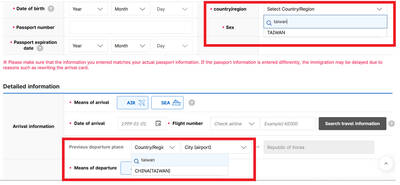
Jason Han says that the e-arrival card spat between South Korea and Taiwan shows that Seoul is signaling adherence to its “one-China” policy, while Taiwan’s response reflects a reciprocal approach. “Attempts to alter the diplomatic status quo often lead to tit-for-tat responses,” the analyst on international affairs tells the Taipei Times, adding that Taiwan may become more cautious in its dealings with South Korea going forward. Taipei has called on Seoul to correct its electronic entry system, which currently lists Taiwan as “China (Taiwan),” warning that reciprocal measures may follow if the wording is not changed before March 31. As of yesterday,

The Portuguese never established a presence on Taiwan, but they must have traded with the indigenous people because later traders reported that the locals referred to parts of deer using Portuguese words. What goods might the Portuguese have offered their indigenous trade partners? Among them must have been slaves, for the Portuguese dealt slaves across Asia. Though we often speak of “Portuguese” ships, imagining them as picturesque vessels manned by pointy-bearded Iberians, in Asia Portuguese shipping between local destinations was crewed by Asian seamen, with a handful of white or Eurasian officers. “Even the great carracks of 1,000-2,000 tons which plied
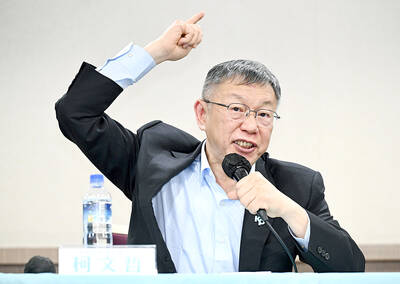
On Thursday, former Taipei mayor and founder of the Taiwan People’s Party (TPP) Ko Wen-je (柯文哲) was sentenced to 17 years in prison and had his civil rights suspended for six years over corruption, embezzlement and other charges. Seven others related to the case were also handed prison sentences, while two were found not guilty. It has been a bad week for the TPP. On Tuesday, prosecutors charged Chinese immigrant Xu Chunying (徐春鶯) with suspicion of taking part in Beijing-directed election interference. Xu has strong links to the TPP, which once offered her a party list legislator nomination. Tuesday also
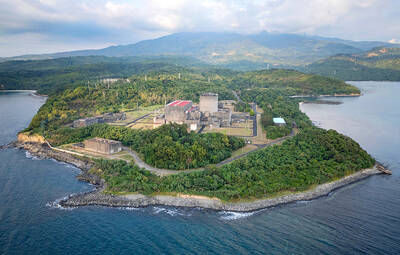
Nuclear power is getting a second look in Southeast Asia as countries prepare to meet surging energy demand as they vie for artificial intelligence-focused data centers. Several Southeast Asian nations are reviving mothballed nuclear plans and setting ambitious targets and nearly half of the region could, if they pursue those goals, have nuclear energy in the 2030s. Even countries without current plans have signaled their interest. Southeast Asia has never produced a single watt of nuclear energy, despite long-held atomic ambitions. But that may soon change as pressure mounts to reduce emissions that contribute to climate change, while meeting growing power needs. The


 RSS
RSS