


Welcome to the Pop Stop, where Around Town intentionally dives headlong into the fray of celebrity gossip news and comes back to you with a distilled version of the past week of heartbreaks, successes and misadventures.
In this space we'll also be announcing upcoming concerts, reporting on the latest hot TV shows, commenting on new albums and all that good stuff. But mostly we'll be delivering the straight dope on the colorful lives of the stars who keep the Chinese pop culture machine well greased. We're lucky, then, to be in Taipei, because the shenanigans that the stars get up to in this town never end, and the blood-lusty wolf packs of reporters looking for a scoop are tireless.
Starting things off with a litigious bang, Elva Hsiao (蕭亞軒) popped the cork on the champagne when she won a NT$1 million libel case on Tuesday against Next Magazine (壹週刊). The magazine had claimed in a Dec. 12, 2001, report that the Vancouver-raised singer was previously the girlfriend of a small-time drug dealer and that she was a wild libertine during her college days. Her indignant denials after the report seem to have been vindicated, to our mild dismay. It seemed like she was finally getting some personality.

But then, charges of untoward drug and sexual indulgence come with a heavy price. Just ask William So (蘇永康) and Anya Wu?吳安雅). Last year they were busted at the Taipei nightclub Texound while loaded up on ecstasy and ever since they've been trying to restore their pubic images, while suffering regular jabs from the media. So felt compelled to title his new album currently fresh off the press So Fresh, in an apparent description of his new detoxed self. Anya, who has been less repentant about her trip to the wild side, was featured in Next two weeks ago with some unflattering extreme close-up photos of her at a promotion event with pasties sticking out from her bra and a curious type of tape at her bikini line.
So and Wu are also conspicuously absent from a line-up of stars including Karen Mok (莫文尉), Coco Lee (李玟), Jay Chou (周杰論) and Wang Lee Hom (王力宏) for a Department of Health anti-ecstasy campaign launched last week. For its campaign the department also overlooked Hong Kong part-time singer, full-time brat Nicholas Tse (謝霆鋒), who, in an Internet poll conducted by a Chinese Web site last week, ranked near the bottom of the public's favorite stars. Reasons cited for his low score on the poll were his uncanny ability to be caught on film with women other than his girlfriend Faye Wong (王菲) and his predilection for driving sports cars into highway barriers, both of which he did in the past two weeks, again. Yet his obnoxious behavior didn't stop thousands of screaming teenie boppers from turning up at every stop of Nicholas' one-day, three-city autograph tour of Taiwan last weekend.
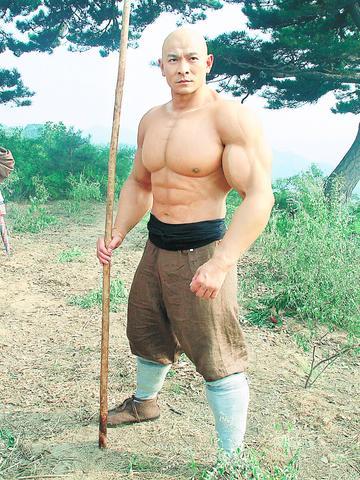
Andy Lau (劉德華), who, unlike hometown maverick Nicholas, has a spotless image, made a discrete appearance in Taiwan earlier this week for a film stint and was

photographed en route with a fashionable hip hop towel wrap and a baseball cap on his head. It turns out Andy wasn't announcing his transformation into a rapper, but rather was protecting his newly shaved cranium from the vicious Taiwan sun. Let's just hope they're paying him well.
People all around Taiwan are now looking to fill the void left by the termination of the blazing hot TV series Taiwan Thunderbolt Fire (台灣霹靂火). Keep your ears open in public and you're likely to hear people mimicking the show's hero Liu Wen-tzong (劉文聰) and quoting his deadly serious warning to an enemy: "I'll give you a can of gasoline and a book of matches! Don't you know that when you borrow money from me there's always a price to pay??"(我會送你一罐氣油和一集火.難道你不知道你跟我借錢都要付出代價?)

Taiwan’s English education system is being pulled apart by three opposing forces. Bilingual Nation 2030 pulls students toward English and global communication. Artificial Intelligence (AI) readiness pulls them toward digital judgment, verification and AI-mediated work. But Taiwan’s old exam culture pulls them back toward memorization, grammar drills, timed reading and correct answers. If the education system keeps using old exams to define success, it risks producing graduates who are neither genuinely bilingual nor genuinely AI-ready, but trained for tasks machines can already perform. The first force is Bilingual Nation 2030. Launched in 2018, the policy aimed to “help Taiwan’s workforce connect
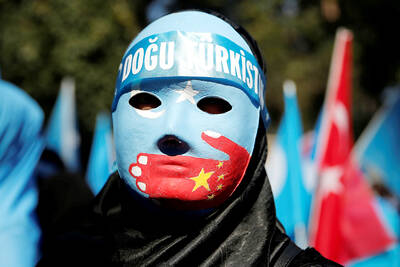
It seems every few days one bumps into one of those “real man” comments in which Taiwan is urged to “face reality” or similar, and “make a deal,” with the speaker implying that soon it will be too late. “Deal” advocates always present themselves as having a superior grip on reality, and the manly ability to make the “hard choice.” Their testosterone-laden language often echoes that of Taiwan sellout advocates. Note that such commentary always specifies a process (“make a deal, work with, make progress”), never the end state of what occupation by a violent authoritarian colonialist state will entail. In

“Taiwan’s Opposition Leader Comes to US With a Message Straight Out of Beijing” read a May 31 headline in the Wall Street Journal. Top US administration officials and members of Congress almost certainly read the WSJ, and if there was a bullet point takeaway that people in Washington should absorb ahead of Chinese Nationalist Party (KMT) Chair Cheng Li-wun’s (鄭麗文) arrival in DC on June 9, that headline is it. The last few columns have discussed this very topic, and the timing is not coincidental. While those top officials likely do not read the Taipei Times, judging by the number
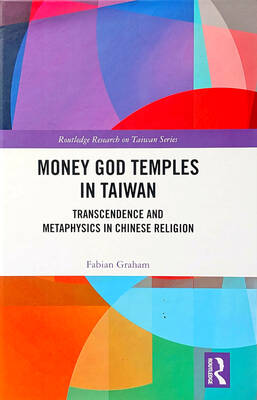
As someone who normally steers clear of books with “transcendence” or “metaphysics” in their subtitles, this reviewer — a casual observer of local belief systems since the 1990s — found Fabian Graham’s Money God Temples in Taiwan a challenging read. Those who’ve only dipped their toes into temple culture will likely need to parse several sections with special care if they’re to keep up with the author, a British ethnographic researcher whose previous books have investigated religious practices among ethnic Chinese in Southeast Asia. This scholarly volume examines a facet of Taiwan’s religious landscape that didn’t exist a century ago, and


 RSS
RSS