


Beneath Berlin's streets lies a forgotten world of bunkers and tunnels that tell tales of cruelty, suffering, escape and espionage.
Foreign visitors seeking remnants of the city's violent 20th century history search in vain for two of the main attractions -- the Wall and Adolf Hitler's bunker.
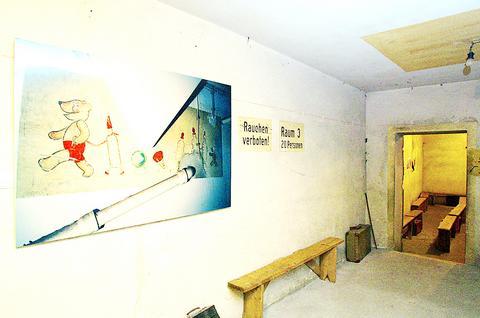
PHOTO: REUTERS
The Wall was torn down, save for a few short crumbling segments, and Hitler's bunker is covered by a car park.
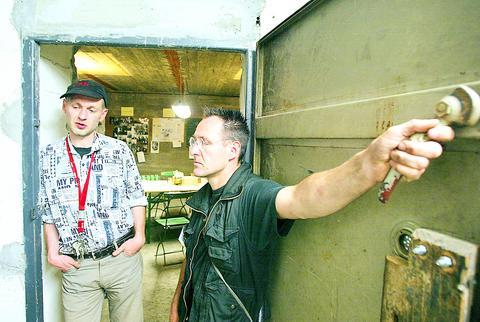
PHOTO: REUTERS
But some of the 1,000 World War II bunkers are intact and accessible, their echoing corridors, propaganda posters and instructions in Gothic script giving a sense of a past most Berliners would prefer to forget.
Luminous paint strips mark the way to emergency exits and cranks for manual air filters jut from the gray concrete. In one bunker, the walls are corroded by quicklime used to cover the dead from street fighting in the weeks before Berlin fell.
One bunker, next to the Gesundbrunnen underground station in central Berlin, contains suitcases, helmets, uniforms, bunk beds and a trove of items gathered from sites by members of the "Berlin Underground Association," which explores bunkers.
The Gesundbrunnen bunker was meant for ordinary citizens and is one of two sites where the association, made up of unpaid enthusiasts, conducts guided tours.
The bunkers of the Nazi elite, located under the city center between the Brandenburg Gate and Potsdamer Platz, in what used to be the Cold War wasteland between East and West Berlin, have been sealed for fear they may become neo-Nazi shrines.
"The city would rather not deal with its Nazi past buried in the ground," said Dietmar Arnold, a local historian who has explored the bunker system and leads tours.
"But we've noticed a lot of tourists come here and ask `Where is the Berlin Wall?' You can hardly show them anything. Then they ask, `Where was Hitler's bunker?'"
Arnold said it was "scandalous" that none of the city's bunkers had been placed under heritage protection. It would even be worth re-opening Hitler's bunker, he said.
The one-storey bunker measuring 15m by 20m lies underneath a car park in front of a modern block of flats close to the Holocaust memorial now under construction.
Communist authorities re-opened it in 1985, destroyed its 4m thick ceiling, and buried it again.
Opening the bunker would remove the mystery surrounding it, said Arnold. "If you combine it with a proper historical exhibition and have someone at the door to make sure only the right sort of people get in, it could be a significant site."
Petra Reetz, spokeswoman for the city's planning department, defended the decision to keep the bunker closed. She said, "We don't want a site where someone gets the idea to put up a candle on Hitler's birthday."
The so-called "Driver's Bunker" nearby, built for Hitler's chauffeurs, was uncovered in 1990 during a search for unexploded World War II bombs.
It contains giant wall paintings of SS troops holding large black shields to protect blonde women and children.
"Those SS comics are a curiosity and were documented and photographed. We consulted historians and concluded this was not of historic value," said Reetz. So the city filled the bunker with sand and sealed it.
Reetz denied Berlin's city government was ignoring its past by neglecting the bunkers.
"Bunkers make an important statement -- if you start a war don't be surprised if it comes back to you," she said. "But Berlin is penniless and has to make priorities. Besides, history stares you in the face above ground everywhere in this city."
By the end of the war the city, the most heavily bombed in Germany, could protect up to 800,000 people in its bunkers -- taking into account they were always three times overfilled.
Most of Berlin's more than 3 million people had to make do with less safe cellars. Bunkers were out of bounds to slave workers, of whom there were at least 200,000 in Berlin.
Civilian bombing victims during the war, estimated at between 18,000 and 50,000, were relatively low. Good air defense, strict Prussian building standards and wide boulevards prevented the firestorms that killed many tens of thousands in Dresden and Hamburg.
Crammed into bunkers as the bombs rained down, Berliners resorted to grim humor. "They would say Berlin was the only town in Germany where you could take the subway from the western to the eastern front," said bunker guide Juergen Mueller.
After the war, the Allies destroyed 80 percent of the bunkers under a program to demilitarize Germany.
But the Cold War brought new digging. Arnold knows of 30 escape tunnels from East to West Berlin, eight of them successful. Most were betrayed to East Germany's Stasi secret police.
Spies also built tunnels during the Cold War. The most famous, a US$30 million US-British project in 1954 to 1955, ran 443m from a US radar station in the Rudow district of Berlin to the Soviet sector.
Codenamed "Operation Gold," the aim was to tap Soviet telephone lines. It appeared to be a success initially, until it emerged that a British double agent, George Blake, had betrayed the project early on.
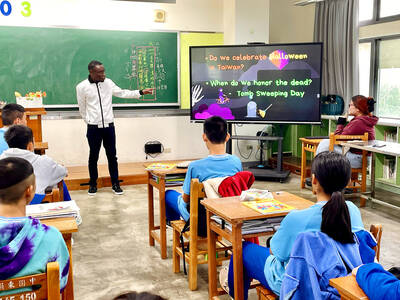
For many people, Bilingual Nation 2030 begins and ends in the classroom. Since the policy was launched in 2018, the debate has centered on students, teachers and the pressure placed on schools. Yet the policy was never solely about English education. The government’s official plan also calls for bilingualization in Taiwan’s government services, laws and regulations, and living environment. The goal is to make Taiwan more inclusive and accessible to international enterprises and talent and better prepared for global economic and trade conditions. After eight years, that grand vision is due for a pulse check. RULES THAT CAN BE READ For Harper Chen (陳虹宇), an adviser
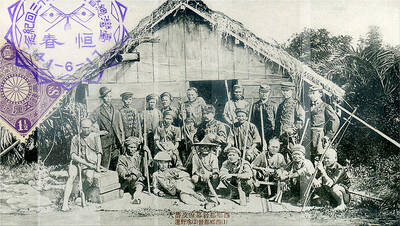
Traditionally, indigenous people in Taiwan’s mountains practice swidden cultivation, or “slash and burn” agriculture, a practice common in human history. According to a 2016 research article in the International Journal of Environmental Sustainability, among the Atayal people, this began with a search for suitable forested slopeland. The trees are burnt for fertilizer and the land cleared of stones. The stones and wood are then piled up to make fences, while both dead and standing trees are retained on the plot. The fences are used to grow climbing crops like squash and beans. The plot itself supports farming for three years.
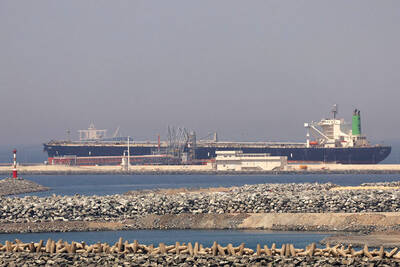
The breakwater stretches out to sea from the sprawling Kaohsiung port in southern Taiwan. Normally, it’s crowded with massive tankers ferrying liquefied natural gas from Qatar to be stored in the bulbous white tanks that dot the shoreline. These are not normal times, though, and not a single shipment from Qatar has docked at the Yongan terminal since early March after the Strait of Hormuz was shuttered. The suspension has provided a realistic preview of a potential Chinese blockade, a move that would throttle an economy anchored by the world’s most advanced and power-hungry semiconductor industry. It is a stark reminder of

May 4 to May 10 It was once said that if you hadn’t performed at the Sapphire Grand Cabaret (藍寶石大歌廳), you couldn’t truly be considered a star. Taking the stage at the legendary Kaohsiung club was more than just a concert. Performers were expected to entertain in every sense, wearing outlandish or revealing costumes and staying quick on their feet as sharp-tongued, over-the-top hosts asked questions and delivered jokes that would be seen as vulgar, even offensive, by today’s standards. Opening in May 1967 during a period of strict political and social control, Sapphire offered a rare outlet for audiences in


 RSS
RSS