


In visiting Poland last month, President Bush took the time to go to Auschwitz and tour one of the most ghastly assaults to humanity in the history of mankind. After finishing his tour, he remarked, "And this site is also a strong reminder that the civilized world must never forget what took place on this site. May God bless the victims and the families of the victims, and may we always remember."
The next day, Bush was in St. Petersburg, Russia. While there, he did not make it up to the Solovetsky Islands, the site of the first camp of the gulag. Nor did he call upon the world to "always remember" the millions of people who perished in the Soviet concentration camps well before Auschwitz was constructed and well after Auschwitz was dismantled. The families of the victims of Soviet Communism -- much more numerous than the families who lost loved ones in Hitler's camps -- received no special blessing from the leader of the free world.
Bush should not be singled out for failing to remember the innocents killed in the gulag. Rarely do visiting dignitaries take time to remember the tragedies of Soviet Communism. The Russian state has done little to commemorate the millions who died or lived miserable lives inside the hundreds of camps scattered throughout the former Soviet Union. Tour buses do not haul visitors to Auschwitz-like memorials, because they do not exist. While private, informal memorials have sprouted, the Russian state and most of Russian society seem determined to avoid coming to grips with their Soviet past.
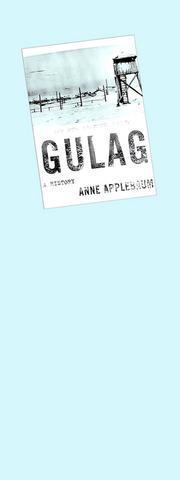
Strangely, the coming parliamentary elections in Russia will be dominated by two parties with historical links to the gulag. The forefathers of the Communist Party of the Russian Federation (not a Socialist or Social Democratic party) created the gulag. The informal head of Russia's other major political party, United Russia, is President Vladimir Putin, an alumnus of the KGB, the last incarnation of the Soviet secret police, which ran the gulag. Putin and the Communist Party leadership practice very different politics than their predecessors, but they have also spent very little energy recognizing the atrocities of their organizations' pasts.
Anne Applebaum, a columnist for The Washington Post, however, has not forgotten. In her new book, Gulag: A History, she is determined to make sure the victims of the Soviet concentration camps are remembered and their oppressors exposed. Her book is tragic testimony to how evil ideologically inspired dictatorships can be.
In the Soviet camps, as Applebaum documents in a straightforward, just-the-facts way, people were tortured and died in the most inhumane of ways -- packed in boxcars, lying in excrement, raped, starved, frostbitten or standing naked, hands and feet tied, exposed to swarms of mosquitoes. These are horrors of a scale and scope that few in Russia or the West can imagine.
Many of my students at Stanford have never even heard of the gulag. (Aleksandr Solzhenitsyn's account was published long ago.) However heavy and difficult the reading can be, this book should be a required text for every student of 20th-century history in Moscow, Russia, and Moscow, Idaho.
For scholars of the Soviet era, this book does not uncover shocking new material. It should now be known to all serious scholars that the camps began under Lenin and not Stalin. It should be recognized by all that people were sent to the camps not because of what they did, but because of who they were. Some may be surprised to learn about the economic function that the camps were designed to perform. Under Stalin, the camps were simply a crueler but equally inefficient way to exploit labor in the cause of building socialism than the one practiced outside the camps in the Soviet Union. Yet, even this economic role of the camps has been exposed before.
What is remarkable is that the facts about this monstrous system so well documented in Applebaum's book are still so poorly known and even, by some, contested. For decades, academic historians have gravitated away from event-focused history and toward social history. Yet, the social history of the gulag somehow has escaped notice. Compared with the volumes and volumes written about the Holocaust, the literature on the gulag is thin.
In one meticulously researched and well-written account, Applebaum's book makes an enormous contribution to filling the void. But rather than the last word, Gulag should serve as a foundation for a new literature. The book begins to answer many important questions, but more must be said.
Did Stalin really believe that the camps might re-educate enemies of the state into productive socialist citizens? Why were Stalin and his henchmen so obsessed with obtaining confessions? Why did they take so seriously judicial procedures? And all the classic debates about the Holocaust need to be asked systematically again with this case (and hopefully by others about camps in China, Cambodia and contemporary North Korea). How could the guards have been so cruel? What did these conspirators in genocide actually believe they were doing? Why did those interned in the camps not revolt? And in contrast to Hitler's death camps, why were so many gulag inmates released?
Applebaum advances our understanding of all these questions but also sets the stage for future scholars to take the analysis one step further. In academic circles, there can be no more excuses for neglect.
Nor in political circles. Bush should take Applebaum's book with him to his ranch this August. After reading it, he could never travel to Russia again without remembering the victims of Soviet concentration camps. If Solovetsky is too hard to get to, he might at least make the 10-minute drive from the Kremlin to the offices of Memorial, the Russian group dedicated to preserving the memory of Stalin's victims. From their modest offices, he might call upon the civilized world to "never forget."

For many people, Bilingual Nation 2030 begins and ends in the classroom. Since the policy was launched in 2018, the debate has centered on students, teachers and the pressure placed on schools. Yet the policy was never solely about English education. The government’s official plan also calls for bilingualization in Taiwan’s government services, laws and regulations, and living environment. The goal is to make Taiwan more inclusive and accessible to international enterprises and talent and better prepared for global economic and trade conditions. After eight years, that grand vision is due for a pulse check. RULES THAT CAN BE READ For Harper Chen (陳虹宇), an adviser
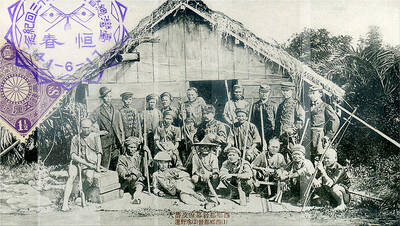
Traditionally, indigenous people in Taiwan’s mountains practice swidden cultivation, or “slash and burn” agriculture, a practice common in human history. According to a 2016 research article in the International Journal of Environmental Sustainability, among the Atayal people, this began with a search for suitable forested slopeland. The trees are burnt for fertilizer and the land cleared of stones. The stones and wood are then piled up to make fences, while both dead and standing trees are retained on the plot. The fences are used to grow climbing crops like squash and beans. The plot itself supports farming for three years.

The breakwater stretches out to sea from the sprawling Kaohsiung port in southern Taiwan. Normally, it’s crowded with massive tankers ferrying liquefied natural gas from Qatar to be stored in the bulbous white tanks that dot the shoreline. These are not normal times, though, and not a single shipment from Qatar has docked at the Yongan terminal since early March after the Strait of Hormuz was shuttered. The suspension has provided a realistic preview of a potential Chinese blockade, a move that would throttle an economy anchored by the world’s most advanced and power-hungry semiconductor industry. It is a stark reminder of

May 4 to May 10 It was once said that if you hadn’t performed at the Sapphire Grand Cabaret (藍寶石大歌廳), you couldn’t truly be considered a star. Taking the stage at the legendary Kaohsiung club was more than just a concert. Performers were expected to entertain in every sense, wearing outlandish or revealing costumes and staying quick on their feet as sharp-tongued, over-the-top hosts asked questions and delivered jokes that would be seen as vulgar, even offensive, by today’s standards. Opening in May 1967 during a period of strict political and social control, Sapphire offered a rare outlet for audiences in


 RSS
RSS