


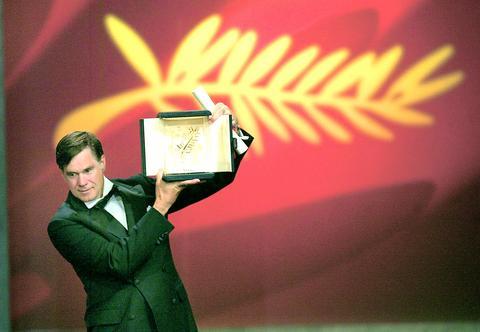
The US film Elephant last night won the Palme d'Or in the biggest turn-up for the books at the Cannes Film Festival for years.
Gus Van Sant also took best director for a film that US critics had described as low-key and far from his best. The director himself said his film was not anti-US. "This is made from the viewpoint of my own life and is not intended to criticize any specific American system."
Todd McCarthy, the influential lead reviewer for Variety magazine, disagreed, attacking the story based on the Columbine school massacre as dull and "at best irresponsible."
Another shock was the jury's dismissal of Lars Von Trier's Dogville, the favorite, which had enraged many US critics for its perceived criticism of their country. Nor was there anything for its star, Nicole Kidman. Instead, best actress went to the Canadian Marie Josee-Croze for Denys Arcand's The Barbarian Invasions, which also won best screenplay.
The 24-year-old Iranian director Samira Makhmalbaf took the jury prize for Five in the Afternoon.
"My film is about an Afghan woman who has no power but wants to be a president one day," she said. "I don't want to be a president if the best known president in the world is George Bush."
The most touching moment was provided by the two prizes taken by the Turkish film Uzak (Distant). Its director, Nuri Bilge Ceylan, took the grand prix and best actor was shared by Muzaffer Ozdemir, who was "too shy" to attend the ceremony, and his co-star the late Emin Toprak, who died in a crash in Turkey a few weeks ago.
Festival organizers are facing a critic's rebellion, with many demanding an overhaul of the selection process. Their fury was further stoked by the selection of five French films, the last of which was Bertrand Blier's Le Cotelette which they booed, describing its story of two self-styled "old farts" lusting after their Algerian cleaner as "odious, stupid and racist ... and a hark back to the bad old days when the French were dumping Algerians in the Seine."
But the most telling blow came from Variety, which published an investigation on the eve of the festival showing that more than 90 per cent of the films chosen in the past decade had some French input.
McCarthy further infuriated the organizers by demolishing Lars Von Trier's Dogville, claiming it advocated the "annihilation" of America.
The aging festival president Gilles Jacob, who McCarthy claimed was overly swayed by a tiny coterie of critics from the French dailies Le Monde and Liberation, shot back that McCarthy had "come to Cannes with a gun." Another official accused American critics of "wiping the shit from their shoes on the festival."
McCarthy hit back yesterday on Sunday, telling The Guardian that Cannes would have to look beyond the group of auteurs championed year after year by Jacob if it was to remain the world's pre-eminent festival.
In a sucker blow, the director Luc Besson, the most powerful producer in France, owned up to what the festival had been denying for the past fortnight -- that "many Americans decided not to come because of the excellent relations we have with that country."
Peter Greenaway, the first of whose Tulse Luper Suitcase trilogy closed the official selection, wondered aloud if Cannes would survive the multi-media age.
After The Baby of Macon and 80 Women, Tulse Luper marks a return to form for the British director, but he may have to have medals struck for diehard fans facing its next two instalments and the DVD tie-ins and academic dissertations he plans. "Hamlet was done in two and a half hours," he declared, "but I have the potential to extend this for thousands of light years."
Meanwhile, Andre Sokurov's homoerotic Father and Son, a minor work compared with his remarkable Russian Ark, which looks like breaking arthouse box office records in Britain, won the international critics' prize, while the Italian family epic The Best of Youth took the top award in the Un Certain Regard section. Prizes also went to the Moroccan and Iranian films, A Thousand Months and Crimson Gold.
But there was joy for Britain, with Roger Michell sharing the top prize in the Director's Fortnight with Norwegian comedy Kitchen Stories, for his film about a grandmother rediscovering her sexual appetite.
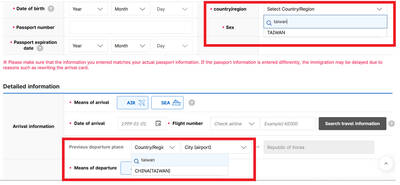
Jason Han says that the e-arrival card spat between South Korea and Taiwan shows that Seoul is signaling adherence to its “one-China” policy, while Taiwan’s response reflects a reciprocal approach. “Attempts to alter the diplomatic status quo often lead to tit-for-tat responses,” the analyst on international affairs tells the Taipei Times, adding that Taiwan may become more cautious in its dealings with South Korea going forward. Taipei has called on Seoul to correct its electronic entry system, which currently lists Taiwan as “China (Taiwan),” warning that reciprocal measures may follow if the wording is not changed before March 31. As of yesterday,

The Portuguese never established a presence on Taiwan, but they must have traded with the indigenous people because later traders reported that the locals referred to parts of deer using Portuguese words. What goods might the Portuguese have offered their indigenous trade partners? Among them must have been slaves, for the Portuguese dealt slaves across Asia. Though we often speak of “Portuguese” ships, imagining them as picturesque vessels manned by pointy-bearded Iberians, in Asia Portuguese shipping between local destinations was crewed by Asian seamen, with a handful of white or Eurasian officers. “Even the great carracks of 1,000-2,000 tons which plied
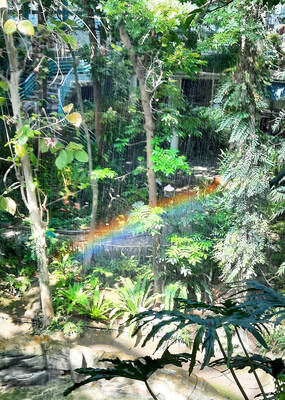
It’s only half the size of its more famous counterpart in Taipei, but the Botanical Garden of the National Museum of Nature Science (NMNS, 國立自然科學博物館植物園) is surely one of urban Taiwan’s most inviting green spaces. Covering 4.5 hectares immediately northeast of the government-run museum in Taichung’s North District (北區), the garden features more than 700 plant species, many of which are labeled in Chinese but not in English. Since its establishment in 1999, the site’s managers have done their best to replicate a number of native ecosystems, dividing the site into eight areas. The name of the Coral Atoll Zone might
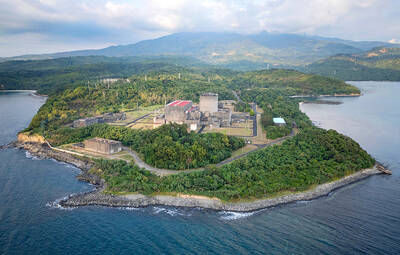
Nuclear power is getting a second look in Southeast Asia as countries prepare to meet surging energy demand as they vie for artificial intelligence-focused data centers. Several Southeast Asian nations are reviving mothballed nuclear plans and setting ambitious targets and nearly half of the region could, if they pursue those goals, have nuclear energy in the 2030s. Even countries without current plans have signaled their interest. Southeast Asia has never produced a single watt of nuclear energy, despite long-held atomic ambitions. But that may soon change as pressure mounts to reduce emissions that contribute to climate change, while meeting growing power needs. The


 RSS
RSS