


Filmmaker Dai Sijie (
He first went to France to learn film making in the 1980s and made three pictures in nine years, struggling all the time to finance them. Which is why he then became an author, writing in French about his boyhood memories in China.
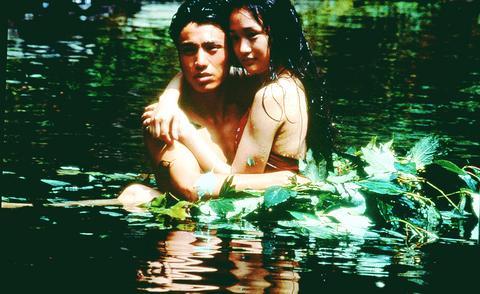
PHOTO: GROUP POWER
The novel was a best-seller, bringing him fame and enough funds to make another film. So, he returned to filmmaking with an adaptation of his own novel.
The result is as pleasing as the book. Balzac and the Little Chinese Seamstress was the opening film of the Un Certain Regard section at last year's Cannes Film Festival. Earlier this year, the film also represented France for Best Foreign Language film at the Golden Globe Awards.
Apt acting and elegant camera work transforms China's natural landscape into a story replete with touching episodes about the experience of two boys in the Cultural Revolution.
Unlike many films set during the Cultural Revolution, which mostly stress pain, trauma and distorted human minds, Balzac takes a different approach. Dai describes the re-education process almost as if it were a sweet memory, despite the hard labor that government doctrines forced him to undergo.
Luo Ming (Chen Kun,
Later, however, their dull and dirty lives are transformed when they meet the Little Seamstress (Zhou Xun,
"I want to change her from an earthy village girl to a sophisticated woman," Luo Ming says. The two of them begin to teach her how to read and introduce her to literature.
The two young men are lousy mine workers but excellent story-tellers. In order to keep his violin (originally perceived to be a bourgeois toy and best thrown away by the village chief), Ma plays a Mozart sonata and convinces the villagers the piece is called "Mozart is always thinking of Chairman Mao."
The pair are asked by the villagers to tell stories about the latest movies shown in town (North Korean and Albanian films only, China's best friends in the 1970s). But instead of repeating tedious propaganda, they suprise with an Alexander Dumas story, "Once upon a time in Albania, there was a man called, the Count of Monte Christo ?."
Then, Luo and Ma steal a case of banned books, including "subversive" novels by Honore de Balzac, Flaubert, Dostoevsky and Gogol. They even find a secret cave where they can read to the Little Seamstress.
It does not take long for a love affair to start, framed by idyllic pastoral scenes of stunning green hills, bubbling streams and romantic caves.
The Little Seamstress may have a simple peasant accent, but she proves bright enough to play at a love triangle involving the two young men masterfully.
Through Balzac, the three discover their passions, ideals and dreams for life. As a result the Little Seamstress decides to get away from a rustic life and a summer of love to go to the city.
Zhou Xun once again shows off her command of the fairy-like, pretty-little-girl role, reprises from Hong Kong Hollywood and Suzhou River. But somehow she's not convincing as a simple village girl.
Liu Ye plays a quieter and more reserved character than he portrayed in Lan Yu. New actor on the block, Chen Kun, is convincing as the confident and out-going character, Luo Ming.
The film has some pretentious and exaggerated parts, but also some touching moments. It is more a nostalgic story about youth than a profound story about the Cultural Revolution and its affect on human minds. But these drawbacks should not prevent you from enjoying a warm and engaging tale.
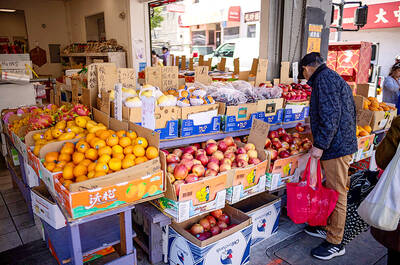
Ajay Verma, a consultant gastroenterologist at Kettering general hospital in Northamptonshire, says our gut is a “complex machine.” “It is constantly providing us with the nutrition we need, initially to grow and develop, and then for us to survive, thrive and repair from injury and illness.” How can we keep it functioning well? Put simply: “Make sure what you put into it is balanced, and that you clear out its waste products adequately,” Verma says. “In a general gastroenterology clinic, the most common conditions we see are irritable bowel syndrome (IBS), gastroesophageal reflux disease, inflammatory bowel disease and constipation,” says Nisha
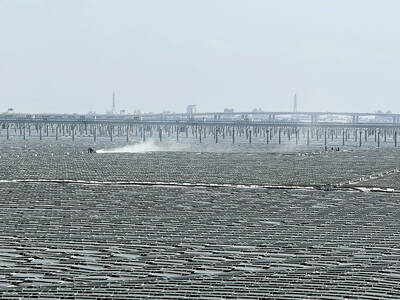
The arithmetic is straightforward and uncomfortable. By the end of 2025, Taiwan had committed itself to a 50-30-20 electricity mix — half natural gas, 30 per cent coal, 20 per cent renewables. The Ministry of Economic Affairs’s (MOEA) own monthly energy reports tell a different story. Natural gas reached 47.8 per cent of generation last year. Coal stood at 35.4 per cent, comfortably above its target ceiling. Renewables came in at 13.1 per cent, well short of the 20 per cent Taipei had pledged a decade earlier. Installed renewable capacity reached roughly half of the 12 gigawatts (GW) the government
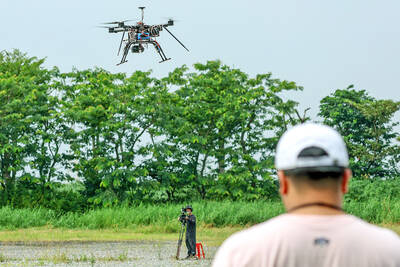
Taiwan’s drone exports are taking off, fuelled by the war in Ukraine, as Taiwanese companies seek a stake in the fast-growing global market for unmanned aerial vehicles (UAV). Low-cost drones used for reconnaissance and strikes are in high demand as governments around the world boost defense spending in the face of intensifying conflicts. A relative new player in the increasingly competitive industry, Taiwan’s pitch is to be an “Asian hub” for the production of UAVs and components free of Chinese materials, or “non-red.” That means its UAVs can be up to three times more expensive than their Chinese competitors, like the world’s biggest
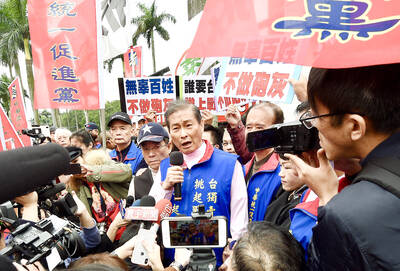
There are shadowy cabals plotting to sell out Taiwan to be annexed by China, by invasion if necessary. Fortunately, they are buffoons. In 2019, former Bamboo Union gangster and founder of the China Unification Promotion Party (CUPP), Chang An-le (張安樂, colorfully known as “White Wolf”), led a protest at the Legislative Yuan against comments made by then-premier Su Tseng-chang (蘇貞昌) that in the event of an attack by China, he would never surrender, but would protect the nation by fighting to the end, even if he only had a broom. Chang had party members bring a wooden casket that they


 RSS
RSS