


Chinese calligraphy is also known as "tzi hua" (
The conventions of calligraphic styles and the traditional didactic emphasis do not apply to Tong's works, where the Chinese characters seem to dance -- almost as if they were performers on a stage. In 1975, choreographer Lin Huai-min (

PHOTO COURTESY OF CKS CULTURAL CENTER
Tong has also written the titles for many of the group's works, which have appeared in Cloud Gate's promotional material. More recently, Tong wrote the name for City Stages (
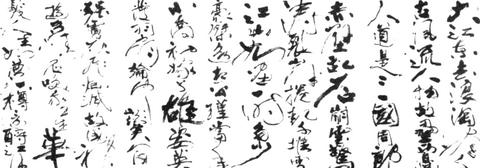
PHOTO COURTESY OF CKS CULTURAL CENTER
Apart from these projects, the calligrapher has held some 50 exhibitions since 1959.
In Tze You Tze Tzai: A dialogue Between Calligraphy and Space (
Tong created the 10 exhibits specifically for these performance venues. Their sculptural quality, both solemn and lithe, make for an interesting interaction with the grand interiors.
The words Tong wrote range from simple phrases like Hsiao Ke(
Tong's selection of short phrases give her much greater freedom of composition, often influenced by Western painting and an emphasis on innovative expression.
Architect Ray Chen (陳瑞憲), who designed the Eslite book store in Taichung and the Shi-Chian University Education Building, also plays an important role in creating the exhibition, having designed panels for Tong to write and arranged the finished work in the venues.
There is a Zen-like quality to some of Tong's interpretations of various classical phrases. This is particularly evident in the work The Largest Object Has Nothing Beyond It (
A dialogue Between Calligraphy and Space is on show at the National Theater and National Concert Hall through April 6.
Taiwan’s English education system is being pulled apart by three opposing forces. Bilingual Nation 2030 pulls students toward English and global communication. Artificial Intelligence (AI) readiness pulls them toward digital judgment, verification and AI-mediated work. But Taiwan’s old exam culture pulls them back toward memorization, grammar drills, timed reading and correct answers. If the education system keeps using old exams to define success, it risks producing graduates who are neither genuinely bilingual nor genuinely AI-ready, but trained for tasks machines can already perform. The first force is Bilingual Nation 2030. Launched in 2018, the policy aimed to “help Taiwan’s workforce connect
“Taiwan’s Opposition Leader Comes to US With a Message Straight Out of Beijing” read a May 31 headline in the Wall Street Journal. Top US administration officials and members of Congress almost certainly read the WSJ, and if there was a bullet point takeaway that people in Washington should absorb ahead of Chinese Nationalist Party (KMT) Chair Cheng Li-wun’s (鄭麗文) arrival in DC on June 9, that headline is it. The last few columns have discussed this very topic, and the timing is not coincidental. While those top officials likely do not read the Taipei Times, judging by the number
With weighty, anxiety-inducing geopolitical topics dominating the headlines, checking in on the wild and weird state of local politics can take some of the edge off. This November’s elections will determine who will be in charge of fixing potholes in your neighborhood, not the potholes in Taiwan’s complicated geopolitical space. Recently, after an online interview with a Taipei-based journalist, I commented that Taipei journalists never go further than the MRT can take them. He laughed and agreed. Naturally, the Taipei mayoral race is eating up much of the press attention. TAIPEI CITY Democratic Progressive Party (DPP) candidate Puma Shen (沈伯洋) has
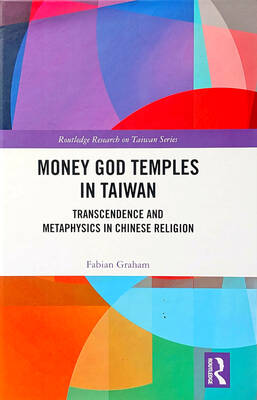
As someone who normally steers clear of books with “transcendence” or “metaphysics” in their subtitles, this reviewer — a casual observer of local belief systems since the 1990s — found Fabian Graham’s Money God Temples in Taiwan a challenging read. Those who’ve only dipped their toes into temple culture will likely need to parse several sections with special care if they’re to keep up with the author, a British ethnographic researcher whose previous books have investigated religious practices among ethnic Chinese in Southeast Asia. This scholarly volume examines a facet of Taiwan’s religious landscape that didn’t exist a century ago, and


 RSS
RSS