


Liquidamber Orientalis is a work as much of scholarship as of performance. It is largely the brainchild of dancer Liu Feng-shueh (劉鳳學), the artistic director of the Neo-Classical Dance Company. Although a pioneer in modern dance, Liu has more recently turned her attention into reviving China's ancient traditions of dance and music. With this current work, Feng brings to the stage four dance and musical works that have lain in the obscurity of mildewy texts for centuries.
This is not a particularly light-hearted night out. Three of the pieces presented are of Tang court music, these slow moving pieces go for a kind of pure aesthetic which might be all very well if you are simply looking at the dances with an eye for picking a companion for the night while sipping on exotic wines. Sitting in the somewhat less relaxed atmosphere off the National Theater, it is more likely to serve as an excellent cure for insomnia unless you want to take the whole exercise rather seriously.
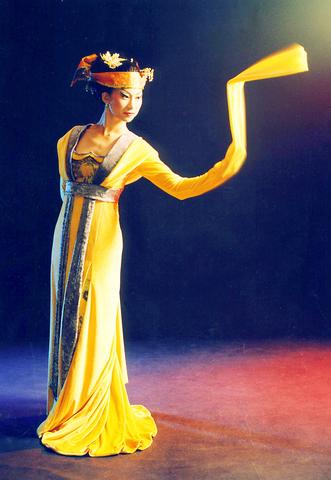
PHOTO COURTESY OF CKS CULTURAL CENTER
And for those who do, Liquidamber Orientalis offers considerable material to ponder upon, especially if you have some knowledge of music. Liu's explanations of the unique features of Tang music show that it already had a very complex structure, with types of harmony and rhythms that are just waiting to be rediscovered.
The Tang dynasty, which ruled China from 618 to 907AD, was one of the cultural high points of Chinese civilization, a period when China's ruling class was open to influences from Central Asia and the Russian steppe, and in which the teachings of Islam, Buddhism, Taoism and Confucianism all competed to influence the thought of Chinese intellectuals. Much of the cultural receptivity was lost after the An Lu-shan rebellion, after which xenophobia took hold of Chinese intellectual life. According to Feng, recreating the music of the Tang is only part of a larger project to more fully understand the society of Tang China, which still is an integral part of what Chinese culture is about today.
This is a rare opportunity to see what Chinese music might have been like one thousand years ago, one that makes very few concessions to modern sensibilities.
Performance Notes:
Grand Piece -- Liquidamber Orientalis: Reconstruction of Tang Music and Dance will be performed by Tang Music and Dance at the National Theater, Taipei at 7:30pm today and tomorrow, and at 2:30pm tomorrow and Sunday. Tickets are NT$300 to NT$1,200
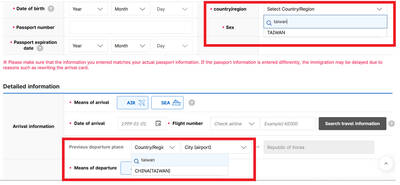
Jason Han says that the e-arrival card spat between South Korea and Taiwan shows that Seoul is signaling adherence to its “one-China” policy, while Taiwan’s response reflects a reciprocal approach. “Attempts to alter the diplomatic status quo often lead to tit-for-tat responses,” the analyst on international affairs tells the Taipei Times, adding that Taiwan may become more cautious in its dealings with South Korea going forward. Taipei has called on Seoul to correct its electronic entry system, which currently lists Taiwan as “China (Taiwan),” warning that reciprocal measures may follow if the wording is not changed before March 31. As of yesterday,

The Portuguese never established a presence on Taiwan, but they must have traded with the indigenous people because later traders reported that the locals referred to parts of deer using Portuguese words. What goods might the Portuguese have offered their indigenous trade partners? Among them must have been slaves, for the Portuguese dealt slaves across Asia. Though we often speak of “Portuguese” ships, imagining them as picturesque vessels manned by pointy-bearded Iberians, in Asia Portuguese shipping between local destinations was crewed by Asian seamen, with a handful of white or Eurasian officers. “Even the great carracks of 1,000-2,000 tons which plied
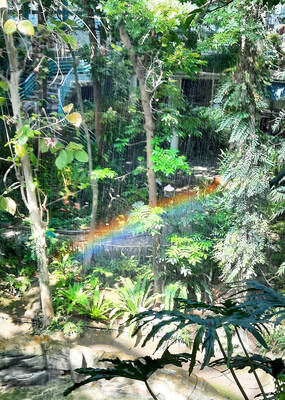
It’s only half the size of its more famous counterpart in Taipei, but the Botanical Garden of the National Museum of Nature Science (NMNS, 國立自然科學博物館植物園) is surely one of urban Taiwan’s most inviting green spaces. Covering 4.5 hectares immediately northeast of the government-run museum in Taichung’s North District (北區), the garden features more than 700 plant species, many of which are labeled in Chinese but not in English. Since its establishment in 1999, the site’s managers have done their best to replicate a number of native ecosystems, dividing the site into eight areas. The name of the Coral Atoll Zone might
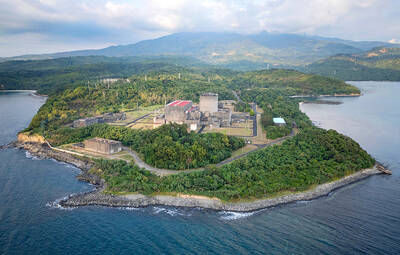
Nuclear power is getting a second look in Southeast Asia as countries prepare to meet surging energy demand as they vie for artificial intelligence-focused data centers. Several Southeast Asian nations are reviving mothballed nuclear plans and setting ambitious targets and nearly half of the region could, if they pursue those goals, have nuclear energy in the 2030s. Even countries without current plans have signaled their interest. Southeast Asia has never produced a single watt of nuclear energy, despite long-held atomic ambitions. But that may soon change as pressure mounts to reduce emissions that contribute to climate change, while meeting growing power needs. The


 RSS
RSS