


While put in doubt earlier this week due to problems surrounding the granting of performance visas, the Taipei leg of Cuba's six-piece a cappella combo, Vocal Sampling's current Asian tour is set to go ahead at Taipei's Sun Yat-sen Memorial Hall this evening without a hitch. Blending a smorgasbord of musical styles such big band, salsa, Afro-Caribbean and traditional Cuban with a cappella into what was once described by Paul Simon as the "most beautiful sound of Cuba," the combo has become one of the Caribbean nation's most important musical assets; and all by sheer chance.
Formed as joke in the early 1990s by a group of students at Havana's National Superior Institute of the Arts, the combo had in fact come to the attention of international record labels long before Ry Cooder re-discovered a 72-year-old crooner by the name of Ibrahim Ferrer in 1996. "We were all students in the early 1990s studying different instruments at the institute and initially got together to sing a cappella as a joke really," explained sextet member Rene Banos. "It was simply a jam session and we certainly never intend to be where we are now."
A joke it may have been, but the combo, comprising of Banos, Jorge Chaviano, Oscar Porro, Abel Sanabria, Reinaldo Sanler and Renato Mora unintentionally went from strength to strength and fast became one of Cuba's most talked about acts.
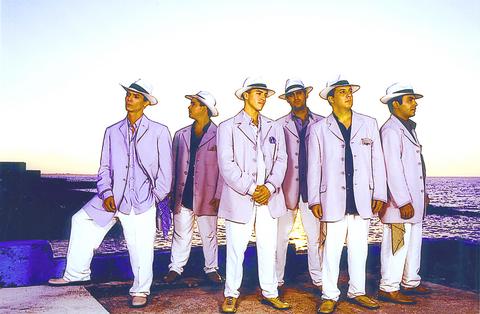
PHOTO COURTESY OF NEW ASPECT
As early as 1992, the sextet had undertaken several successful tours of Europe and been lauded by such icons of the music world as Bobby McFerrin and Peter Gabriel. It was ex-Talking Head David Byrne and his Luaka Bop label, however, that would prove the combo's stepping stone to global success.
The appearance of the group's number, Diablo Al Infierno on an early Luaka Bop compilation set the wheels in motion and the combo were signed by German label BMG in 1995. That same year the band released its debut album, Una Forma Mas, the success of which in the US saw the combo making a historic tour to San Francisco and New York, where it came to the attention of still more musical luminaries who included Paul Simon and Carlos Santana. A year later the group was to create an even bigger storm when it was invited by Quincy Jones to appear at the 30th Montreux Jazz Festival as part of his 50th birthday bash. During the festival the six-man act shared the stage with Phil Collins, Chaka Kahn, David Sandborn as well as Simply Reds' Mick Hucknell.
Since the combo's 1995 debut, Vocal Sampling has released three other albums, the most recent of which, Cambio de Tiempo, is the focal point for the current Asian tour. While much of the material on the a cappella group's previous albums comprised re-workings of other people's tunes, the latest release sees Vocal Sampling's own songwriting and arranging prowess put under the spotlight.
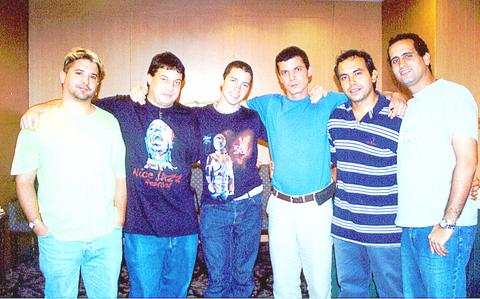
"We all have different musical interests and because of this our repertoire has expanded in recent years," continued Banos. "Writing tunes is a collective endeavor these days. We are six voices who are always open to new and challenging musical concepts."
Although released last year, the album has only recently made it into record stores in Taiwan, where it is at present enjoying a modicum of success with local jazz and Latin aficionados.
In addition to this evening's performance, the group has also agreed to bring its blend of salsa, big band, Afro-Caribbean and traditional Cuban sounds to an impromptu appearance at the Taipei Arts Festival tomorrow afternoon in the plaza adjacent to Taipei's Chungshan Hall.
What: Vocal Sampling: A Cappella Sounds of Cuba
When and Where: Tonight at 7:30pm at Taipei's Sun Yat-sen Memorial Hall (台北國父紀念館). Tomorrow afternoon at 3:30pm in the plaza of Taipei's Chungshan Hall (中山堂)
Tickets: Tickets for this evenings show cost between NT$400 and NT$1,800 and are available from Acer Ticketing Outlets nationwide or direct from the venue. Tomorrow's appearance at the Chungshan Hall is free

Taiwan’s English education system is being pulled apart by three opposing forces. Bilingual Nation 2030 pulls students toward English and global communication. Artificial Intelligence (AI) readiness pulls them toward digital judgment, verification and AI-mediated work. But Taiwan’s old exam culture pulls them back toward memorization, grammar drills, timed reading and correct answers. If the education system keeps using old exams to define success, it risks producing graduates who are neither genuinely bilingual nor genuinely AI-ready, but trained for tasks machines can already perform. The first force is Bilingual Nation 2030. Launched in 2018, the policy aimed to “help Taiwan’s workforce connect
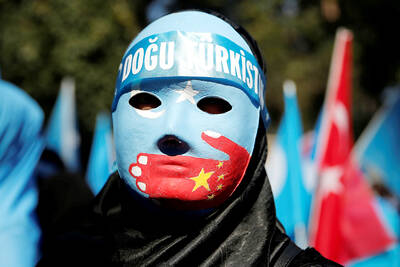
It seems every few days one bumps into one of those “real man” comments in which Taiwan is urged to “face reality” or similar, and “make a deal,” with the speaker implying that soon it will be too late. “Deal” advocates always present themselves as having a superior grip on reality, and the manly ability to make the “hard choice.” Their testosterone-laden language often echoes that of Taiwan sellout advocates. Note that such commentary always specifies a process (“make a deal, work with, make progress”), never the end state of what occupation by a violent authoritarian colonialist state will entail. In

There are shadowy cabals plotting to sell out Taiwan to be annexed by China, by invasion if necessary. Fortunately, they are buffoons. In 2019, former Bamboo Union gangster and founder of the China Unification Promotion Party (CUPP), Chang An-le (張安樂, colorfully known as “White Wolf”), led a protest at the Legislative Yuan against comments made by then-premier Su Tseng-chang (蘇貞昌) that in the event of an attack by China, he would never surrender, but would protect the nation by fighting to the end, even if he only had a broom. Chang had party members bring a wooden casket that they
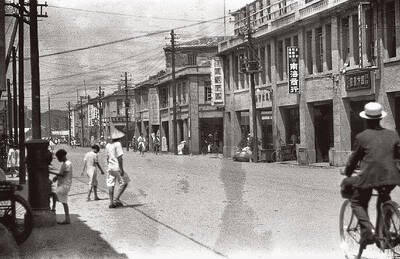
June 1 to June 7 "If all Taiwanese were as afraid of dying as you, then what would happen?” Physician Shih Chiang-nan (施江南) reportedly said this to his wife Chen Chiao-tung (陳焦桐) after she urged him to stop intervening on behalf of Taiwanese soldiers stranded overseas after serving in the Japanese Army during World War II. Shih had clashed with high-ranking officials over the issue, engaged in several heated arguments with Taiwan governor-general Chen Yi (陳儀) and allegedly shouted at general Ko Yuan-fen (柯遠芬), chief of staff of the Taiwan Garrison Command, over


 RSS
RSS