


Chang Tso-chi's (
Though filmed in a realist style, it escapes the heavy-handedness and cliches that infect many films of a similar scope and ambition, and realizes its subject with honesty and vision.
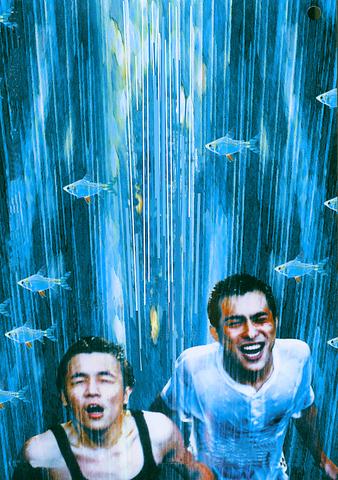
PHOTO COURTESY OF CHANG TSO-CHI FILM STUDIO
Set in a decrepit neighborhood in an anonymous town in Taipei County, The Best of Times failed to make a good impression at the recent film festival in Venice, and the pace of the movie will seem alien to those accustomed to Hollywood blockbusters. Those patient enough to give it a chance, however, will be rewarded. Chang presents a sincere picture of the directionlessness of life for two young men, Wei and Jie.
Nineteen-year-old Wei and Jie are two care-free cousins growing up in a large extended family of mixed (Taiwanese and mainland) origin.
Wei's twin sister suffers from Leukemia and Jie's father, an army veteran from the mainland, rages against the government that has forgotten him, drinking and gambling all day to forget his troubles.
Wei and Jie escape from their troubled family's maelstrom by being careless and by dreaming. Wei practices with his nun-chuks and dreams of becoming a martial arts hero like Bruce Lee. Jie joins a Taoist chanting group and believes that he is becoming a magician.
A horse in the alley outside the window of Wei's dying sister is mistaken for a unicorn, and a drainage ditch that runs next to the family's shabby home is host to an enchanting scene when a flock of white ducks land gracefully in its fetid water.
Like Chang's previous works, sadness pervades throughout the film, as can be seen in the film's cinematography: the lights and shadows of a rainy day, sunsets by the sewer and coral reefs in the sea.
There are few actions scenes in the movie. The action comes when Wei gets promoted from his job as a parking valet at a nightclub. The local mafia boss, Brother Gu, makes him a debt collector and gives the cousins a gun.
The gun, as well as their own carelessness, proves to be Wei and Jie's undoing. After accidentally blowing away Brother Gu, the cousins try to escape to Ilan.
But then Wei becomes ill (it seems he has symptoms similar to his sister's), and the cousins return home to face the death of Wei's sister and the wrath of the angry gangsters.
The acting in The Best of Times is superb. The two young actors Wing Fan (
Fan's good looks might even make him a star one day.
Chang winds the dramatic tension tight throughout the movie, showing again why his movies are compared to fellow Taiwanese director Hou Hsiao-hsien's.
Chang's three previous films are Darkness and Light (1999), Ah-Chung (1996) and Midnight Revenge (1994).
Darkness and Light, about a teenage girl who lives with her blind family in Keelung, won the Tokyo Grand Prix and the Golden Horse awards for editing and best screenplay, as well as the Silver Screen award at the Singapore International Film Festival for best Asian feature film.
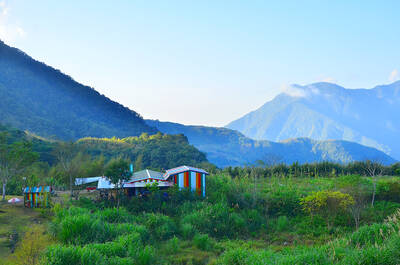
If one asks Taiwanese why house prices are so high or why the nation is so built up or why certain policies cannot be carried out, one common answer is that “Taiwan is too small.” This is actually true, though not in the way people think. The National Property Administration (NPA), responsible for tracking and managing the government’s real estate assets, maintains statistics on how much land the government owns. As of the end of last year, land for official use constituted 293,655 hectares, for public use 1,732,513 hectares, for non-public use 216,972 hectares and for state enterprises 34 hectares, yielding

The small platform at Duoliang Train Station in Taitung County’s Taimali Township (太麻里) served villagers from 1992 to 2006, but was eventually shut down due to lack of use. Just 10 years later, the abandoned train station had become widely known as the most beautiful station in Taiwan, and visitors were so frequent that the village had to start restricting traffic. Nowadays, Duoliang Village (多良) is known as a bit of a tourist trap, with a mandatory, albeit modest, admission fee of NT$10 giving access to a crowded lane of vendors with a mediocre view of the ocean and the trains
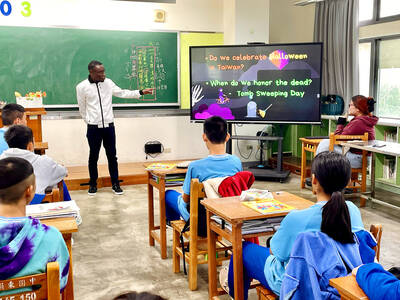
For many people, Bilingual Nation 2030 begins and ends in the classroom. Since the policy was launched in 2018, the debate has centered on students, teachers and the pressure placed on schools. Yet the policy was never solely about English education. The government’s official plan also calls for bilingualization in Taiwan’s government services, laws and regulations, and living environment. The goal is to make Taiwan more inclusive and accessible to international enterprises and talent and better prepared for global economic and trade conditions. After eight years, that grand vision is due for a pulse check. RULES THAT CAN BE READ For Harper Chen (陳虹宇), an adviser
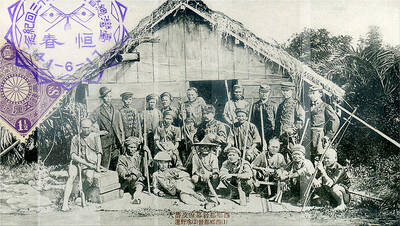
Traditionally, indigenous people in Taiwan’s mountains practice swidden cultivation, or “slash and burn” agriculture, a practice common in human history. According to a 2016 research article in the International Journal of Environmental Sustainability, among the Atayal people, this began with a search for suitable forested slopeland. The trees are burnt for fertilizer and the land cleared of stones. The stones and wood are then piled up to make fences, while both dead and standing trees are retained on the plot. The fences are used to grow climbing crops like squash and beans. The plot itself supports farming for three years.


 RSS
RSS