


Ghost stories have always been popular with Chinese audiences. With the star power of Shu Qi (
Visible Secret II (鬼味人間) puts Abe Kwang, who wrote and produced Visible Secret into the director's chair. His experience as a writer might account for the stronger narrative thread that holds this film together.
While graphically less ostentatious than its forerunner, Visible Secret II, is full of those feelings of paranoia that most of us can probably relate to -- when we wonder if a house or certain circumstances are out to "get you." Kwang has lots of fun playing around with this, creating situations that seem supernatural but have a more banal explanation, at the same time fully admitting the reality of the supernatural's influence on the world around us. He seems to be saying that what looks like the work of ghosts is actually the work of men, while a person who looks perfectly ordinary might actually be a ghost.
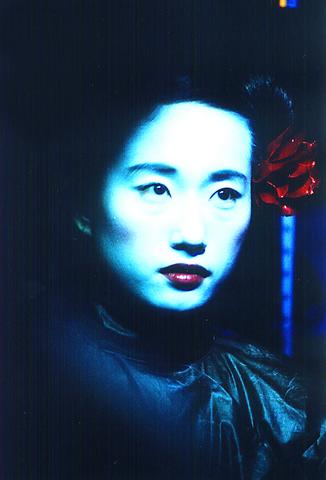
PHOTO COURTESY OF GROUP POWER WORKSHOP
Kwang tells the story of Jack (Eason Chan), who marries Mak Ching (Jo Koo), a woman he discovers he knows very little about but who has selflessly helped him through a difficult period and who "finds" the money to pay for a new apartment after they marry. When Jack gets hit by a car, Mak makes a deal with a spirit at a small shrine she finds in a back alley that she will give her life to the spirit in exchange for his. Jack makes a miraculous recovery, but then the spirit starts demanding her price. Jack becomes suspicious of his wife's past and with his niece, who is both more and less than she seems, starts investigating her. The spirit confuses matters by occasionally possessing Ching Mak in an effort to get her to join her in the spirit world. The intricacies of the plot are difficult to follow, but there is a kind of atmospheric integrity to the work that allows you to accept some pretty stupendous logical leaps.
The idyllic married life between Jack and Mak is well set up, and is the emotional background against which the creepy possessions and mistrust are set. This is the film's main strength. The relationship between the couple and a member of the spirit world has echoes of Rouge(胭脂扣), Stanley Kwan's (關錦鵬) 1987 film, which is still one of the classics of this genre. The vision in Visible Secret is darker, and the world that Kwang sketches, one that exists on the edge of our perceptions claiming its due, provides a gentle tingle of recognition. Jo Koo's performance is also a pleasure to watch, managing the switches between the extremes of domestic bliss to a possessed body with conviction.
Visible Secret II is not about to take the cinema world by storm, but is solid entertainment providing a generous helping of thrills, good acting and creative thinking on the part of the creators. Can you really ask for more?

Taiwan’s English education system is being pulled apart by three opposing forces. Bilingual Nation 2030 pulls students toward English and global communication. Artificial Intelligence (AI) readiness pulls them toward digital judgment, verification and AI-mediated work. But Taiwan’s old exam culture pulls them back toward memorization, grammar drills, timed reading and correct answers. If the education system keeps using old exams to define success, it risks producing graduates who are neither genuinely bilingual nor genuinely AI-ready, but trained for tasks machines can already perform. The first force is Bilingual Nation 2030. Launched in 2018, the policy aimed to “help Taiwan’s workforce connect

“Taiwan’s Opposition Leader Comes to US With a Message Straight Out of Beijing” read a May 31 headline in the Wall Street Journal. Top US administration officials and members of Congress almost certainly read the WSJ, and if there was a bullet point takeaway that people in Washington should absorb ahead of Chinese Nationalist Party (KMT) Chair Cheng Li-wun’s (鄭麗文) arrival in DC on June 9, that headline is it. The last few columns have discussed this very topic, and the timing is not coincidental. While those top officials likely do not read the Taipei Times, judging by the number
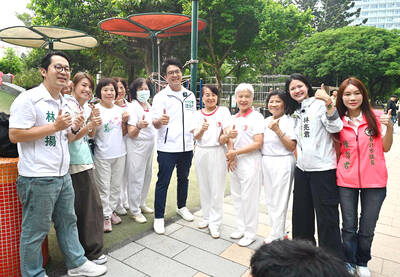
With weighty, anxiety-inducing geopolitical topics dominating the headlines, checking in on the wild and weird state of local politics can take some of the edge off. This November’s elections will determine who will be in charge of fixing potholes in your neighborhood, not the potholes in Taiwan’s complicated geopolitical space. Recently, after an online interview with a Taipei-based journalist, I commented that Taipei journalists never go further than the MRT can take them. He laughed and agreed. Naturally, the Taipei mayoral race is eating up much of the press attention. TAIPEI CITY Democratic Progressive Party (DPP) candidate Puma Shen (沈伯洋) has
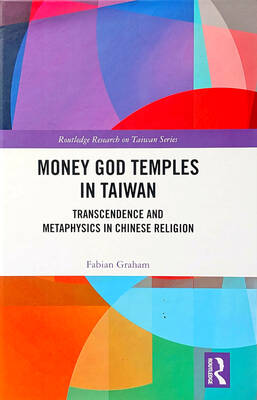
As someone who normally steers clear of books with “transcendence” or “metaphysics” in their subtitles, this reviewer — a casual observer of local belief systems since the 1990s — found Fabian Graham’s Money God Temples in Taiwan a challenging read. Those who’ve only dipped their toes into temple culture will likely need to parse several sections with special care if they’re to keep up with the author, a British ethnographic researcher whose previous books have investigated religious practices among ethnic Chinese in Southeast Asia. This scholarly volume examines a facet of Taiwan’s religious landscape that didn’t exist a century ago, and


 RSS
RSS