


On the evening of July 20 at the Formosa Regent, a 21-year-old office worker from the southern city of Pingtung won the championship in the first Ford Supermodel of the World -- Taiwan, putting her in the media spotlight. In addition to NT$800,000 in prize money, Lin Yi-hsing (
If she wins, Lin will be awarded a US$250,000 contract with Ford Models, which has helped former models such as Sharon Stone and Kim Basinger abtain their star status.
Will Lin join their ranks? Will the entertainment industry's ongoing quest for Asian beauties put her in the world spotlight, following the success of such Asian models as Chinese-Malaysian Ling Tang?

PHOTOS COURTESY OF UNIQUE PREMIER MODELING
Having signed two commercial deals and a modeling contract since winning, Lin has quit her previous job and wasted no time moving to the modeling hub of Taipei. The future has never seemed brighter.
Commenting on her surprise triumph over the many willowy contestants, some as tall as 184cm, Kris Fang (
"The international fashion industry is looking for a kind of face ... a face which, by just looking at it, no one can be sure where the model is from. Is she from mainland China or Taiwan or Singapore? It makes people wonder," Fang said. "She can represent all Asians. It's a face without nationality."

Recognizing the international fashion industry's increasing interest in Asian models, Fang stressed that it was his years of negotiating efforts that brought one of the world's two biggest modeling contests (the other being Elite Models' Model Look of the Year) to Taiwan. His low-key attitude when talking about the biggest modeling contest in the fashion industry comes in part from his realization that a Taiwanese model, however successful domestically, can rarely make it to a catwalk in Paris.
According to Johnson Jiang (
"It would have meant a lot more if the contest was organized by a neutral party and integrated all the agencies in the industry," Jiang said. Having a single model agency host the contest virtually denies access for models of other agencies, according to Jiang, because in Taiwan's modeling agency circles, the concept of "schools" is deep-rooted.
Moreover, other agencies are likely to discourage their models from joining the competition for fear that they may want to switch agents. Helping their models win a contract with an international agency and go to work in Europe or the US is not in local agencies' interests, "because that way they lose their workforce and profit."
"Despite the flaws, it's a nice opportunity for those completely new to the field," Jiang said. "It may give aspiring models the hope of someday becoming a top model on the international stage, but at the same time, it shows them that the chance is one-in-a-million."
Gisiele Wu (
"My true passion is photography," a casually-dressed Wu said. Modeling is a more of a cherishable experience than a profession for Wu, who plans to study design in England after college. However, joining the competition and its preceding training courses was a valuable experience. "The training has given me more confidence both on stage and in life," she said.
Despite being one of the few contestants with some amateur modeling experience, Wu had to go through the training course like everyone else and "hone my skills of walking in high heels. That's the greatest challenge, even for experienced models," Wu said.
After conquering high heels, these young girls had to attend a class for psychological strengthening, where would-be models come to realize what it takes to be successful.
"Many young girls imagine modeling to be all about dressing up and posing. That's wrong. You have to dare to walk naked in front of hundreds of people. You have to grin and bear it when auditioners tell you that you're ugly. You have to be able to stand open criticism and people gossiping behind your back," Fang said.
Even if a model manages to do well in Taiwan, it's tough fighting their way to international fame. If a Giorgio Armani show needs 30 models, nearly 1,000 people from all over the world will apply for the deal, while the auditioners will pick perhaps only one Asian.
Insisting that the quality of Taiwanese models is above the Asian average, Jiang conluded from his eight years of working as an agent that the problem is industrial. "There are things Taiwan doesn't have. ... The popularity of Japanese designers worldwide provides their models with a lot of opportunities, while models from China can stand out as high quality because there is a much larger population there to pick from," he said.
Fang sees the same problem. "Few people in Europe recognize any Taiwanese designer brands. Taiwan is a major manufacturer of textiles in the world, but that is industrial textiles and other inexpensive kinds of cloth. High fashion is not Taiwan's forte. If more Taiwanese designers were staging their shows in New York, more models would perform with them there."
Fang holds out hope for models to work in Japan, Singapore and Hong Kong, because Taiwanese models cost less compared with their counterparts from these countries. "As for Europe, I always tell my models to hope only for the experience, not for a future," he said.
For those who are determined to become one of the world's top models, Fang says that "they have to overcome the language barrier. Studying more and going abroad helps," he said, stressing that intelligence is a plus. "After they have seen more things, they carry themselves differently."
They also need to shake free of their upbringings, especially the dependance resultant from Taiwanese parents' over-protectiveness and excessive attention since childhood. "Remember that when you're in a foreign country there is no mommy around; you'll have to look after yourself," Fang said.
"I have often heard from my models that photograhers try to lure them into bed with deals. It may be cliche but it happens all the time. When you're striving to be a world-famous model, what do you do? Whether in Taiwan or abroad, you have to be smart. It may be easy to get in the business, but it's hard to survive," Fang said. "So when you look at the pretty face of a supermodel, think about the wisdom behind it," he said.
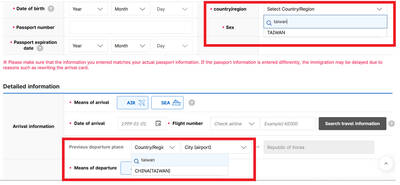
Jason Han says that the e-arrival card spat between South Korea and Taiwan shows that Seoul is signaling adherence to its “one-China” policy, while Taiwan’s response reflects a reciprocal approach. “Attempts to alter the diplomatic status quo often lead to tit-for-tat responses,” the analyst on international affairs tells the Taipei Times, adding that Taiwan may become more cautious in its dealings with South Korea going forward. Taipei has called on Seoul to correct its electronic entry system, which currently lists Taiwan as “China (Taiwan),” warning that reciprocal measures may follow if the wording is not changed before March 31. As of yesterday,

The Portuguese never established a presence on Taiwan, but they must have traded with the indigenous people because later traders reported that the locals referred to parts of deer using Portuguese words. What goods might the Portuguese have offered their indigenous trade partners? Among them must have been slaves, for the Portuguese dealt slaves across Asia. Though we often speak of “Portuguese” ships, imagining them as picturesque vessels manned by pointy-bearded Iberians, in Asia Portuguese shipping between local destinations was crewed by Asian seamen, with a handful of white or Eurasian officers. “Even the great carracks of 1,000-2,000 tons which plied

It’s only half the size of its more famous counterpart in Taipei, but the Botanical Garden of the National Museum of Nature Science (NMNS, 國立自然科學博物館植物園) is surely one of urban Taiwan’s most inviting green spaces. Covering 4.5 hectares immediately northeast of the government-run museum in Taichung’s North District (北區), the garden features more than 700 plant species, many of which are labeled in Chinese but not in English. Since its establishment in 1999, the site’s managers have done their best to replicate a number of native ecosystems, dividing the site into eight areas. The name of the Coral Atoll Zone might
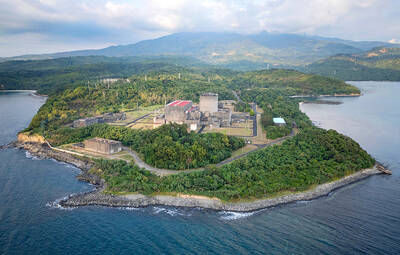
Nuclear power is getting a second look in Southeast Asia as countries prepare to meet surging energy demand as they vie for artificial intelligence-focused data centers. Several Southeast Asian nations are reviving mothballed nuclear plans and setting ambitious targets and nearly half of the region could, if they pursue those goals, have nuclear energy in the 2030s. Even countries without current plans have signaled their interest. Southeast Asia has never produced a single watt of nuclear energy, despite long-held atomic ambitions. But that may soon change as pressure mounts to reduce emissions that contribute to climate change, while meeting growing power needs. The


 RSS
RSS