


As the final note lingers in the cramped smoky bar, the audience is uncertain whether to cheer, cry or laugh. It's like this at most concerts by Aboriginal singers, who tend to mix heart-wrenching blues with tribal celebration anthems, and it's doubly so with Samingad (
But the blues element in the music is the dominant one and the lasting impact is one of dull melancholy. Try as she might to seem joyful, the core of Samingad's music is gray, sad and soulful, which is why it sticks in the mind long after a show.
Samingad is a daughter of the Nanwang (

PHOTO: COURTESY ROCK RECORDS
The Puyuma are inheritors of a proud tradition that reaches back to the beginning of time, at least in the tribe's folklore, to when they lived in the "southern lands" which they were forced to flee due to cataclysmic rains. After floating away from their ancestral home on huge vessels, the tribe washed up on Taiwan's southeastern shores and eventually settled near present-day Taitung, where -- and again here one has to believe the oral tradition -- the tribe led a life of tranquility, peace and equality for centuries. Then came foreign invaders in rapid succession over the past 300 years and the tribe's harmonious lifestyle began to unravel under the stress of modernity.
Much of Samingad's music is an attempt to recapture the spirit, if not the reality, of the Puyuma past through lyrics that evoke the tribe's past or lament its present situation. She also sings of hard times in true delta blues style.
When she was 16, Samingad moved to Taipei to find work, because her family could no longer support her studies. To help make ends meet and send money home, she held down several jobs at once, including one waiting tables at Driftwood (
As luck would have it, she was discovered while filling in for an absent singer and it was only a matter of months before her first album, The Sound of the Sunny Meadow (
The sudden burst of fame and media exposure hasn't changed Samingad much. She has stuck to low-key performances at small venues like Driftwood and Peshawar, the Aboriginal bar off Shihta Road, and collaborations with other Aboriginal singers and bands. She also released a second album last year titled Wild Fire, Spring Wind (
Samingad is not a flashy performer. If she were, she'd be a pop star. This is not to say her concerts are not impressive, though. Her voice is massive, shockingly so for someone of her diminutive size, and her mournful Puyuma-language ballads leave most people floored, which is why at the end no one knows quite how to react.
Samingad performs tomorrow night at Peshawar at 9:30pm. The bar is located at 3, Alley 80, Shihta Rd., Taipei (
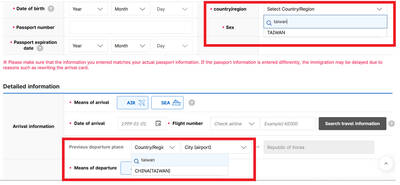
Jason Han says that the e-arrival card spat between South Korea and Taiwan shows that Seoul is signaling adherence to its “one-China” policy, while Taiwan’s response reflects a reciprocal approach. “Attempts to alter the diplomatic status quo often lead to tit-for-tat responses,” the analyst on international affairs tells the Taipei Times, adding that Taiwan may become more cautious in its dealings with South Korea going forward. Taipei has called on Seoul to correct its electronic entry system, which currently lists Taiwan as “China (Taiwan),” warning that reciprocal measures may follow if the wording is not changed before March 31. As of yesterday,

The Portuguese never established a presence on Taiwan, but they must have traded with the indigenous people because later traders reported that the locals referred to parts of deer using Portuguese words. What goods might the Portuguese have offered their indigenous trade partners? Among them must have been slaves, for the Portuguese dealt slaves across Asia. Though we often speak of “Portuguese” ships, imagining them as picturesque vessels manned by pointy-bearded Iberians, in Asia Portuguese shipping between local destinations was crewed by Asian seamen, with a handful of white or Eurasian officers. “Even the great carracks of 1,000-2,000 tons which plied
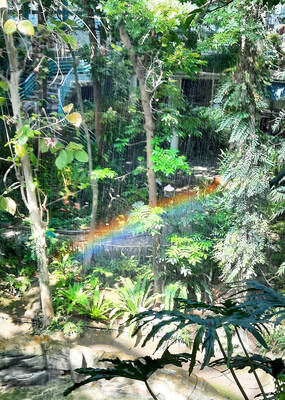
It’s only half the size of its more famous counterpart in Taipei, but the Botanical Garden of the National Museum of Nature Science (NMNS, 國立自然科學博物館植物園) is surely one of urban Taiwan’s most inviting green spaces. Covering 4.5 hectares immediately northeast of the government-run museum in Taichung’s North District (北區), the garden features more than 700 plant species, many of which are labeled in Chinese but not in English. Since its establishment in 1999, the site’s managers have done their best to replicate a number of native ecosystems, dividing the site into eight areas. The name of the Coral Atoll Zone might
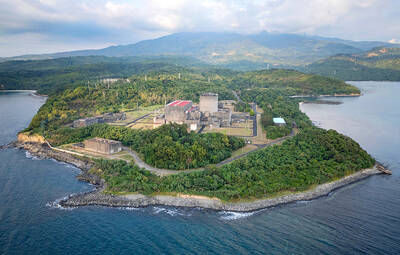
Nuclear power is getting a second look in Southeast Asia as countries prepare to meet surging energy demand as they vie for artificial intelligence-focused data centers. Several Southeast Asian nations are reviving mothballed nuclear plans and setting ambitious targets and nearly half of the region could, if they pursue those goals, have nuclear energy in the 2030s. Even countries without current plans have signaled their interest. Southeast Asia has never produced a single watt of nuclear energy, despite long-held atomic ambitions. But that may soon change as pressure mounts to reduce emissions that contribute to climate change, while meeting growing power needs. The


 RSS
RSS