


Set up to coincide with the opening of the Taipei Fine Arts Museum in 1983, the Tenth International Biennial Print and Drawing Exhibition has played a vital role in promoting the traditional Chinese art form of printmaking as well as exchanges among international print artists.
At the sixth biennial, "drawing" was added to the event's name with the aim of promoting the appreciation of a greater diversity of art forms on paper.
Each biennial includes two parts, one of selected works from an international competition and an accompanying exhibition with print and drawing-related themes.
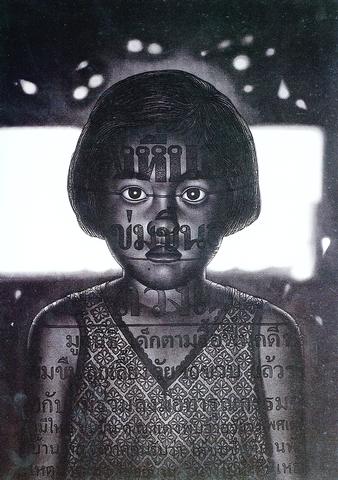
PHOTO COURTESY OF TFAM
This year, to celebrate the biennial's nearly 20-year history, the invitational exhibition is a retrospective of sorts. "Exhibition of Recent Works by Former Award Winners" on TFAM's 1st floor features 77 artists and 117 works. Their evolved skills and concepts, as the exhibits show, make this part of the biennial even more interesting than the winning works of the competition.
Apart from prints and drawings, installations and mixed media works are on show, as there's no limit on which medium the works employ. Neither is there any limit on the surprise viewers will get when encountering in a single gallery the astounding works by former award winners, many of whom have since gained international renown.
Chung You-hui (
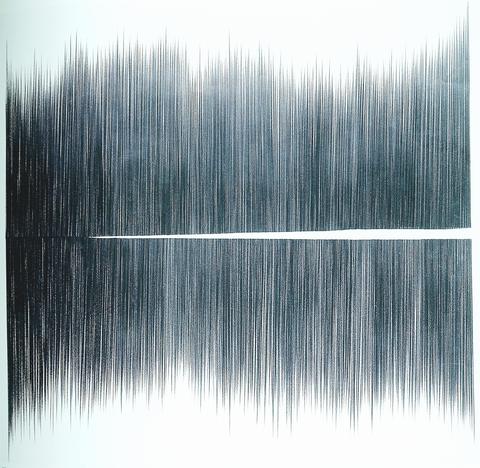
PHOTO COURTESY OF TFAM
Though presented in the cheerful manner of a travel diary, the work was inspired by the Sept. 11 attacks on the World Trade Center in New York. Held over in the US on his trip after the attacks, he passed time watching TV and wondering "did the twin towers really collapse? Is it some special effect like in a Hollywood movie?" Chung told the Taipei Times in a phone interview.
Chung began thinking that "what you see with your eyes at the moment might be false, and what you have always kept in your memory might never have happened," he said. "If the line between the real and the unreal can be thus blurred, why not create the reality that I travelled around the world in my Mini? This can be a way to solve the regret that there are things you cannot take with you when you go somewhere."
Another interesting work is Dawn Chen-ping's (
Under the sink, he placed a head of the devil among stalactites hanging from the underside of the sink. In this way, a small universe is built up in a private space. By using the sink, one not only gives flesh to holy images but water to the devil's land as well.
"In a private space like a restroom, where one is faced only with oneself, there are Heaven, Earth and Hell all in one place," said Dawn. Many visitors to the restrooms at TFAM were disgusted when they found the Devil's head under the sink, while others had great fun matching their face with the printed outline on the mirror.
Turning to the exhibition of winning works on the third floor of TFAM, visitors will be shocked by a big pair of eyes staring out of darkness as they ascend on the elevator. Portrait of a Child -- Social Victim No. 6 is an eye-catching work by Vara Chaiyanitaya from Thailand, winner of the gold medal in the print category. Composed like a portrait used in missing-person notices, the solemn black-and-white image shows a little girl against a dim background, overlapped by shadows of Thai letters.
The girl's sad and helpless stare expresses the silent accusation that give a voice to Vara's stand on Thailand's rampant violence, which, according to Vara, the Thai media luridly portrays with relish. "My objective is to create artistic media that can reflect the pain of the victims. So everyone ... will understand the problems and help make this world a better place," he said.
The work's concern with the social environment is what judges valued most this year. "The really good works not only have to be technically outstanding but socially conscious as well. This year, we placed great value on works that were willing to discuss such issues as environmental protection and cultural expression," said Wang Hsio-hsiung (王秀雄), chairman of the competition's international jury and professor at the Department of Fine Arts at Tunghai University.
Gold-medal winner in the drawing category deals with a much lighter theme. Hills (山丘), by Pan Jen-song (潘仁松) -- whose prints have been exhibited in six previous biennials -- is a delightful work blending abstract and realistic techniques to show the landscape of Yangming mountain, where Pan lives. The idyllic scenery is portrayed with thin pencil and ink strokes in dots and lines. Inspired by nature and childhood memories, the work does not strictly correspond to any actual scenery in Yangming mountain, but "is meant to stimulate the viewers' imagination, so that different viewers see different sceneries in the drawing," Pan said. The occasional use of light yellow gives the landscape rhythm and a pulsing warmth.
"The work stands out with its unique landscape depiction. It shows a freshness and almost tangibly clean air," said Wang.
With the number of international participants of the competition setting a new record this year, viewers can expect to see a selection of works of unprecedentedly high quality. The trend to blend printing and drawing techniques is also evident in many works. Most importantly, the biennial is a chance for the public to experience the tranquility in the works by Japanese artists, the ingenious use of mixed media by American artists and the untamed imagination of other up-and-coming talents.
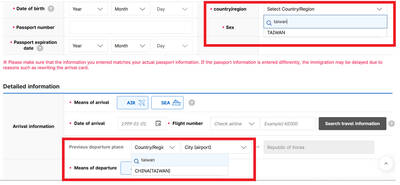
Jason Han says that the e-arrival card spat between South Korea and Taiwan shows that Seoul is signaling adherence to its “one-China” policy, while Taiwan’s response reflects a reciprocal approach. “Attempts to alter the diplomatic status quo often lead to tit-for-tat responses,” the analyst on international affairs tells the Taipei Times, adding that Taiwan may become more cautious in its dealings with South Korea going forward. Taipei has called on Seoul to correct its electronic entry system, which currently lists Taiwan as “China (Taiwan),” warning that reciprocal measures may follow if the wording is not changed before March 31. As of yesterday,
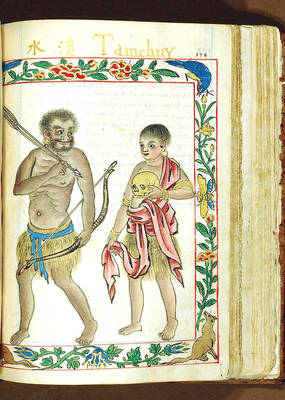
The Portuguese never established a presence on Taiwan, but they must have traded with the indigenous people because later traders reported that the locals referred to parts of deer using Portuguese words. What goods might the Portuguese have offered their indigenous trade partners? Among them must have been slaves, for the Portuguese dealt slaves across Asia. Though we often speak of “Portuguese” ships, imagining them as picturesque vessels manned by pointy-bearded Iberians, in Asia Portuguese shipping between local destinations was crewed by Asian seamen, with a handful of white or Eurasian officers. “Even the great carracks of 1,000-2,000 tons which plied
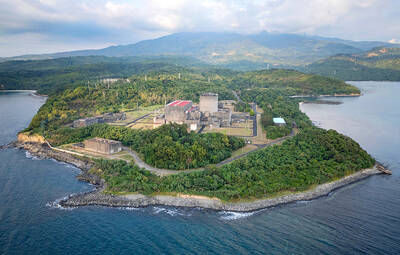
Nuclear power is getting a second look in Southeast Asia as countries prepare to meet surging energy demand as they vie for artificial intelligence-focused data centers. Several Southeast Asian nations are reviving mothballed nuclear plans and setting ambitious targets and nearly half of the region could, if they pursue those goals, have nuclear energy in the 2030s. Even countries without current plans have signaled their interest. Southeast Asia has never produced a single watt of nuclear energy, despite long-held atomic ambitions. But that may soon change as pressure mounts to reduce emissions that contribute to climate change, while meeting growing power needs. The
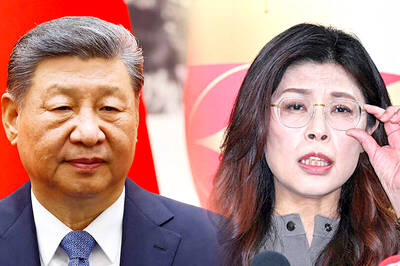
On Monday morning, in quick succession, the Chinese Communist Party (CCP) and the Chinese Nationalist Party (KMT) released statements announcing “that the Central Committee of the Communist Party of China and General Secretary Xi Jinping (習近平) have invited KMT Chairwoman Cheng Li-wun (鄭麗文) to lead a delegation on a visit to the mainland” as the KMT’s press release worded it. The KMT’s press release added “Chairwoman Cheng expressed her gratitude for the invitation and has gladly accepted it.” Beijing’s official Xinhua news release described Song Tao (宋濤), head of the Taiwan Work Office of the CCP Central Committee, as


 RSS
RSS