


When punk rocks started back in England in the late 1970s, it was all about disaffected youth, the decline of the nuclear family and other volatile societal trends. Now Taiwan, after decades of economic miracles, infrastructure development and WTO lobbying, is finally going through the same phase.
The hotbed of the local punk movement is Taichung, home of a club or a gang or just a group of kids called the Feirenbang (廢人幫), which could be roughly translated as "Wasted youth", though they, using perfect English vernacular, prefer to call themselves something that's unprintable in this newspaper.
A movement unto itself, the Feirenbang has produced a bunch of bands. Some are good and some suck, but they all have a kind of raw punk rock energy that just doesn't seem care about much. Tonight at 9pm at Zeitgeist, what's probably the purest punk group or the lot, Reproduction (複製人), will play with two other bands, Bacteriophage (噬菌體) and Wang Fu (旺福).
Reproduction's most prominent figure is the guitarist, a 17-year-old dropout named Hsiao-hsin (小鑫) who could be considered Taiwan's closest thing to Darby Crash. He's young, has ridiculous haircuts and really believes in punk rock. Fortunately, his happy-go-lucky attitude and a relative dearth of hard drugs on the island mean he'll probably live past 20.
Zeitgeist is located in the basement at 122 Chunghsiao E. Rd., Sec. 2, Admission is NT$250.
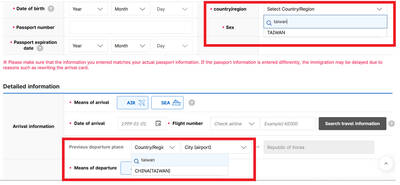
Jason Han says that the e-arrival card spat between South Korea and Taiwan shows that Seoul is signaling adherence to its “one-China” policy, while Taiwan’s response reflects a reciprocal approach. “Attempts to alter the diplomatic status quo often lead to tit-for-tat responses,” the analyst on international affairs tells the Taipei Times, adding that Taiwan may become more cautious in its dealings with South Korea going forward. Taipei has called on Seoul to correct its electronic entry system, which currently lists Taiwan as “China (Taiwan),” warning that reciprocal measures may follow if the wording is not changed before March 31. As of yesterday,
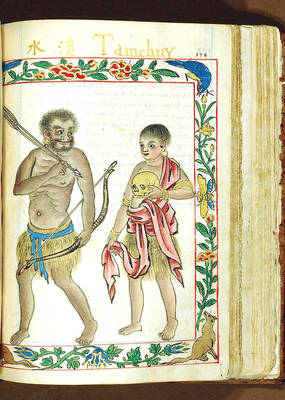
The Portuguese never established a presence on Taiwan, but they must have traded with the indigenous people because later traders reported that the locals referred to parts of deer using Portuguese words. What goods might the Portuguese have offered their indigenous trade partners? Among them must have been slaves, for the Portuguese dealt slaves across Asia. Though we often speak of “Portuguese” ships, imagining them as picturesque vessels manned by pointy-bearded Iberians, in Asia Portuguese shipping between local destinations was crewed by Asian seamen, with a handful of white or Eurasian officers. “Even the great carracks of 1,000-2,000 tons which plied
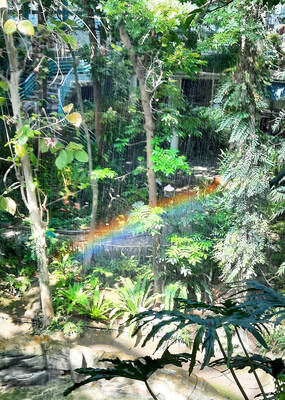
It’s only half the size of its more famous counterpart in Taipei, but the Botanical Garden of the National Museum of Nature Science (NMNS, 國立自然科學博物館植物園) is surely one of urban Taiwan’s most inviting green spaces. Covering 4.5 hectares immediately northeast of the government-run museum in Taichung’s North District (北區), the garden features more than 700 plant species, many of which are labeled in Chinese but not in English. Since its establishment in 1999, the site’s managers have done their best to replicate a number of native ecosystems, dividing the site into eight areas. The name of the Coral Atoll Zone might
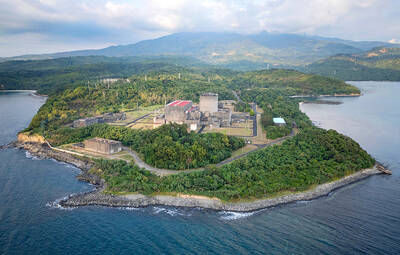
Nuclear power is getting a second look in Southeast Asia as countries prepare to meet surging energy demand as they vie for artificial intelligence-focused data centers. Several Southeast Asian nations are reviving mothballed nuclear plans and setting ambitious targets and nearly half of the region could, if they pursue those goals, have nuclear energy in the 2030s. Even countries without current plans have signaled their interest. Southeast Asia has never produced a single watt of nuclear energy, despite long-held atomic ambitions. But that may soon change as pressure mounts to reduce emissions that contribute to climate change, while meeting growing power needs. The


 RSS
RSS