


The cream of the crop from among Taiwan's cyber-nerds duked it out yesterday in the final rounds of the country's preliminaries for the First World Cyber Games (WCG).
The WCG, which will be held in Seoul between Dec. 5 and Dec. 9, is billed as the computer game equivalent of the Olympics. Organizers, Samsung, Microsoft, Intel and Sony have dubbed the competition "e-sport," and plan to change the event's name to Cyber Olympics by 2003.
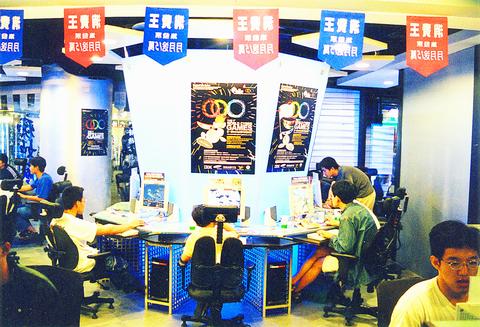
PHOTO COURTESY OF AZTEC
In Taiwan, the WCG preliminaries were organized by cyber-cafe chain Aztec and took place over the past three weekends at locations in Taipei and Taichung. The final rounds whittled down the number of competitors to the top players or team in the four games in which Taiwan will compete -- Quake III, StarCraft, Age of Empires and Counterstrike. The WCG also features competition in FIFA 2000 and Unreal Tournament, but Taiwan is not joining those events, apparently because of lack of interest in those games.
The top three competitors in Quake III, StarCraft and Age of Empires and the top five-member team in Counterstrike will enjoy an all-expenses paid trip to Seoul courtesy of Aztec to represent Taiwan at the WCG, although they will do so under the name Chinese Taipei.
WCG competition does not divide the sexes, but nevertheless, the games are almost exclusively the domain of males in their teens and 20s. In total, 1,200 players competed in the preliminaries, and among them, only 10 were women. At the sprawling flagship Aztec store in the Asia World building across from the Taipei Railway Station the competitors faced off in pitched battles in their respective events. Playing under strict rules to avoid cheating and tampering with the computers, judges observe each player's screen and issue warnings and penalties to players who slammed down their mouses, hit their keyboards in frustration or cursed at the screen.
Players also wear earphones and smoking is prohibited, which makes the competition site distinctly unlike the typical smoky, loud cyber-cafe. Some teams and players have coaches, who pull the competitors aside at regular breaks in the competition to offer advice on strategy or soothe frayed nerves.
Counterstrike was the most popular event and, according to Chen Hsiu-fen (
Jackal Lee (
Until their departure for Seoul, the 14 winners of the Taiwan preliminaries will undergo rigorous training at camps in Taipei and Taichung starting next Tuesday. The teams will train in their respective categories for five days and will then embark on a two-week tour of Taiwan starting Nov. 11 to take on challengers at Aztec branches.
Once in Seoul, the teams will be in competition with 500 players from 37 countries, among which the powerhouse is unquestionably Korea, where gaming is now a well-paid professional activity. Players will be competing for US$300,000 in total prize money. Aztec has also promised NT$2 million to divide among the players in Taiwan's representative group who place in the top three in any event.
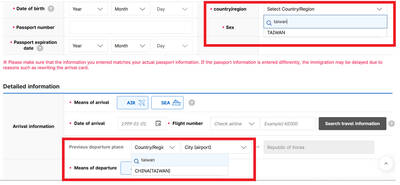
Jason Han says that the e-arrival card spat between South Korea and Taiwan shows that Seoul is signaling adherence to its “one-China” policy, while Taiwan’s response reflects a reciprocal approach. “Attempts to alter the diplomatic status quo often lead to tit-for-tat responses,” the analyst on international affairs tells the Taipei Times, adding that Taiwan may become more cautious in its dealings with South Korea going forward. Taipei has called on Seoul to correct its electronic entry system, which currently lists Taiwan as “China (Taiwan),” warning that reciprocal measures may follow if the wording is not changed before March 31. As of yesterday,
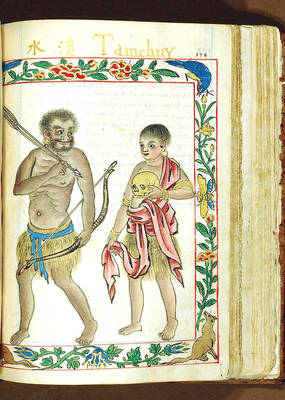
The Portuguese never established a presence on Taiwan, but they must have traded with the indigenous people because later traders reported that the locals referred to parts of deer using Portuguese words. What goods might the Portuguese have offered their indigenous trade partners? Among them must have been slaves, for the Portuguese dealt slaves across Asia. Though we often speak of “Portuguese” ships, imagining them as picturesque vessels manned by pointy-bearded Iberians, in Asia Portuguese shipping between local destinations was crewed by Asian seamen, with a handful of white or Eurasian officers. “Even the great carracks of 1,000-2,000 tons which plied
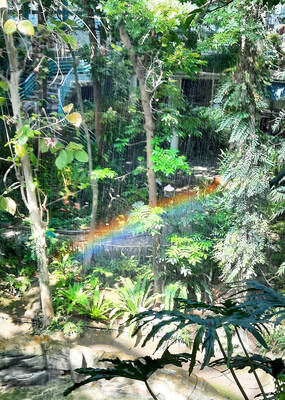
It’s only half the size of its more famous counterpart in Taipei, but the Botanical Garden of the National Museum of Nature Science (NMNS, 國立自然科學博物館植物園) is surely one of urban Taiwan’s most inviting green spaces. Covering 4.5 hectares immediately northeast of the government-run museum in Taichung’s North District (北區), the garden features more than 700 plant species, many of which are labeled in Chinese but not in English. Since its establishment in 1999, the site’s managers have done their best to replicate a number of native ecosystems, dividing the site into eight areas. The name of the Coral Atoll Zone might
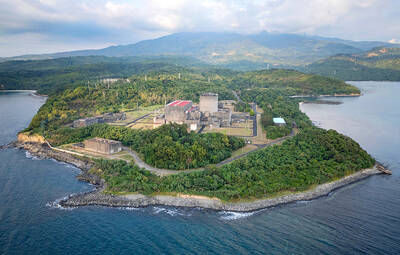
Nuclear power is getting a second look in Southeast Asia as countries prepare to meet surging energy demand as they vie for artificial intelligence-focused data centers. Several Southeast Asian nations are reviving mothballed nuclear plans and setting ambitious targets and nearly half of the region could, if they pursue those goals, have nuclear energy in the 2030s. Even countries without current plans have signaled their interest. Southeast Asia has never produced a single watt of nuclear energy, despite long-held atomic ambitions. But that may soon change as pressure mounts to reduce emissions that contribute to climate change, while meeting growing power needs. The


 RSS
RSS