


The Second Miaoli International Mask Festival (第二屆苗栗國際假面藝術節), which opened Saturday, is presenting one of the most comprehensive exhibitions of Asian masks ever held in Taiwan. The event, which runs until April 29, will also incorporate an array of folk music and dance performances associated with the use of masks.
The exhibition and performances are sponsored by the Miaoli County Culture Bureau (
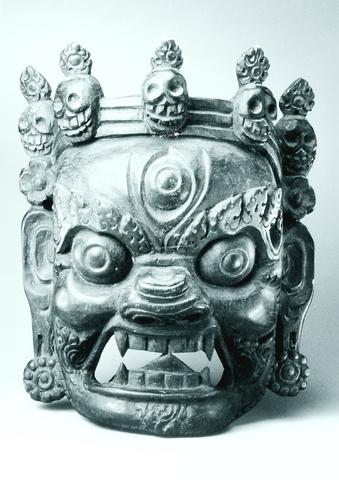
PHOTO COURTESY OF ACEF
The current exhibition, which focuses on Asia, contains 403 masks, many of them over a century old. Highlights of the exhibition are two sacrificial masks from Java which date back 1,000 years, one of which is made of gold, the other of bronze. Securing these objects' shipment to Taiwan for the show was perhaps the event's biggest coup. "Insurance made up a large part of the expenses for this show," said Chou.
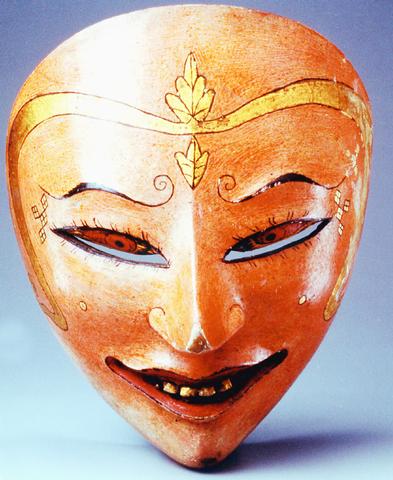
PHOTO COURTESY OF ACEF
The mask exhibition takes the form of an installation art display and aims to cover the two main traditions of mask art in Asia, Chinese and Indian. Chou said said viewers will be able to see the frequent overlap of the traditions,especially visible in the mask art of regions like Tibet. Featured masks originate from Mongolia, Tibet, China, Japan, Taiwan, Thailand, India, Nepal and Sri Lanka.
The Miaoli Mask Festival was initiated in 1999 during the preparation for the construction of the Sanyi Museum of Wood Sculpture (三義木雕博物館), when cultural administrators happened upon the strong vein of mask art that exists within Miaoli's wood carving tradition.
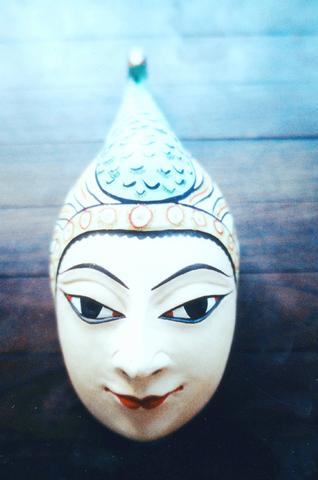
PHOTO COURTESY OF ACEF
The subtitle of the show "Masks, a Banquet for the Soul" (假面的藝術,心靈的饗宴) is intended to emphasize the important role that masks play in expressing religious aspirations and the importance of masks in traditional culture.
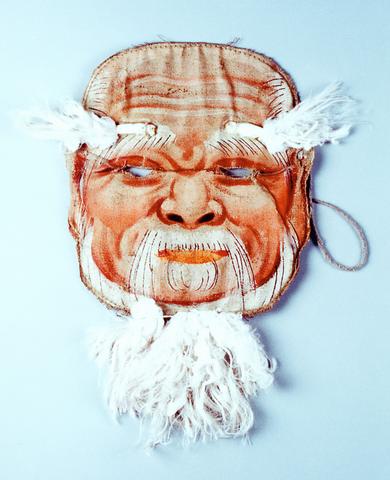
PHOTO COURTESY OF ACEF
Although masks are not commonly used in Chinese ritual or performance, Hakka (客家) culture, which is strongly represented in Miaoli, uses masks in funeral rites, which explains the choice of Miaoli for the event.
Hakka masks will be on display, as will another form of Chinese masks, called "Nuo" (儺面), which date back to the Tang dynasty (618-907) and are currently only used in China's relatively isolated Guizhou (貴州) and Jiangxi (
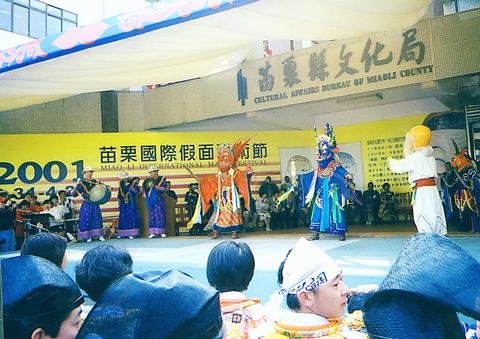
PHOTO: TIFFANY FENG, TAIPEI TIMES
One of the most dynamic elements of the festival will be performances by troupes from all over the world. These will be held in many different locations around Miaoli and most, with the exception of those by higher-profile dance groups, will be free.
Organizers say the event is a rare opportunity to learn about the rich heritage and multiple religious and cultural usages of masks. "By wearing a mask I represent a ghost. In the northeast of Thailand, the masked performers scare away evil spirits that lurk in the wilderness," said one ghost performer of the Nongkhai Dramatic Art Club (農凱戲劇藝術團) from Thailand.
Members of Mongol National Ethnic Dance Group (蒙古國家民族歌舞團) said that their masks were representations of Buddha, and their performance was intended to subdue demons and enhance people's faith in Buddhism.
Fu Hsueh-peng (傅學鵬), Miaoli County commissioner, said he hoped the arts festival would become a regular event to show off Miaoli's culture and give Miaoli residents a chance to learn more about the cultures of other nations.
What: The Second Miaoli International Mask Festival (
When: April 1 to April 29, 9am to 9pm
Where: Miaoli County Culture Bureau (
Ticket: Exhibition NT$100; Performances, free or NT$100 to NT$500
For more information call (037) 352-961 ext. 611-614 or check out the festival Web site at http://www.mask.org.tw.
If one asks Taiwanese why house prices are so high or why the nation is so built up or why certain policies cannot be carried out, one common answer is that “Taiwan is too small.” This is actually true, though not in the way people think. The National Property Administration (NPA), responsible for tracking and managing the government’s real estate assets, maintains statistics on how much land the government owns. As of the end of last year, land for official use constituted 293,655 hectares, for public use 1,732,513 hectares, for non-public use 216,972 hectares and for state enterprises 34 hectares, yielding

The small platform at Duoliang Train Station in Taitung County’s Taimali Township (太麻里) served villagers from 1992 to 2006, but was eventually shut down due to lack of use. Just 10 years later, the abandoned train station had become widely known as the most beautiful station in Taiwan, and visitors were so frequent that the village had to start restricting traffic. Nowadays, Duoliang Village (多良) is known as a bit of a tourist trap, with a mandatory, albeit modest, admission fee of NT$10 giving access to a crowded lane of vendors with a mediocre view of the ocean and the trains
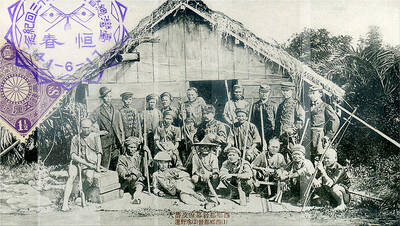
Traditionally, indigenous people in Taiwan’s mountains practice swidden cultivation, or “slash and burn” agriculture, a practice common in human history. According to a 2016 research article in the International Journal of Environmental Sustainability, among the Atayal people, this began with a search for suitable forested slopeland. The trees are burnt for fertilizer and the land cleared of stones. The stones and wood are then piled up to make fences, while both dead and standing trees are retained on the plot. The fences are used to grow climbing crops like squash and beans. The plot itself supports farming for three years.
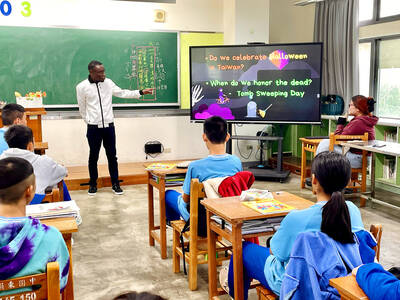
For many people, Bilingual Nation 2030 begins and ends in the classroom. Since the policy was launched in 2018, the debate has centered on students, teachers and the pressure placed on schools. Yet the policy was never solely about English education. The government’s official plan also calls for bilingualization in Taiwan’s government services, laws and regulations, and living environment. The goal is to make Taiwan more inclusive and accessible to international enterprises and talent and better prepared for global economic and trade conditions. After eight years, that grand vision is due for a pulse check. RULES THAT CAN BE READ For Harper Chen (陳虹宇), an adviser


 RSS
RSS