


Last night's glittering 37th Golden Horse Awards was filled with its usual share of upsets and surprises. Ang Lee's Crouching Tiger, Hidden Dragon picked up the important best film award, leaving sentimental favorite In the Mood for Love left to ponder what might have been.
But it was the announcements that low-budget shoot'em up -- The Mission -- had won best director and best leading actor that surprised most, pipping the favorites Crouching Tiger and In the Mood.
One winner that came as no surprise was Maggie Cheung's gong for Best Leading Actress -- her fourth.
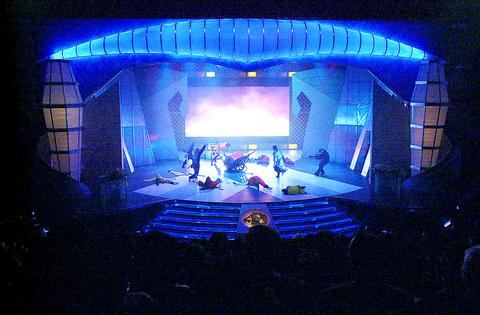
PHOTO: TAI LI-AN, TAIPEI TIMES
Ever the gracious winner, she said it was a pity that Michelle Yoeh had failed to take the award, commenting that people had failed to notice her fine acting.
Crouching Tiger won a total of six awards, though most of them in minor technical sections.
Ang Lee, though disappointed he would missed out on best director was comforted by news that Crouching Tiger will represent Taiwan in the best foreign picture category in the upcoming Oscars.
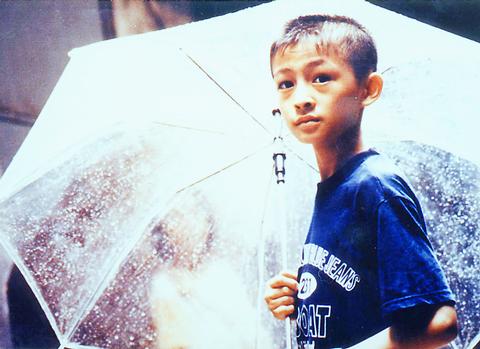
PHOTO: COURTESY OF NEW ACTION ENTERTAINMENT CO., LTD.
Speaking about his picture when presenting the awards for Best Leading Actor, Lee said that his film was the fulfillment of a boyhood dream.
"Everyone has a dragon inside them," he said. "Everyone must pursue it."
This was perhaps exactly want brought To Kei-fung his best director award. The Mission was a very low budget feature, even by Hong Kong standards, but he said that without the financial pressures he "didn't have to compromise" in making the film he wanted -- in this case, a highly visual action drama with minimal dialogue. Francis Ng, a virtual unknown in cinema, knocked out the much touted Tony Leung for Best Actor.
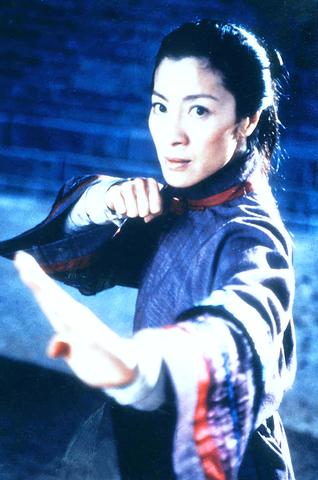
PHOTO: COURTESY OF BUENA VISTA FILM CO., LTD.
In fact, Wang Ka-wei's In The Mood For Love won only three awards from nine nominations.
The Cabbie -- the only fully film produced in Taiwan -- was pushed out by the greater attention given to Lament of Sand River, which picked up both the Best Supporting Actress Award and Best Art Direction, to make a particularly fine showing for a virtual unknown.
Chang Chih-yung, the director of Lament was also awarded the Jury Special Prize, a category restricted to locally produced films. After accepting the award, he said he was not particularly pleased, as the award was not part of the open competition.
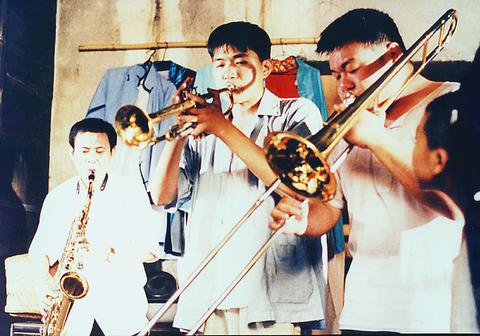
PHOTO: COURTESY OF CENTRAL MOTION PICTURE CORPORATION
"It is no more than a consolation prize," he said.
He thought that it would be preferable to have a new category such as "best new director" open to all films.
Another critical note was sounded by director Hsin Chih, who received the lifetime achievement award for his contribution to Taiwan cinema. Hsin was a seminal figure in Taiwan-language cinema and has made over 90 films. During his acceptance speech, he argued that arts grants are not the way to go about building a film industry, saying that it leads to the production of more self-indulgent works.
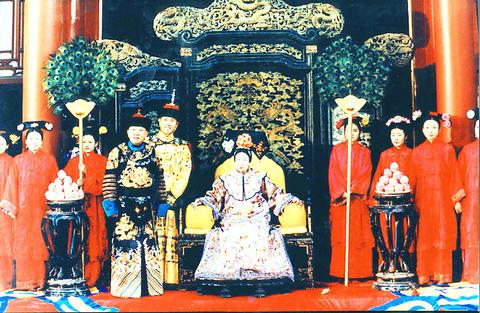
PHOTO: COURTESY OF CENTRAL MOTION PICTURE CORPORATION
It was not surprising that The Cabbie took the Jury Grand Prize, another award restricted to locally produced films, but in the light of Chang's comments in reference to his jury prize, it seemed a little bit of an anti-climax.
In a moving acceptance ceremony, the second lifetime achievement award was given to 86-year-old Cheng Chian-chou, a film promoter who help bring Taiwan film out from under the yoke of Japanese control.
The success of Crouching Tiger heralded in a new era for the awards in which outsiders had an extremely high level of representation for what is still a very Chinese oriented event.
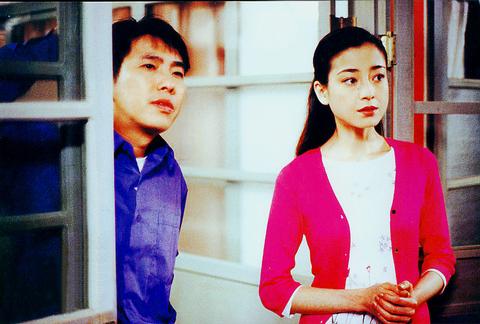
PHOTO: COURTESY OF CENTRAL MOTION PICTURE CORPORATION
Tim Squyres, a long-time Ang Lee associate, brought in the award for Best Film Editing for Crouching Tiger.
After accepting the award, he said that Lee's job on the movie was to see that the film worked in terms of Chinese culture, and his was to see that it could have a high level of understanding among Western audiences. Rob Hodgson, whose other credits include the effects for Matrix, won Best Visual Effects, and Eugene Gearty, who has been with Lee since The Ice Storm added to the haul in the technical category for best sound effects. He said that he was very impressed with the quality of the films at the Golden Horse, and with such international participation in these films, even suggested that the Golden Horse Awards be broadcast in the US.
That Christopher Doyle took Best Cinematography for In The Mood came as a surprise to no one, but the presence of a figure who has make a name for himself within the Chinese film establishment again highlighted the internationalization of the Chinese-language film sector.
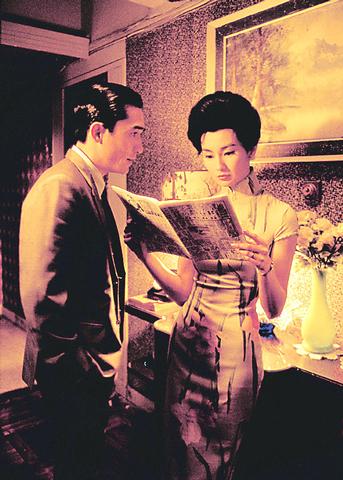
PHOTO: COURTESY OF MATA ENTERTAINMENT CO. LTD.
The nominations encompassed film works from all over the Chinese speaking world and the variety of accents on stage was a great affirmation of the diversity show in the films. Cheung Ka-nin in The Cabbie was an interesting selection for Best Supporting Actor for this quintessentially Taiwanese film. As a Cantonese and a former stunt crew member with Jackie Chan, he said his prize was largely for his accomplishment in playing a role in which he spoke in a Taiwanese dialect.
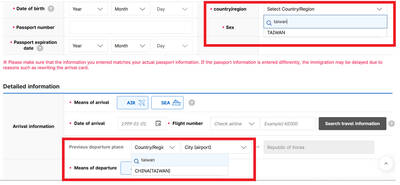
Jason Han says that the e-arrival card spat between South Korea and Taiwan shows that Seoul is signaling adherence to its “one-China” policy, while Taiwan’s response reflects a reciprocal approach. “Attempts to alter the diplomatic status quo often lead to tit-for-tat responses,” the analyst on international affairs tells the Taipei Times, adding that Taiwan may become more cautious in its dealings with South Korea going forward. Taipei has called on Seoul to correct its electronic entry system, which currently lists Taiwan as “China (Taiwan),” warning that reciprocal measures may follow if the wording is not changed before March 31. As of yesterday,
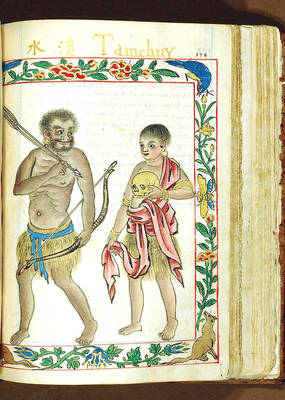
The Portuguese never established a presence on Taiwan, but they must have traded with the indigenous people because later traders reported that the locals referred to parts of deer using Portuguese words. What goods might the Portuguese have offered their indigenous trade partners? Among them must have been slaves, for the Portuguese dealt slaves across Asia. Though we often speak of “Portuguese” ships, imagining them as picturesque vessels manned by pointy-bearded Iberians, in Asia Portuguese shipping between local destinations was crewed by Asian seamen, with a handful of white or Eurasian officers. “Even the great carracks of 1,000-2,000 tons which plied
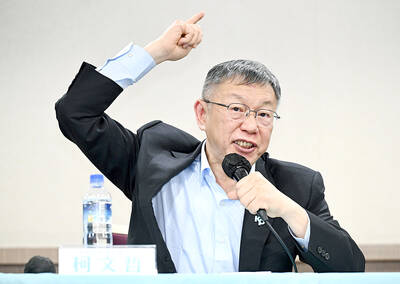
On Thursday, former Taipei mayor and founder of the Taiwan People’s Party (TPP) Ko Wen-je (柯文哲) was sentenced to 17 years in prison and had his civil rights suspended for six years over corruption, embezzlement and other charges. Seven others related to the case were also handed prison sentences, while two were found not guilty. It has been a bad week for the TPP. On Tuesday, prosecutors charged Chinese immigrant Xu Chunying (徐春鶯) with suspicion of taking part in Beijing-directed election interference. Xu has strong links to the TPP, which once offered her a party list legislator nomination. Tuesday also
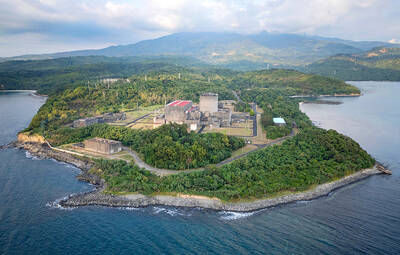
Nuclear power is getting a second look in Southeast Asia as countries prepare to meet surging energy demand as they vie for artificial intelligence-focused data centers. Several Southeast Asian nations are reviving mothballed nuclear plans and setting ambitious targets and nearly half of the region could, if they pursue those goals, have nuclear energy in the 2030s. Even countries without current plans have signaled their interest. Southeast Asia has never produced a single watt of nuclear energy, despite long-held atomic ambitions. But that may soon change as pressure mounts to reduce emissions that contribute to climate change, while meeting growing power needs. The


 RSS
RSS