


Crouching Tiger, Hidden Dragon (
Ang Lee's seventh picture, but his first venture into the martial arts genre. Though this epic tale of courage, deceit and destiny is centered on the intertwined lives of two women, Lee intends to introduce to the world the spirit of the hsia and the world of martial arts.
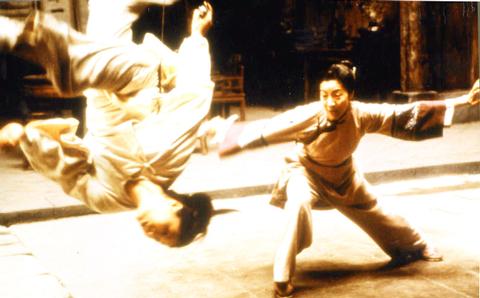
PHOTO: COURTESY OF BUENA VISTA FILM CO., LTD.
Yu Shu-lien (Michelle Yeoh,

PHOTO: COURTESY OF BUENA VISTA FILM CO., LTD.
But Yu is also wary of Jen, suspecting her of being the thief of the Sword of Green Destiny, which belongs to Yu's beloved, the warrior Li Mu-bai (Chow Yun-Fat,
The search for the sword is fleshed out with other narrative lines, including an exotic romance between Jen and a bandit leader Lo, who kidnapped her during a journey across the Gobi desert and a tale of revenge between Li and Jen's governess, the notorious Jade Fox. Yu and Jen are ultimately destined to face one another in the fiercest showdown of their lives, one that leads all three main characters ineluctably to a tragic end.

PHOTO: COURTESY OF BUENA VISTA FILM CO., LTD.
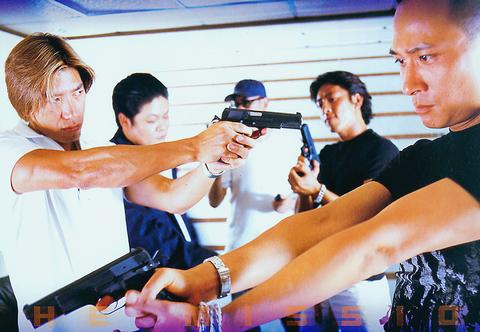
PHOTO: COURTESY OF BUENA VISTA FILM CO., LTD.
In the Mood For Love (
In In the Mood for Love, director Wong Kar-wei (
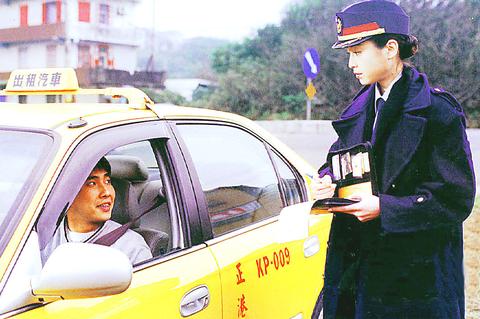
PHOTO: COURTESY OF BUENA VISTA FILM CO., LTD.
The story is set in Hong Kong, 1962. It's sheer coincidence that Chow Mo-Wan (Tony Leung,
Neither of them realizes how their relationship begins. By accident, they discover that their respective spouses are having an affair. They begin to rehearse how they can confront their spouses with what they know. Then Mr. Chow invites Mrs. Chan to help him with a newspaper column he is writing. Their meetings are discreet, but people begin to notice. The possibility that they, too, will drift into an affair is slight. But Mrs. Chan's emotional reticence begins to haunt Mr. Chow and he finds his feelings changing. It's almost like being in love.
Little Cheung (
An emerging star in Hong Kong's new cinema, director Fruit Chan (
In Little Cheung Chan looks at the cruel world of Hong Kong through the innocent eyes of a child (played by nine-year-old child actor Yiu Yuet-ming,
The setting is the hand-over of Hong Kong to China in 1997. For Cheung and Fan, it was a moment of both tenderness and adventure. They witness brutal gang fights on the streets. They are rescued from a gang massacre. Cheung is later separated from Fan because of his involvement in gang activities. The next time Little Cheung sees Fan is when she and the family are being deported back to China.
The Mission (
This is another action film by one of Hong Kong's most prolific directors Jonnie To. This one earned him Best Director at Hong Kong's Film Awards in 1999. A failed assassination attempt on triad boss Lung brings five killers of diverse backgrounds to seek out an enemy: Roy, an underworld boss with his own territory; Shin, a formidable hitman; and Custis, Mike, and James, who have retired from the triad world. Devoted to Lung's service for their own reasons, they have to complete the mission even if it means losing their lives. The tension, the danger, and the sheer boredom that comes with the job gradually bring the men closer to each other. They resolve their differences and become comrades and good friends. But their friendship is put to the test again and again due to the pressures of their mission and developments in gang society. The film is another successful product of To's skill at presenting a combination of drama and satire that offers a mild critique of Hong Kong society.
The Cabbie (
Aside from shrinks and priests, who else listens to people's deepest, darkest secrets as often as cabbies do? Director Chen Yi-wen (陳以文) and Chang Hwa-kun present a realistic comedy depicting Taiwan's most loved and hated species -- cabbies.
Su Ta-chuen's (Chu Chung-heng, 屈中恆) home is his father's cab company, where there are always cabbies hanging around. Growing up in this environment, he naturally develops a great interest in driving at an early age. During his adolescence, when his peers were driving their scooters without licenses, he is already driving a car without a license. In his eyes, bad driving is more shameful than bad grades. He loves cars far more than women, until one day he falls in love at first sight -- with a traffic policewoman. He risks tickets and even a revoked license to win the girl's heart.
If one asks Taiwanese why house prices are so high or why the nation is so built up or why certain policies cannot be carried out, one common answer is that “Taiwan is too small.” This is actually true, though not in the way people think. The National Property Administration (NPA), responsible for tracking and managing the government’s real estate assets, maintains statistics on how much land the government owns. As of the end of last year, land for official use constituted 293,655 hectares, for public use 1,732,513 hectares, for non-public use 216,972 hectares and for state enterprises 34 hectares, yielding

The small platform at Duoliang Train Station in Taitung County’s Taimali Township (太麻里) served villagers from 1992 to 2006, but was eventually shut down due to lack of use. Just 10 years later, the abandoned train station had become widely known as the most beautiful station in Taiwan, and visitors were so frequent that the village had to start restricting traffic. Nowadays, Duoliang Village (多良) is known as a bit of a tourist trap, with a mandatory, albeit modest, admission fee of NT$10 giving access to a crowded lane of vendors with a mediocre view of the ocean and the trains
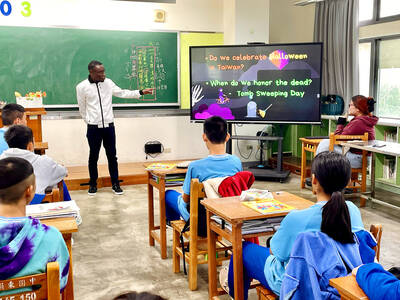
For many people, Bilingual Nation 2030 begins and ends in the classroom. Since the policy was launched in 2018, the debate has centered on students, teachers and the pressure placed on schools. Yet the policy was never solely about English education. The government’s official plan also calls for bilingualization in Taiwan’s government services, laws and regulations, and living environment. The goal is to make Taiwan more inclusive and accessible to international enterprises and talent and better prepared for global economic and trade conditions. After eight years, that grand vision is due for a pulse check. RULES THAT CAN BE READ For Harper Chen (陳虹宇), an adviser
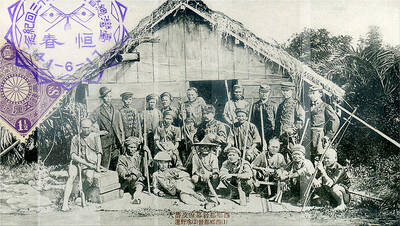
Traditionally, indigenous people in Taiwan’s mountains practice swidden cultivation, or “slash and burn” agriculture, a practice common in human history. According to a 2016 research article in the International Journal of Environmental Sustainability, among the Atayal people, this began with a search for suitable forested slopeland. The trees are burnt for fertilizer and the land cleared of stones. The stones and wood are then piled up to make fences, while both dead and standing trees are retained on the plot. The fences are used to grow climbing crops like squash and beans. The plot itself supports farming for three years.


 RSS
RSS