


Skateboarding has always been a sport for a bunch of punks, but possibly it came to Taipei too late for that. Here, it wasn't born out of thrash metal, dysfunctional families and social decay as it was in the US.
Skateboarding came to Taiwan as a fashion. A lot of kids wore the baggy jeans and the Blind Reaper shirts before they realized they needed a board to go with them. But that time has passed. The punks have caught on. And although fame and fortune may not come immediately, their 15 seconds of air -- call it hangtime -- is already theirs, courtesy of ESPN.
Earlier this month, the sports network sponsored an X-Games qualifier in Taipei that served as a measure of Taiwan's venture into extreme sports. After the final judging, five skateboarders, five rollerbladers, and four BMXers were awarded paid trips to Phuket, Thailand, for the Asian X-Games in early December. Not bad for a bunch of upstarts.
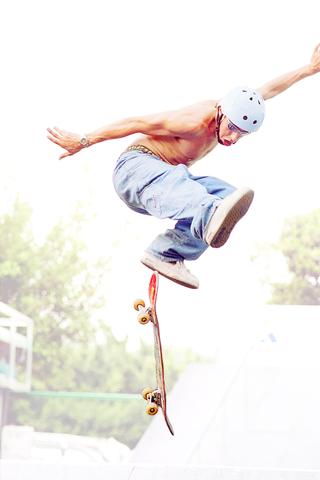
PHOTO: CHEN CHENG-CHANG, TAIPEI TIMES
In Thailand they'll compete against skateboarders and BMX bike riders -- from Japan, Korea, Singapore and Thailand. The winners will go to the international X-Games and face kids from the US and Europe that they generally read about in magazines.
Andre Lai has done this before, having qualified for the street skating competition in last year's Asian X-Games. That Taiwan qualifier wasn't televised and was a lot lower profile than this year's. Still, it got him to Thailand, where he said his performance was "pathetic" but "the parties were really cool." In terms of the regional competition, "first is Japan," he said, "then maybe next comes Thailand and Singapore, and after that Korea."
Skateboarding, and other so-called extreme sports, have made noticeable inroads into the Taiwanese teen culture during the last few years. Just five years ago, there were only two or three skate shops in Taipei. Now there are 15 or 20. Many of those shops sponsor their own competitions, offering prizes of up to NT$60,000. Foreign shoe companies, like DC and Axion, have also found around 15 local athletes to sponsor, sending them monthly care packages of equipment and clothes.
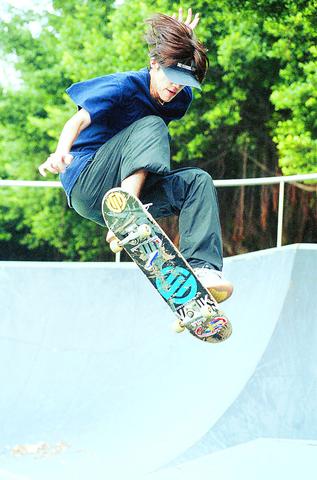
PHOTOS: CHEN CHENG-CHANG
Though this is its first year in Taiwan, the X-Games is in its sixth year internationally and is working hard to take all the counter culture sports and bring them into the mainstream. "These sports are really just starting to develop here and if they're not at a high level yet, that's just because they never had the facilities. We're just trying to promote them all and give the kids a chance to compete," said Geoff Le Cren, who worked with ESPN in running the Taipei games.
At the X-Games host site -- a new skate park designed and partly funded by Adidas and administered by the Chinese Extreme Sports Association (中華民國極限運動協會) -- rollerbladers and skateboarders have been sharing the ramps relatively equally for about two months now. (Taiwan has not yet been infected with the Western skaters' credo that goes something like: rollerbladers are wusses and they suck and they should all die.)
It's a pretty mellow scene. Kids here don't care about that rivalry yet, and it's uncertain if they ever will. On weekends, the standing area is filled with parents, younger siblings and the odd girlfriend. On weekdays after school, some kids even show up in school uniforms, a little bit dorky, and they're almost always rollerbladers. The skaters, meanwhile, don't stray much from their own uniforms of big jeans and NT$1000 T-shirts, which may signal a coming hierarchy of coolness.
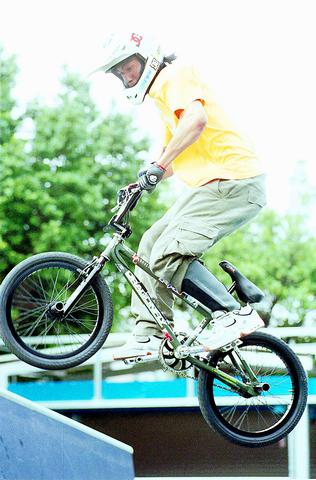
PHOTOS: CHEN CHENG-CHANG
But being cool for skaters has its non-participatory edge. Some of them shrugged off the X-Games competition and offered excuses that would result in ridicule and scorn if their more devoted compatriots overheard them.
Twenty-year-old Mikey Lei, a pretty decent skater, said, "I would have been in it, but I didn't have a board." Didn't have a board? "Yeah, I broke my board just before that. Now I got a new board." This was two days after the X-Games.
Fortunately, there were plenty of others around who were encouraged to take a shot at extreme fame. The general philosophy of the X-Games is inclusiveness, so sponsors levied no entry fees and some juniors, such as Hou Bo-hung, were as young as seven.
But don't dis the little guys, because they are the future of extreme sports in Taiwan. At the recent competition, the top two skaters were 18 and 19, respectively, and the oldest competitor in either skateboard or inline to win the free ride to Thailand was 23. Says the 26-year-old Lai: "I'm an old man."
Not that anybody's complaining about the winners. If you mention the names of Kang Ze-wei (first place winner) or Chen Jia-ming (second) around skate shops, people will nod their heads and say, "Yeah, they're good skaters." So the X-Games may be a good measure of the talent out there, but the level still has to rise. "The local guys are pretty good at ledges" -- tricks like grinds and slides -- "but that's all flatland stuff. They don't really know how to use the ramps yet," said Canadian skater, Todd Tessie.
But ramps weren't the only problem at the X-Games. There was also rain and inaugural year growing pains. First, a typhoon blowing through made for a damp course, delays, and an abbreviated format. Then, an inconsistent field of more than 250 participants made for a lot of missed kick-flips and unspectacular runs. So in the end the X-Games were more of a fun day in the park than a hard core competition, yet it still served as a solid promotional tool.
Those ramps probably pose the greatest challenge to Taiwan's next generation of skaters. The new park has about a dozen of them, including a 13-foot monster half pipe that nobody ever drops in on. "It's huge," said Jerry Lin, a 20-year-old college student who skates the park every day, "No way."
Taipei's Chungshan Extreme Skate Park is located near the intersection of Chungshan North and Mintsu West roads, next to the Chungshan Soccer Stadium. Hours: 9am to midnight.
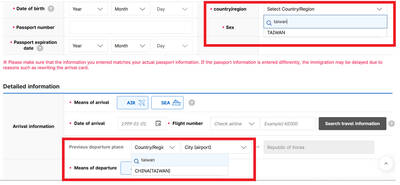
Jason Han says that the e-arrival card spat between South Korea and Taiwan shows that Seoul is signaling adherence to its “one-China” policy, while Taiwan’s response reflects a reciprocal approach. “Attempts to alter the diplomatic status quo often lead to tit-for-tat responses,” the analyst on international affairs tells the Taipei Times, adding that Taiwan may become more cautious in its dealings with South Korea going forward. Taipei has called on Seoul to correct its electronic entry system, which currently lists Taiwan as “China (Taiwan),” warning that reciprocal measures may follow if the wording is not changed before March 31. As of yesterday,

The Portuguese never established a presence on Taiwan, but they must have traded with the indigenous people because later traders reported that the locals referred to parts of deer using Portuguese words. What goods might the Portuguese have offered their indigenous trade partners? Among them must have been slaves, for the Portuguese dealt slaves across Asia. Though we often speak of “Portuguese” ships, imagining them as picturesque vessels manned by pointy-bearded Iberians, in Asia Portuguese shipping between local destinations was crewed by Asian seamen, with a handful of white or Eurasian officers. “Even the great carracks of 1,000-2,000 tons which plied
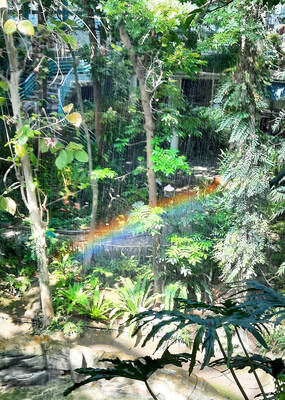
It’s only half the size of its more famous counterpart in Taipei, but the Botanical Garden of the National Museum of Nature Science (NMNS, 國立自然科學博物館植物園) is surely one of urban Taiwan’s most inviting green spaces. Covering 4.5 hectares immediately northeast of the government-run museum in Taichung’s North District (北區), the garden features more than 700 plant species, many of which are labeled in Chinese but not in English. Since its establishment in 1999, the site’s managers have done their best to replicate a number of native ecosystems, dividing the site into eight areas. The name of the Coral Atoll Zone might
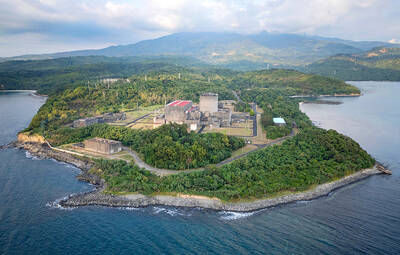
Nuclear power is getting a second look in Southeast Asia as countries prepare to meet surging energy demand as they vie for artificial intelligence-focused data centers. Several Southeast Asian nations are reviving mothballed nuclear plans and setting ambitious targets and nearly half of the region could, if they pursue those goals, have nuclear energy in the 2030s. Even countries without current plans have signaled their interest. Southeast Asia has never produced a single watt of nuclear energy, despite long-held atomic ambitions. But that may soon change as pressure mounts to reduce emissions that contribute to climate change, while meeting growing power needs. The


 RSS
RSS