


Sitting in a wooden pavilion, protected from the brisk breeze whipping across the lush hills of Maokung, Chang Chen-nan (
"I have been here for almost 100 years. Why do I stay on? It's not because of the money. I could make much more by selling it off. But I want something to pass on to my children."
As he talks, he presides over a kettle, making tea in a small clay teapot that is a Min-nan tradition. Hundreds of people come up to Maokung on the cool evenings of summer to do exactly the same thing, talking late into the night and enjoying the fresh air and the distant lights of Taipei.
Most are ignorant of the tensions simmering among the farmers and teahouse owners like Chang, or of the neighbor-to-neighbor rivalries that have led to some businesses turning in others for what were once considered innocuous -- though illegal -- structures, such as the one Chang enjoys his tea under. The structures have long served as ways to creatively expand seating among Maokung's teahouses, which are technically classified as tea farms, not tourist attractions.
And that, in many ways, is what this great tea debate boils down to. Technicalities, loopholes and the like. The farmers have exploited loopholes in land-use laws for years to transform Maokung from a tea plantation to a teahouse tourist haven. Many have made good money doing it, or at least more than they would as tea farmers, and they see it as a way to promote sustainable, agriculture-based tourism.
The city, and some critics of the farmers, say the teahouse owners are getting carried away with developing the area. Some 23 illegal structures -- mostly pavilions and sheds -- have been condemned in the current crackdown.
But the farmers are a tough breed, and they certainly aren't taking this idly. This is a bitter cup of tea to swallow for them. Chang, who is the proprietor of the Shan Shui Ke (
"It is only because I applied for a permit originally that they have the case on record," he says in exasperation. "That's why they have torn it down. The moment you play their game, they have a handle on you. In future, I am going to build temporary structures [which aren't covered under the regulations], so there is nothing they can catch me on."
TOURIST HAVEN, LEGAL MINEFIELD
Maokung's combination of proximity, natural beauty and ample range of establishments in which to eat and drink have proved an irresistible combination that have consistently brought in the crowds, jamming its narrow mountain roads during weekends and holidays. The recent demolition of a number of illegal structures has unsettled teahouse owners and highlighted the legal minefield they inhabit.
In one melodramatic scene, a city demolition team faced off with an elderly couple who threatened suicide, an incident which brought Maokung some unwelcome publicity.
As the director of the Macha District Farmers Association, Cheng Ming-chun (鄭明圳) mediated in the affair. Tragedy was prevented, but the issues that led to such brouhaha over an outhouse remain, and locals don't think things are likely to change in the short term.
Waving his arm expansively to include the buildings dotting the opposite hills, Chang says, "Almost all those buildings contain illegal structures."
According to locals, part of the problem lies in laws that forbid the division of agricultural land. So as the land gets passed down from generation to generation, the number of people with rights to the land increase. Any development requires approval of all rights holders - and in most cases, people can't or won't bother to go through this process. So they go ahead and build, hoping for the best.
"The government always says you can apply for approval, but there are too many conditions" says Kao Shu-fen (高淑芬) of the Shuang Hsiang Yuan (雙橡園) teahouse and restaurant. "It's not possible for us to comply with all of them." Kao and her husband added a second tier to their teahouse this February, but removed it again ahead of the wrecking crew.
Cheng says the farmers association has already put forward proposals to the Council of Agriculture to provide greater latitude in future, but for now, even the farmers whose structures have been demolished agree that they have broken the law.
"It is not the demolition I care about, but the whole attitude of the people who came to do it," Chang says.
"They had a bad attitude and threatened us with more demolitions."
As to the legal basis of such action, he replies with a Taiwanese proverb: "There are thousands of laws, just pick the one you want to use."
Tseng Ku-feng (
JUMPING THROUGH LOOPHOLES
Ironically, it is a rather indifferent attitude toward the law that has been largely responsible for the development of Maokung as a popular holiday destination in the first place. According to Cheng, Maokung was one of the first areas to promote "recreational tourism" in the late 1970s when Lee Teng-hui (
Liu Ming-tzu (
The recent wave of demolitions has given rise to some bad feeling, much of it directed at the perceived unfairness of ill defined and erratically enforced regulations. Even Liu, who expressed his approval of the demolitions, says the regulations hamper development. "The government's attitude is that of catching a thief," he says, indicating a negative enforcement of regulations rather than constructive participation in either developing or conserving the area.
Meanwhile, the proprietors of Shuang Hsiang Yuan and Shan Shui Ke are being philosophical about the demolition of the illegal structures. Says Kao, of Shuang Hsiang Yuan: "If you have the courage to be a thief, then you should have the courage to get caught."
Despite bowing to the demolition orders, Kao remains agitated. A particular slight, in her eyes, is that she believes her best efforts in contributing to Maokung and her customers haven't been recognized. "We want to do the best we can for the people who come here," she says. "I don't charge extra when customers stay late or anything like that." So to make the best of the view, which on a clear night is particularly spectacular, they put up a pavilion on the roof.
But for people like Liu, it is this kind of thing that gives local business operators a bad name. "It's too much," he says. "They are no longer even pretending to operate as farmers. It's not enough that they don't provide parking on their land [and therefore contribute to blocking already narrow roads], they operate to all hours of the night."
SEEKING RESOLUTION
The government says that immediate legalization of existing structures, the option put forward by the Farmers Association, is not viable. In April this year, the Council of Agriculture issued amendments to the Recreational Agriculture Guidelines, which the Mucha Farmers Association insist still fail to meet the needs of business operations in suburban areas such as Maokung. The basic requirement that recreational farms are a minimum of half a hectare in size cuts out many existing operators. Tseng acknowledged that these guidelines are also too broad. "We will meet with the Bureau of Urban Planing and bring in the Farmers Association to review the situation."
Liu, the former government advisor, is not optimistic that government involvement will quickly resolve this problem, saying that too many agencies are involved. "The more people involved in meetings and conferences, the less is actually being done. More people only means more opinions."
In the meantime, as meetings carry on, teahouse operators gripe that those with money and political connections can get anything built, while less influential people are victimized in the name of the law.
QUESTIONS OF PERCEPTION
The situation in Maokung will be one of the focal points of the debate over tourism and landowners' rights. People like Kao and Chang see themselves as contributing to the prosperity of Maokung and carrying on an agriculture-related tradition that is in danger of disintegration. For them, economic survival now has more to do with providing an attractive venue for city visitors and little to do with planting tea. Establishments in which tea planting and processing dominate the owner's attention do exist, but they are less visible to the majority of visitors.
In a burst of antagonism toward the government, Chang says, "If they want to protect the area, they should direct farmers more toward tourism. Tea farming is one of the worst things for these mountains. Lots of fertilizer must be used. Instead, they hamper us each step of the way."
"We have done all this ourselves," Kao says of the many popular establishments around Maokung. "They talk about promoting agriculture tourism, but we have actually done something about it."
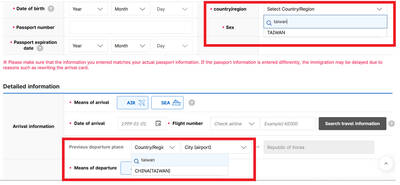
Jason Han says that the e-arrival card spat between South Korea and Taiwan shows that Seoul is signaling adherence to its “one-China” policy, while Taiwan’s response reflects a reciprocal approach. “Attempts to alter the diplomatic status quo often lead to tit-for-tat responses,” the analyst on international affairs tells the Taipei Times, adding that Taiwan may become more cautious in its dealings with South Korea going forward. Taipei has called on Seoul to correct its electronic entry system, which currently lists Taiwan as “China (Taiwan),” warning that reciprocal measures may follow if the wording is not changed before March 31. As of yesterday,

The Portuguese never established a presence on Taiwan, but they must have traded with the indigenous people because later traders reported that the locals referred to parts of deer using Portuguese words. What goods might the Portuguese have offered their indigenous trade partners? Among them must have been slaves, for the Portuguese dealt slaves across Asia. Though we often speak of “Portuguese” ships, imagining them as picturesque vessels manned by pointy-bearded Iberians, in Asia Portuguese shipping between local destinations was crewed by Asian seamen, with a handful of white or Eurasian officers. “Even the great carracks of 1,000-2,000 tons which plied

It’s only half the size of its more famous counterpart in Taipei, but the Botanical Garden of the National Museum of Nature Science (NMNS, 國立自然科學博物館植物園) is surely one of urban Taiwan’s most inviting green spaces. Covering 4.5 hectares immediately northeast of the government-run museum in Taichung’s North District (北區), the garden features more than 700 plant species, many of which are labeled in Chinese but not in English. Since its establishment in 1999, the site’s managers have done their best to replicate a number of native ecosystems, dividing the site into eight areas. The name of the Coral Atoll Zone might
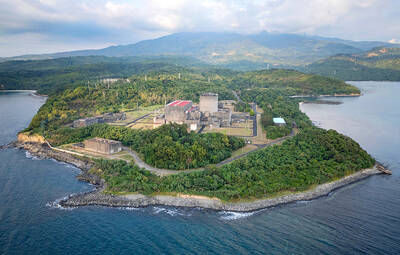
Nuclear power is getting a second look in Southeast Asia as countries prepare to meet surging energy demand as they vie for artificial intelligence-focused data centers. Several Southeast Asian nations are reviving mothballed nuclear plans and setting ambitious targets and nearly half of the region could, if they pursue those goals, have nuclear energy in the 2030s. Even countries without current plans have signaled their interest. Southeast Asia has never produced a single watt of nuclear energy, despite long-held atomic ambitions. But that may soon change as pressure mounts to reduce emissions that contribute to climate change, while meeting growing power needs. The


 RSS
RSS