

Yuan Jang sat by the roadside pretending to be receiving wisdom.
And Kung said `You old fool, come out of it,
Get up and do something useful.'


Thus wrote the poet Ezra Pound, in a rough American vernacular in 1925 in his [Canto XIII], with an intention to shock. Kung is K'ung Fu Tzu (551-479 BC), or Confucius as he is known in English.
Needless to say, Pound wasn't the first westerner to be drawn to Confucianism. Nevertheless, he had difficulty finding an English translation of the [Analects] so had to use a version in French, dating from 1841. He rendered passages impressionistically into English verse and arranged them into an artistically evocative sequence. It's even possible he homed in on Confucius largely because his writings were so widely neglected in the West, just as -- according to fellow poet W.B. Yeats -- he fed the stray cats in his adopted Italian home of Rapallo, not because he liked cats but because everybody else in the town despised them.
But Pound was nothing if not an eccentric and an individualist. For the most part, when religious belief began to wane in the West in the early 20th century and seekers after enlightenment turned to the East, they looked to Buddhism. Only the occasional sober inquirer lighted on the teachings of this less otherworldly oriental sage, almost the Buddha's exact contemporary.
This isn't surprising. Most of these western seekers were young, and Confucianism looks at first glance distinctly like a belief-system for old men. For when India was turning to meditation among the Himalayan snows, the rejection of the world, and spiritual transcendence, China was listening to a teacher who encouraged order, good government, and sound family values.
Another problem confronting the renegades from western belief-systems was that Confucianism had long been a state cult. This wasn't at all to the taste of iconoclastic rebels.
Nevertheless, some branches of the tradition did influence the young of the late 1960s and early 1970s. Richard Wilhelm's translation of the I Ching (Book of Changes) -- one of the Confucian [Five Classics], with appendices attributed to Confucius himself -- had zealots casting coins and reading their fortunes from San Francisco to Delhi, and London to Kathmandu.
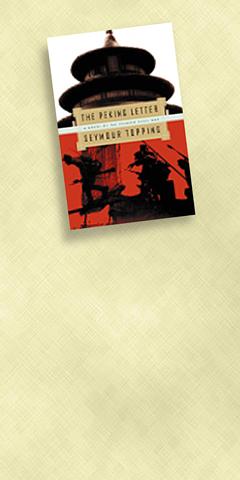
An Introduction to Confucianism is a timely new survey of the subject, and if it is not an easy read, nevertheless it is complex because the subject itself is complex. There is no mindless attempt at dumbing down.
The author is a former mainlander who is now a professor at a small university college in central Wales, UK. One can imagine him working away at his manuscript, collating references, adding to his bibliography, while the rain drips off the leaves, just like the traditional scholar in an old Chinese painting.
The Protestant world too had expressed an occasional interest in this remote set of ideas, mostly prompted by the fact that Confucians didn't worship idols. Xinzhong Yao even quotes the German existentialist philosopher Karl Jaspers as saying that "In the 19th and 20th centuries it was not rare for Protestant missionaries in China to be so overwhelmed by the profundity of Chinese thought that they would reverse their role and return to the West, so to speak, as `Chinese missionaries'".
But the Confucian system is, anyway, not irreligious. It sees state power as an extension of heavenly order and harmony. It simply doesn't enter into the nature of the gods in too much detail. They are inscrutable, and better kept as a mystery. But this is not to imply that they don't exist.
Confucianism is on every side in Taiwan. The enormous level of support for Chen Shui-bian once he was elected President, despite the fact that most of the electorate didn't vote for him, is Confucian respect for authority perceived as legitimately constituted. The power of the father in Taiwanese domestic life is a product of Confucian filial piety.
Whether or not these are entirely desirable characteristics in the modern age is another matter. Hardly a week goes by without foreigners in Taipei having to listen to tearful tales of paternal tyranny. Rote learning, and a disinclination to question what you are taught, are also Confucian characteristics. And traditional Confucianism has real problems with the ideals of women's rights, and the claims of feminism generally.
On the other hand, as Xinzhong Yao points out, many people claim that the East Asian economic miracle of the 1970s was a direct product of the Confucian virtues of self-sacrificing hard work and inter-personal trust and cooperation. Japan and Korea, after all, are other places where Confucianism is strong. Opponents dispute this, insisting that the arrival of western ideas and business methods has always resulted in a surge of interest and highly successful imitation in the Orient. They point out that Confucianism was held responsible for the decline of China in the nineteenth century by many of Sun Yat-sen's followers in the years leading up to the foundation of the republic in 1911 on the grounds that it suppressed individual initiative.
Either way, Confucius's teachings have always stressed humanity's control over its own destiny. It was not Confucianism, but a misunderstanding of Buddhism, that was responsible for the old western view that the East is characterized by a resigned and submissive fatalism.
Perhaps Confucianism will gain new adherents in the years to come. It is an ideal philosophical system for a secular world in search of stability, ecological sanity, and peace, and one that doesn't rely on doubtful religious concepts to sustain its credibility.
Ezra Pound, using apricot blossom in its traditional function in Chinese poetry as an emblem of learning, certainly believed that the creed would continue to live, and extend its influence from the Orient to the Occident. Pound has Confucius say in the closing lines of his poem,
"The blossoms of the apricot blow from the east to the west, And I have tried to keep them from falling."

As mega K-pop group BTS returns to the stage after a hiatus of more than three years, one major market is conspicuously missing from its 12-month world tour: China. The omission of one of the group’s biggest fan bases comes as no surprise. In fact, just the opposite would have been huge news. China has blocked most South Korean entertainment since 2016 under an unofficial ban that also restricts movies and the country’s popular TV dramas. For some Chinese, that means flying to Seoul to see their favorite groups perform — as many were expected to do for three shows opening
A recent report from the Environmental Management Administration of the Ministry of Environment highlights a perennial problem: illegal dumping of construction waste. In Taoyuan’s Yangmei District (楊梅) and Hsinchu’s Longtan District (龍潭) criminals leased 10,000 square meters of farmland, saying they were going to engage in horticulture. They then accepted between 40,000 and 50,000 cubic meters of construction waste from sites in northern Taiwan, charging less than the going rate for disposal, and dumped the waste concrete, tile, metal and glass onto the leased land. Taoyuan District prosecutors charged 33 individuals from seven companies with numerous violations of the law. This

Taiwan’s semiconductor industry consumes electricity at rates that would strain most national grids. Taiwan Semiconductor Manufacturing Co (TSMC) alone accounted for more than 9 percent, or 2,590 megawatts (MW), of the nation’s power demand last year. The factories that produce chips for the world’s phones and servers run around the clock. They cannot tolerate blackouts. Yet Taiwan imports 97 percent of its energy, with liquefied natural gas reserves measured in days. Underground, Taiwan has options. Studies from National Taiwan University estimate recoverable geothermal resources at more than 33,000 MW. Current installed capacity stands below 10 MW. OBSTACLES Despite Taiwan’s significant geothermal potential, the
Chinese Nationalist Party (KMT) Chair Cheng Li-wun (鄭麗文) returned from her trip to meet People’s Republic of China (PRC) dictator Xi Jinping (習近平) bearing “a gift” for the people of Taiwan: 10 measures the PRC proposed to “facilitate the peaceful development of cross-strait relations.” “China on Sunday unveiled 10 new incentive measures for Taiwan,” wrote Reuters, wrongly. The PRC’s longstanding habit with Taiwan relations is to repackage already extant or once-existing policies and declare that they are “new.” The list forwarded by Cheng reflects that practice. NEW MEASURES? Note the first item: establishing regular communication mechanisms between the Chinese Communist Party


 RSS
RSS