


Negotiations over the special defense budget are still stalled in the Legislative Yuan, with proposals varying widely and amounts ranging from NT$380 billion to NT$1.25 trillion (US$11.9 billion to US$39.1 billion). The debate has centered on all aspects from the total cost and letters of acceptance (LOA) to procurement content and oversight mechanisms, all of which have been subject to political maneuvering and repeated deadlock.
However, for most of the public, the issue is actually quite simple — should Taiwan’s national security be treated as a political bargaining chip?
In an interview with the Chinese-language Liberty Times (sister paper of the Taipei Times), Taichung Mayor Lu Shiow-yen (盧秀燕) of the Chinese Nationalist Party (KMT) on Sunday said that it would be “reasonable to pass NT$800 billion to NT$1 trillion” for the special defense budget.
Lu said that certain purchases need not wait for the US to send an LOA, or official pricing letter, before the budget is authorized. The key point surrounding the budget is not the numbers themselves, but rather a larger reminder that discussion is not the problem — infinite delay is.
The international landscape is always changing. The invasion of Ukraine and the war in the Middle East have driven countries to expand their militaries and compete for weapons, and the tightening of global supply chains is a reality. If Taiwan remains trapped in internal disputes and political calculations, and misses the opportunity to act, the costs would not be limited to the budget — the result would be a gap in overall national defense capabilities. Weapons do not wait, and security cannot be put on hold for political negotiations.
Supporting arms procurement does not equate to giving up on oversight — after all, the larger the budget, the greater the need for clarity and comprehensive explanation. Which items address urgent defense needs? Which align with the future shape of warfare? Which should be included in the special budget, and which should be handled under the annual budget?
Each of these matters should be brought to light and subject to scrutiny. The ruling party, in particular, must take responsibility by presenting clear strategic priorities and procurement logic. Transparency is the prerequisite for gaining support, and clarity is the key to resolving doubts. Sound arms procurement is not about making indiscriminate purchases, but about purchasing the right equipment quickly to reinforce combat effectiveness.
There is another unavoidable issue. If the legislature remains mired in prolonged political confrontations and procedural disputes over arms procurements, causing urgently needed defense plans to stall, the consequences could extend beyond decisionmaking efficiency — national security itself might be eroded. National defense is not an option — it is a bottom line. Arms procurement is not a political tool, but a requirement for survival.
Realistically, national defense is not only about weapons. It is about people. The armed forces are facing mounting recruitment challenges and declining retention rates, which are already affecting the structure of combat capabilities. If compensation fails to reflect the risks and professional demands of military service, even the most advanced equipment could become nothing but hollow assets. Raising salaries and improving institutional conditions for service members is not about appeasement, but about investment. It is not an expense, but a source of combat power. Only by retaining military personnel can Taiwan’s national defense be sustained.
We all want peace, but peace cannot be established upon fragility. What is truly needed today is not more slogans, but a fundamental sense of responsibility — the ruling party and the opposition should refrain from reducing national defense into a political bargaining chip, and the ruling party should put forth clearer and more persuasive plans to reach a minimum consensus. National defense must no longer be stalled, arms procurement must not lie idle and the legislature must not continue to be consumed by internal conflict.
Chen Ching-yun is a former director of the Legislative Yuan’s Bureau of Legal Affairs.
Translated by Kyra Gustavsen
A gap appears to be emerging between Washington’s foreign policy elites and the broader American public on how the United States should respond to China’s rise. From my vantage working at a think tank in Washington, DC, and through regular travel around the United States, I increasingly experience two distinct discussions. This divergence — between America’s elite hawkishness and public caution — may become one of the least appreciated and most consequential external factors influencing Taiwan’s security environment in the years ahead. Within the American policy community, the dominant view of China has grown unmistakably tough. Many members of Congress, as
The Hong Kong government on Monday gazetted sweeping amendments to the implementation rules of Article 43 of its National Security Law. There was no legislative debate, no public consultation and no transition period. By the time the ink dried on the gazette, the new powers were already in force. This move effectively bypassed Hong Kong’s Legislative Council. The rules were enacted by the Hong Kong chief executive, in conjunction with the Committee for Safeguarding National Security — a body shielded from judicial review and accountable only to Beijing. What is presented as “procedural refinement” is, in substance, a shift away from
The shifting geopolitical tectonic plates of this year have placed Beijing in a profound strategic dilemma. As Chinese President Xi Jinping (習近平) prepares for a high-stakes summit with US President Donald Trump, the traditional power dynamics of the China-Japan-US triangle have been destabilized by the diplomatic success of Japanese Prime Minister Sanae Takaichi in Washington. For the Chinese leadership, the anxiety is two-fold: There is a visceral fear of being encircled by a hardened security alliance, and a secondary risk of being left in a vulnerable position by a transactional deal between Washington and Tokyo that might inadvertently empower Japan
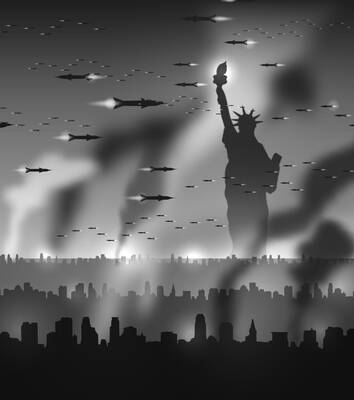
After declaring Iran’s military “gone,” US President Donald Trump appealed to the UK, France, Japan and South Korea — as well as China, Iran’s strategic partner — to send minesweepers and naval forces to reopen the Strait of Hormuz. When allies balked, the request turned into a warning: NATO would face “a very bad” future if it refused. The prevailing wisdom is that Trump faces a credibility problem: having spent years insulting allies, he finds they would not rally when he needs them. That is true, but superficial, as though a structural collapse could be caused by wounded feelings. Something


 RSS
RSS