


Taiwan’s population declined for the 26th consecutive month in February, as deaths continued to outnumber births, resulting in negative population growth. However, amid this birthrate crisis, domestic violence is on the rise, with 136,781 cases reported last year, up 9,419, or 7.4 percent, from 2024, National Police Agency statistics showed.
Even more troubling is that the severity of cases is also on the rise, with 13,831 being referred as criminal cases for prosecution last year, up nearly 60 percent from 2021 levels. The number of domestic violence reports and those referred for criminal prosecution both posted five-year highs.
Beyond these official statistics, the number of unreported domestic violence cases also remains high. Many victims would not seek legal help as a first recourse, and instead endure their abuse in silence. This can lead to escalating levels of harm, and by the time legal intervention occurs and cases are reported in the news, lives might already be at risk.
In family violence cases, older family members might, out of reluctance to see younger family members imprisoned, choose to remain silent and endure the abuse rather than report it.
For domestic abuse involving romantic partners, Article 7 of the Domestic Violence Prevention Act (家庭暴力防治法) was amended in 2023 to include protections for same-sex couples and those in non-cohabiting relationships. However, in instances where victims do not wish to disclose their sexual identity, cases of abuse continue to go unchecked.
Perpetrators of domestic abuse often employ manipulation and fear tactics to convince victims that they would be not be better off alone. Victims then tell themselves that they are on the receiving end of this abusive treatment due to their own personal failings, or that they have done something to deserve the verbal or physical violence. Over time, they might come to subconsciously believe that leaving would be even more painful, and thus choose to stay.
Victims might also question the effectiveness of potentially obtaining a protection order and be reluctant to seek legal help. In practice, what happens is that upon hearing a case, a family court decides whether to issue a protection order. If the order is issued, the perpetrator would be ordered to stop harassing or to stay a certain distance from the victim. Violating the order constitutes a criminal offense and the perpetrator can be arrested, including by a private citizen.
When faced with domestic violence, victims should prioritize their own safety. They should seek medical attention as soon as possible to obtain a medical report, and preserve evidence, such as photographs, video or audio recordings, of their injuries and any damage at the scene. They should call the police immediately to stop the violence and apply for a court protection order. If they need emergency accommodation, they can seek assistance through social welfare and public health service networks to obtain professional help, such as psychological counseling, to prevent further violence.
Wang Hsiang-cheng is a civil servant.
Translated by Gilda Knox Streader
A gap appears to be emerging between Washington’s foreign policy elites and the broader American public on how the United States should respond to China’s rise. From my vantage working at a think tank in Washington, DC, and through regular travel around the United States, I increasingly experience two distinct discussions. This divergence — between America’s elite hawkishness and public caution — may become one of the least appreciated and most consequential external factors influencing Taiwan’s security environment in the years ahead. Within the American policy community, the dominant view of China has grown unmistakably tough. Many members of Congress, as
The Hong Kong government on Monday gazetted sweeping amendments to the implementation rules of Article 43 of its National Security Law. There was no legislative debate, no public consultation and no transition period. By the time the ink dried on the gazette, the new powers were already in force. This move effectively bypassed Hong Kong’s Legislative Council. The rules were enacted by the Hong Kong chief executive, in conjunction with the Committee for Safeguarding National Security — a body shielded from judicial review and accountable only to Beijing. What is presented as “procedural refinement” is, in substance, a shift away from
The shifting geopolitical tectonic plates of this year have placed Beijing in a profound strategic dilemma. As Chinese President Xi Jinping (習近平) prepares for a high-stakes summit with US President Donald Trump, the traditional power dynamics of the China-Japan-US triangle have been destabilized by the diplomatic success of Japanese Prime Minister Sanae Takaichi in Washington. For the Chinese leadership, the anxiety is two-fold: There is a visceral fear of being encircled by a hardened security alliance, and a secondary risk of being left in a vulnerable position by a transactional deal between Washington and Tokyo that might inadvertently empower Japan
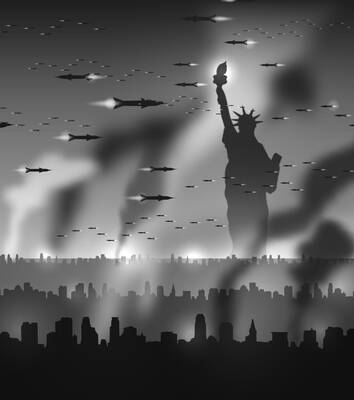
After declaring Iran’s military “gone,” US President Donald Trump appealed to the UK, France, Japan and South Korea — as well as China, Iran’s strategic partner — to send minesweepers and naval forces to reopen the Strait of Hormuz. When allies balked, the request turned into a warning: NATO would face “a very bad” future if it refused. The prevailing wisdom is that Trump faces a credibility problem: having spent years insulting allies, he finds they would not rally when he needs them. That is true, but superficial, as though a structural collapse could be caused by wounded feelings. Something


 RSS
RSS