


With his Davos speech describing the rules-based international order as a “fiction,” Canadian Prime Minister Mark Carney made a mainstay of debates across the “global south” fashionable in the West. Developing and emerging economies have long criticized the inconsistent implementation of international rules and double standards at the heart of the international order. Now, a Western leader has acknowledged the hypocrisy, too.
Until recently, the Carneys of the world had invested considerable political capital in defending the rules-based order against such accusations. At the Munich Security Conference last month, the Saudi Minister of Foreign Affairs Faisal bin Farhan Al Saud remarked, with relief, that “finally, we are, all of us, being honest with each other” about the broken nature of the old system.
However, should we really be rejoicing at this move toward greater honesty? What would come of Western leaders acknowledging how “imperfect” the old order was “even at the best of times,” as German Chancellor Friedrich Merz recently put it?
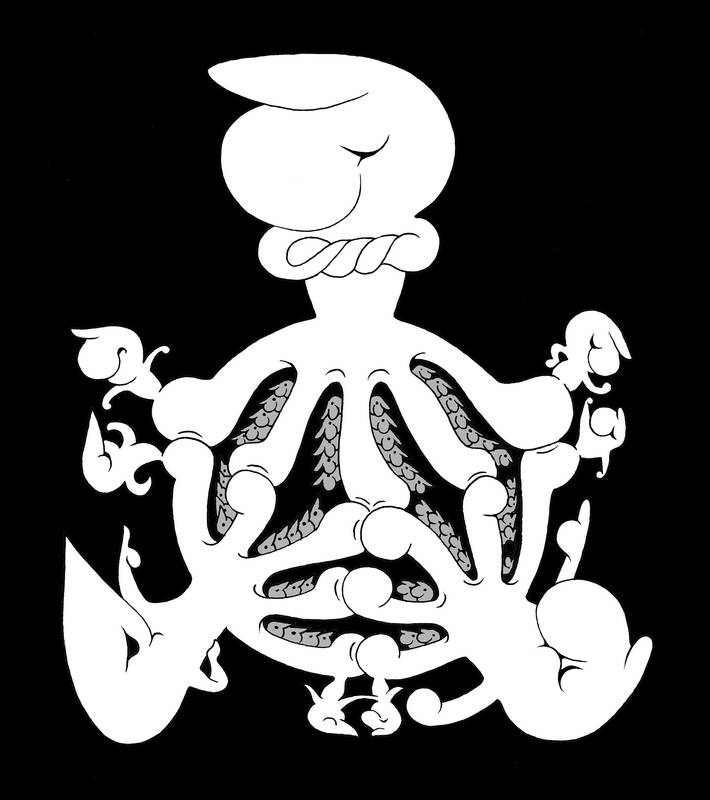
Illustration: Mountain People
I ask as someone who has called for a more honest conversation about that order’s inconsistencies and the legitimate concerns they raised. I hoped that acknowledging the double standards would help reduce them, leading to a more constructive debate about how to strengthen international rules and norms. Yet now I worry that the honesty on display today is not serving either objective.
Instead of ensuring greater consistency or inspiring reforms to make the prevailing system more just and emancipatory, this newfound frankness often seems aimed at opposite ends. It is being used to justify blatant discrepancies, and to depict any work toward more consistent global rules as futile.
Most of those who highlight the old order’s shortcomings are not promising to alter their own behavior. They might acknowledge the hypocrisies enshrined in that order, but their reactions to the intervention in Venezuela by US President Donald Trump’s administration and the US-Israeli strikes against Iran confirm that nothing much has changed. They remain willing to condone or look past their allies’ rule violations.
Aside from Spanish Prime Minister Pedro Sanchez, few Western leaders have called out the illegality of the US-Israeli attack on Iran. Not even the EU — a longtime champion of international law — has issued an official condemnation.
In fact, judging by recent official statements, some in the West seem to regard dishonesty about the old order’s double standards and moralizing by Europeans and others as two sides of the same problematic coin. For them, being more honest about the old order means no longer chiding other governments for their violations of international rules.
Thus, Merz recently made clear that Germany would not be “lecturing our partners on their military strikes against Iran.”
However, in that case, nothing has changed: The partners Germany is sparing from moralizing lectures are the same partners that Germany has almost always spared from moralizing lectures.
Few who have finally acknowledged the old order’s deficits are taking the next step of trying to build something better. Instead, the more common argument is that the old order is basically dead, and not to be mourned. The implication is that Western countries should now focus on the far more limited goal of defending their own strategic interests in a world where power politics dominate, and where international rules no longer command respect.
This was the subtext of European Commission President Ursula von der Leyen’s speech at the EU Ambassadors’ Conference earlier this month, in which she said: “Europe can no longer be a custodian for the old-world order, for a world that has gone and will not return.”
Likewise, Merz believes that the rules-based order “no longer exists.”
Even Carney, who suggested that “something bigger, better, stronger, more just” could be built on the ruins of the old order, has provided little detail on what this could look like — he also initially endorsed the US-Israeli strikes on Iran, albeit “with regret.”
Those declaring the old order dead — which is conveniently happening just as its double standards have come to haunt the West — might want to be seen as refreshingly honest brokers. However, one can just as easily interpret their statements as abandoning all ambition to shape global rules and principles for the better.
Western leaders now speak in the same “transactional” terms that they once criticized the global south for using. They, too, have settled on a foreign-policy approach based on national interests, rather than on principles that serve the interests of all. Their goal is not to advance a more just global order, but rather to promote a “realist” stance that frees them from any commitment to defending or strengthening international rules.
Of course, it is reasonable to ask whether “middle powers” can uphold international rules, let alone establish new ones, without the buy-in of a hegemon. However, if they completely drop the ambition to do so, the very notion of a rules-based order would indeed be dead. The honesty we have been waiting for would be used to justify inconsistencies or an abdication of leadership. If that is our future, we may miss the “fictional” world we have lost.
Eisentraut is head of research and publications at the Munich Security Conference.
Copyright: Project Syndicate
China’s supreme objective in a war across the Taiwan Strait is to incorporate Taiwan as a province of the People’s Republic. It follows, therefore, that international recognition of Taiwan’s de jure independence is a consummation that China’s leaders devoutly wish to avoid. By the same token, an American strategy to deny China that objective would complicate Beijing’s calculus and deter large-scale hostilities. For decades, China has cautioned “independence means war.” The opposite is also true: “war means independence.” A comprehensive strategy of denial would guarantee an outcome of de jure independence for Taiwan in the event of Chinese invasion or
Chinese Nationalist Party (KMT) Chairwoman Cheng Li-wun (鄭麗文) earlier this month said it is necessary for her to meet with Chinese President Xi Jinping (習近平) and it would be a “huge boost” to the party’s local election results in November, but many KMT members have expressed different opinions, indicating a struggle between different groups in the party. Since Cheng was elected as party chairwoman in October last year, she has repeatedly expressed support for increased exchanges with China, saying that it would bring peace and prosperity to Taiwan, and that a meeting with Xi in Beijing takes priority over meeting
The political order of former president Lee Teng-hui (李登輝) first took shape in 1988. Then-vice president Lee succeeded former president Chiang Ching-kuo (蔣經國) after he passed, and served out the remainder of his term in office. In 1990, Lee was elected president by the National Assembly, and in 1996, he won Taiwan’s first direct presidential election. Those two, six and four-year terms were an era-defining 12-year presidential tenure. Throughout those years, Lee served as helmsman for Taiwan’s transition from martial law and authoritarianism to democracy. This period came to be known as the “quiet revolution,” leaving a legacy containing light
Gulf states did not ask the US to go to war with Iran, but many are now urging it not to stop short by leaving the Islamic Republic still able to threaten the Gulf’s oil lifeline and the economies that depend on it, three Gulf sources said. At the same time, these sources, and five Western and Arab diplomats said Washington was pressing Gulf states to join the US-Israeli war. According to three of them, US President Donald Trump wants to show regional backing for the campaign to bolster its international legitimacy as well as support at home. “There is a wide


 RSS
RSS