


Lessons from baseball
Carrying the momentum of their World Baseball Softball Confederation Premier12 championship and the expectations of fans across Taiwan, the national team arrived in Tokyo earlier this month for the World Baseball Classic. What followed was far from what anyone anticipated. Not only did Taiwan fail to secure a win in its opening game against Australia, but it suffered a crushing 13–0 defeat to Japan in the second game, which was ended under mercy rules in the seventh inning.
For a society that has long embraced baseball as its “national sport,” the blow was harsh. Yet for adults, the moment offered a powerful, shared sense of loss that can be transformed into a teachable moment for the next generation.
First, it is a reminder not to ignore risk. Even before the tournament began, key players such as Taiwanese-American Jonathon Long and Lee Hao-yu (李灝宇) withdrew due to injuries.
In the game against Australia, team captain Chen Chieh-hsien (陳傑憲) was sidelined after a pitch hit his hand, fracturing a finger.
Life, much like sports, is filled with unpredictable “black swans.” No matter how well prepared we are, uncertainty is always present. What we can teach children is not only the importance of preparation, but also the necessity of contingency planning.
Second, it is a lesson in grace and resilience. Complaining about questionable umpire calls or accusing opponents of intentional hit-by-pitches does nothing to change the outcome. It only reveals a lack of sportsmanship and undermines the motivation to improve.
For young people raised in an era of low birthrates and greater parental attention, they often have fewer opportunities to confront failure. Yet setbacks are essential for growth. Through the challenges faced by Taiwan’s team in this tournament, we can help children understand how to respond to defeat with dignity.
Although Taiwan did not advance past Pool C, the experience has delivered a valuable lesson to all of society. When the storm passes, Taiwan’s passion for baseball will endure.
The responsibility now falls on adults: to seize this moment, to guide and accompany children. In doing so, we can help them learn not just how to watch a game, but how to face the inevitable storms in their own lives.
Lee Chyi-fu
Taipei
Taiwanese pragmatism has long been praised when it comes to addressing Chinese attempts to erase Taiwan from the international stage. “Taipei” and the even more inaccurate and degrading “Chinese Taipei,” imposed titles required to participate in international events, are loathed by Taiwanese. That is why there was huge applause in Taiwan when Japanese public broadcaster NHK referred to the Taiwanese Olympic team as “Taiwan,” instead of “Chinese Taipei” during the opening ceremony of the Tokyo Olympics. What is standard protocol for most nations — calling a national team by the name their country is commonly known by — is impossible for
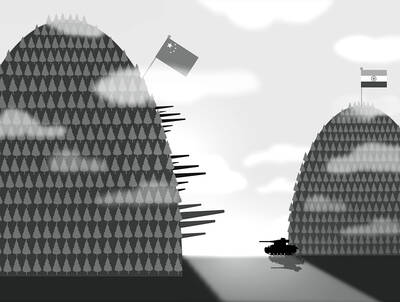
India is not China, and many of its residents fear it never will be. It is hard to imagine a future in which the subcontinent’s manufacturing dominates the world, its foreign investment shapes nations’ destinies, and the challenge of its economic system forces the West to reshape its own policies and principles. However, that is, apparently, what the US administration fears. Speaking in New Delhi last week, US Deputy Secretary of State Christopher Landau warned that “we will not make the same mistakes with India that we did with China 20 years ago.” Although he claimed the recently agreed framework
The Office of the US Trade Representative (USTR) on Wednesday last week announced it is launching investigations into 16 US trading partners, including Taiwan, under Section 301 of the Trade Act of 1974 to determine whether they have engaged in unfair trade practices, such as overproduction. A day later, the agency announced a separate Section 301 investigation into 60 economies based on the implementation of measures to prohibit the importation of goods produced with forced labor. Several of Taiwan’s main trading rivals — including China, Japan, South Korea and the EU — also made the US’ investigation list. The announcements come
Taiwan is not invited to the table. It never has been, but this year, with the Philippines holding the ASEAN chair, the question that matters is no longer who gets formally named, it is who becomes structurally indispensable. The “one China” formula continues to do its job. It sets the outer boundary of official diplomatic speech, and no one in the region has a serious interest in openly challenging it. However, beneath the surface, something is thickening. Trade corridors, digital infrastructure, artificial intelligence (AI) cooperation, supply chains, cross-border investment: The connective tissue between Taiwan and ASEAN is quietly and methodically growing


 RSS
RSS