


Taiwan’s population decline has since 2020 outstripped its growth.
After 10 years of dwindling birthrates and five years of negative population growth, last year saw 27,000 fewer births than the year before’s 130,000. The speed with which the population is falling stands in stark contrast with economic growth rates. It is a problem that has been noticed across the world.
Since 2018, the government has been attempting to fix the falling birthrate. Despite more than NT$600 billion (US$19 billion) in investment over eight years, little progress has been made.
With a growing number of elderly people and less babies, attitudes toward both groups have taken a less tolerant turn as patience wears thin. There are many reasons behind why people have fewer children. Exorbitant house prices and rents, difficulty accessing childcare, inflexibility in the workplace and soaring child-rearing costs aside, there are other hidden challenges that parents must face everyday.
I remember the time I saw a young mother board a Taiwan Railways Administration (TRA) train with her baby, who disturbed the carriage’s peace and quiet. As people are increasingly less tolerant to disruptive noise, some rolled their eyes, while others moved carriages or muttered disapprovingly. Only one other mother with a child gave them a sympathetic, but strained smile.
On more than one occasion, I have seen a mother bring her child into a public library, whose noise disturbed everyone’s peace. Her best efforts to quiet the child were ineffective and she was in the end politely asked to leave.
I truly felt for this mother. Comforting and caring for a young child aside, she is forced to worry about everyone else’s feelings. Her child was small — probably too small to understand even picture books. It could be that she was simply under so much pressure and in need of a place to decompress. Perhaps she had no other place to go, so she came to the library.
Although some local governments offer respite services for parents, they often must be booked in advance. A toddler’s mood swings are difficult to predict and parental stress can flare up suddenly in a way that is difficult for those without children to imagine. With fewer and fewer people choosing to have children, sympathy is harder to come by.
In the current age, inconveniences are taken as infringements on personal freedoms. Communities today also do not look like they did in the past, when mothers under pressure could turn to extended family members or neighbors to share the load and give themselves a moment to slow down.
Despite there seeming to be a designated area for dogs in every park these days, truly baby-friendly spaces remain scarce.
The TRA’s Chu-Kuang Express and Electric Multiple Unit train lines could, like the Tze-Chiang Express, include designated family-friendly carriages to give parents some peace of mind. Libraries should offer sound-proofed spaces with toys and children’s books as a temporary retreat where parents and their children could play safely.
The Taipei and New Taipei City governments already offer family-friendly movie screenings, which is a step in the right direction.
The nation still has a long way to go in addressing its birthrate problems. Beyond offering financial subsidies, the government should create more child-friendly spaces for families. Parents should not have to steel themselves with the courage just to step outside. Perhaps, then, more people might be willing to have children.
Jimmy Hsu is a farmer.
Translated by Gilda Knox Streader
A gap appears to be emerging between Washington’s foreign policy elites and the broader American public on how the United States should respond to China’s rise. From my vantage working at a think tank in Washington, DC, and through regular travel around the United States, I increasingly experience two distinct discussions. This divergence — between America’s elite hawkishness and public caution — may become one of the least appreciated and most consequential external factors influencing Taiwan’s security environment in the years ahead. Within the American policy community, the dominant view of China has grown unmistakably tough. Many members of Congress, as
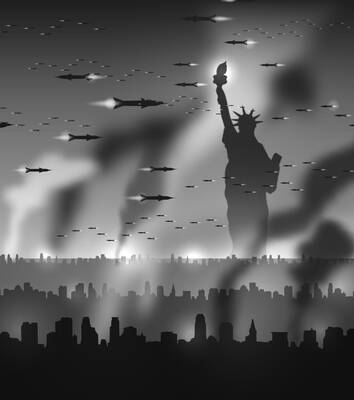
After declaring Iran’s military “gone,” US President Donald Trump appealed to the UK, France, Japan and South Korea — as well as China, Iran’s strategic partner — to send minesweepers and naval forces to reopen the Strait of Hormuz. When allies balked, the request turned into a warning: NATO would face “a very bad” future if it refused. The prevailing wisdom is that Trump faces a credibility problem: having spent years insulting allies, he finds they would not rally when he needs them. That is true, but superficial, as though a structural collapse could be caused by wounded feelings. Something
Former Taipei mayor and Taiwan People’s Party (TPP) founding chairman Ko Wen-je (柯文哲) was sentenced to 17 years in prison on Thursday, making headlines across major media. However, another case linked to the TPP — the indictment of Chinese immigrant Xu Chunying (徐春鶯) for alleged violations of the Anti-Infiltration Act (反滲透法) on Tuesday — has also stirred up heated discussions. Born in Shanghai, Xu became a resident of Taiwan through marriage in 1993. Currently the director of the Taiwan New Immigrant Development Association, she was elected to serve as legislator-at-large for the TPP in 2023, but was later charged with involvement
Out of 64 participating universities in this year’s Stars Program — through which schools directly recommend their top students to universities for admission — only 19 filled their admissions quotas. There were 922 vacancies, down more than 200 from last year; top universities had 37 unfilled places, 40 fewer than last year. The original purpose of the Stars Program was to expand admissions to a wider range of students. However, certain departments at elite universities that failed to meet their admissions quotas are not improving. Vacancies at top universities are linked to students’ program preferences on their applications, but inappropriate admission


 RSS
RSS