


Earthquakes do not care about borders. Neither do floods, hurricanes or the diseases that follow them. When disaster strikes anywhere in the world, the international system is supposed to respond based on need, not politics.
Organizations like the WHO exist specifically to coordinate amid global health emergencies and make sure that medical expertise and disaster relief reach people quickly, regardless of what flag flies over their government buildings.
The whole point of having international health institutions is that disease and disaster are universal problems that require universal solutions.
However, that mission keeps running into a much older problem, which is that international organizations are still made up of governments and governments often care about politics more than they care about human life.
The WHO has spent years refusing to acknowledge Taiwan, a country of 23 million people with one of the world’s best healthcare systems, as if it does not exist. Taiwan has been blocked from participating in the WHO since 2016, not because of anything related to public health, but because China, in its delusion, considers Taiwan part of its territory, and uses its considerable diplomatic influence to make sure other countries and international organizations treat Taiwan accordingly.
The WHO went along with Beijing’s demands, signing agreements that essentially gave China veto power over whether Taiwan gets included in global health discussions. That might seem like an internal diplomatic matter, the kind of issue that seems purely political, except that when you exclude a country from the organization meant to coordinate responses to health emergencies, people actually die because of it.
Taiwan is not just kept out of meetings and conferences, the exclusion is more comprehensive than that. Taiwan cannot access WHO technical guidelines in real time, cannot participate in disease surveillance networks that track outbreaks as they develop and cannot coordinate directly with the international system when disasters happen.
When other countries face health emergencies, they can request WHO assistance and get connected to a network of member states ready to help. Taiwan has no formal channel to offer assistance or request it, which means that even when the nation has exactly what a disaster zone needs, there is no official mechanism to coordinate a response.
Countries have to decide individually whether to accept Taiwan’s help and that decision is almost always shaped by whether it will damage their relationship with China.
An earthquake in Myanmar on March 28 showed what the policy looks like when people are actually dying. The magnitude 7.7 quake killed more than 3,600 people and Myanmar’s government immediately started accepting international help. Chinese rescue teams crossed the border, along with teams from India, Russia, Thailand, Vietnam and the United Arab Emirates. Taiwan assembled a 126-member rescue unit with six search dogs and 15 tonnes of specialized equipment, the kind of disaster response team that takes years to train and requires serious resources to maintain. They waited on standby for 48 hours while Myanmar’s military government decided whether to let them in.
The answer was no, international aid was sufficient.
Burmese students in Taiwan were watching as their hometowns got destroyed, posting about neighbors and family members still buried while a team that could help them got rejected. Taiwan’s team, with everything needed to pull survivors from rubble and decades of earthquake response experience, got sent home because letting them in would have irritated Beijing.
This is not the first time. In April 2015, when a magnitude 7.8 earthquake killed more than 8,700 people in Nepal and left more than 21,000 injured, Nepal’s government turned down Taiwan’s offer to send a search and rescue team, citing the lack of diplomatic ties and the physical distance between the two countries.
The distance excuse was nonsense, given that Nepal accepted rescue teams from countries much farther away, but the real reason was obvious enough. Countries that want to maintain good relations with China have learned that accepting Taiwan’s help comes with diplomatic costs, so when disaster strikes and people are trapped under rubble, governments do the math and decide that keeping Beijing happy matters more than getting every available rescue team on the ground as fast as possible.
Taiwan has answered this exclusion not with withdrawal, but with three decades of relentless medical humanitarian work. While the WHO pretends it does not exist and governments reject its rescue teams to avoid offending China, Taiwan has built one of the most active international medical assistance programs in the world.
Their doctors and rescue workers keep showing up in countries that will accept them, training foreign medical professionals, performing surgeries in places where specialized care is rare and responding to disasters whenever they are on the ground. The work continues because Taiwan has apparently decided that lack of official recognition is not a good enough reason to stop helping people.
Taiwan has been doing this work for decades regardless of whether anyone officially recognizes it. The Taiwan Root Medical Peace Corps has sent 422 medical missions to 50 countries since 1995, with more than 20,000 volunteers performing surgeries and training local doctors in places such as Bolivia, India, Indonesia, Liberia, Paraguay, Peru and the Philippines, as well as African nations.
The Taiwan International Healthcare Training Center has trained more than 2,100 healthcare professionals from 80 countries since it was established in 2002, teaching specialized medical techniques that those doctors take home and use to save lives in their own communities.
None of that expertise gets channeled through the WHO or counts in any official international health coordination, but Taiwan keeps sending doctors and rescue teams anyway because the work matters more than the recognition.
Almost every other disputed territory in the world gets some form of WHO engagement, even if unofficial. The WHO works in Palestinian territories, Kosovo and other places where sovereignty is disputed, because health needs do not wait for political settlements. Taiwan is effectively the only place where the WHO has decided that one country’s political objections outweigh all public health considerations.
The WHO was created to save lives during health emergencies, not to enforce one country’s territorial claims, but that is exactly what it does when it excludes Taiwan. The cost is not paid by diplomats in Geneva or politicians in Beijing. The cost is paid by people trapped under rubble, patients who never receive treatment and communities facing outbreaks that spread further than they should have.
Those deaths are the price of bowing to China and the people running these institutions have decided it is worth paying.
Noa Wynn is a researcher and journalist focusing on international security, social dynamics and the forces shaping modern societies. He has reported on political and social issues across multiple regions, with a particular interest in how global pressures shape local realities.
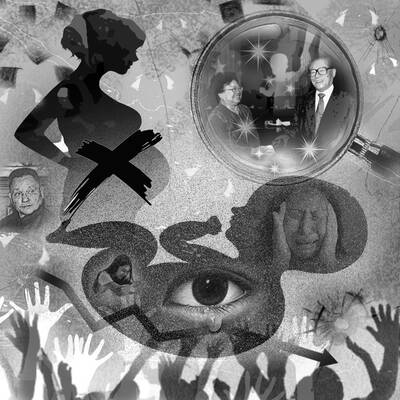
Jan. 1 marks a decade since China repealed its one-child policy. Just 10 days before, Peng Peiyun (彭珮雲), who long oversaw the often-brutal enforcement of China’s family-planning rules, died at the age of 96, having never been held accountable for her actions. Obituaries praised Peng for being “reform-minded,” even though, in practice, she only perpetuated an utterly inhumane policy, whose consequences have barely begun to materialize. It was Vice Premier Chen Muhua (陳慕華) who first proposed the one-child policy in 1979, with the endorsement of China’s then-top leaders, Chen Yun (陳雲) and Deng Xiaoping (鄧小平), as a means of avoiding the
As the Chinese People’s Liberation Army (PLA) races toward its 2027 modernization goals, most analysts fixate on ship counts, missile ranges and artificial intelligence. Those metrics matter — but they obscure a deeper vulnerability. The true future of the PLA, and by extension Taiwan’s security, might hinge less on hardware than on whether the Chinese Communist Party (CCP) can preserve ideological loyalty inside its own armed forces. Iran’s 1979 revolution demonstrated how even a technologically advanced military can collapse when the social environment surrounding it shifts. That lesson has renewed relevance as fresh unrest shakes Iran today — and it should

The last foreign delegation Nicolas Maduro met before he went to bed Friday night (January 2) was led by China’s top Latin America diplomat. “I had a pleasant meeting with Qiu Xiaoqi (邱小琪), Special Envoy of President Xi Jinping (習近平),” Venezuela’s soon-to-be ex-president tweeted on Telegram, “and we reaffirmed our commitment to the strategic relationship that is progressing and strengthening in various areas for building a multipolar world of development and peace.” Judging by how minutely the Central Intelligence Agency was monitoring Maduro’s every move on Friday, President Trump himself was certainly aware of Maduro’s felicitations to his Chinese guest. Just
On today’s page, Masahiro Matsumura, a professor of international politics and national security at St Andrew’s University in Osaka, questions the viability and advisability of the government’s proposed “T-Dome” missile defense system. Matsumura writes that Taiwan’s military budget would be better allocated elsewhere, and cautions against the temptation to allow politics to trump strategic sense. What he does not do is question whether Taiwan needs to increase its defense capabilities. “Given the accelerating pace of Beijing’s military buildup and political coercion ... [Taiwan] cannot afford inaction,” he writes. A rational, robust debate over the specifics, not the scale or the necessity,


 RSS
RSS