


The last foreign delegation Nicolas Maduro met before he went to bed Friday night (January 2) was led by China’s top Latin America diplomat. “I had a pleasant meeting with Qiu Xiaoqi (邱小琪), Special Envoy of President Xi Jinping (習近平),” Venezuela’s soon-to-be ex-president tweeted on Telegram, “and we reaffirmed our commitment to the strategic relationship that is progressing and strengthening in various areas for building a multipolar world of development and peace.”
Judging by how minutely the Central Intelligence Agency was monitoring Maduro’s every move on Friday, President Trump himself was certainly aware of Maduro’s felicitations to his Chinese guest. Just a few hours later, at 2:00 am Saturday morning, Ambassador Qiu and his party would themselves be rousted from bed by fireworks, power outages, and an inability to communicate on their mobile phones or laptops. By that time, Mr. Maduro et ux were in business-class seats on a US Army Delta Force MH-47 Chinook helicopter en route to the USS Iwo Jima.
US President Donald Trump’s National Security Strategy (NSS) released this past December 4 should have given anybody who read it a “heads-up” that the Maduros’ arrest and extraction was imminent. The NSS reflects the peculiar way the Trump administration ponders whether China wishes America well or ill. It revels in accounts of China’s bad economic behavior and complains that “American elites — over four successive administrations of both political parties — were either willing enablers of China’s strategy or in denial.” But when it comes to a military threat, the NSS can never quite get the words “China” and “threat” into the same sentence.
The NSS lists six “core, vital national interests.” First is “a [Western] Hemisphere that remains free of hostile foreign incursion or ownership of key assets, and that supports critical supply chains.” To China-policy experts who read, “hostile foreign incursion,” “critical supply chains,” it’s obvious — that’s “China” — not just in Venezuela, but throughout Latin America.
Similarly, the sixth “vital national interest” is “to ensure that US technology and US standards — particularly in AI, biotech, and quantum computing — drive the world forward.” Boom! This is Taiwan. Trump’s favorite Taiwanese, TSMC chief executive C.C. Wei (魏哲家), can attest to that.
The 33-page NSS’s “America First” outlook gives primacy of place to “The Western Hemisphere.” But note that it expends just three and a half pages on it, while number two, “Asia,” gets six pages; “Europe” is third with a bit over two and a half pages; and the rest of the world gets two pages. Unsurprisingly, the NSS’s “Asia” discussion centers on China. The NSS steadfastly resists calling China “hostile” despite its predatory trade and industrial overcapacity practices. “Potentially hostile”? Yes. But “hostile”? Perish the thought!
To safeguard these interests, the NSS adopts a Churchillian “balance of power” principle: “The United States cannot allow any nation to become so dominant that it could threaten our interests... We must prevent the global, and in some cases even regional, domination of others.” The NSS also posits that “the United States must never be dependent on any outside power for core components — from raw materials to parts to finished products — necessary to the nation’s defense or economy. … This will require expanding American access to critical minerals and materials while countering predatory economic practices.” All this, too, has “China” written all over it.
The NSS explicitly requires that America’s allies shoulder much heavier defense burdens in their own regions of the world while the United States redirects its fiscal resources toward modernizing its core strengths — nuclear weapons, undersea and space — and pushing ahead in new battlespaces that will decide the future of military power, “such as AI, quantum computing, autonomous systems, and the energy necessary to power these domains.” The Trump NSS regards Taiwan’s advanced technology manufacturing as central to “AI, quantum, and autonomous systems” domains. The NSS says, “we will also harden and strengthen our military presence in the Western Pacific, while in our dealings with Taiwan and Australia we maintain our determined rhetoric on increased defense spending.” Surprise! After the NSS came out, the Pentagon discovered US$11 billion in Taiwan arms requests it had forgotten to approve during the previous administration.
And what does the NSS see as the paramount threat facing the United States in Asia? “Any attempt [by whom is left unsaid] to seize Taiwan or achieve a balance of forces so unfavorable as to make defending that island impossible.” And why is Taiwan so important? Taiwan, the NSS explains, is “rightly” the focus of the NSS’s deterrence concerns partially because of its “dominance in semiconductor production,” but “mostly because Taiwan provides direct access to the Second Island Chain [in the Western Pacific] and splits Northeast and Southeast Asia into two distinct theaters.”
So, jumping ahead a month from the NSS publication, one who read the NSS would not have been surprised by President Trump’s January 3, 2026, incursion into Venezuela to seize its dictator and bring him to justice on “drug trafficking and narco-terrorism conspiracies” charges. Yet, the real reason for the move, the reason repeated by Secretary of State Marco Rubio the following day, was the NSS requirement that the Hemisphere “remain free of hostile foreign incursion or ownership of key assets.” The only global power that fits this description is the one which dispatched ambassador Qiu Xiaoqi to Caracas seeking a deeper strategic relationship in a multipolar world.
At his Mar-a-Lago press conference Saturday morning President Trump briefed the press on the joint special operations that had concluded just a few hours earlier. He was indignant that Venezuela increasingly was “acquiring menacing offensive weapons that could threaten US interests and lives — and they used those weapons last night.” Indeed, Maduro had spent years assembling impenetrable air defense networks, mostly supplied by Russia and China — from Russia’s long-range S-300 missiles supported by Chinese JY-27 over-the-horizon anti-stealth radar, to close-in “Buk” missiles, weapons whose sole mission was to deter the exact attack scenario of January 2. (Videos of smoldering Buk command posts, radars, and track-mounted missile launchers surfaced on the internet shortly after the American attack). Around the world, commentators wondered “where were Venezuela’s air defenses?” That the American incursion destroyed, suppressed or disabled all these defenses, suggests that the US can at least neutralize older Chinese arms.
When asked at his press conference how the Maduro seizure might affect US relations with China and Russia, specifically their access to Venezuelan oil, the President said, imprecisely, “China and Russia” may have to wait until whenever “we get things straightened out; but in terms of other countries that want oil, we are in the oil business.” On the Sunday morning talk shows, Secretary of State Rubio mentioned other issues with Venezuela: “you can’t turn Venezuela into the operating hub for Iran, for Russia, for Hisb’allah, for China, for the Cuban intelligence agents that control that country.” There was “China” right in there with Hisb’allah. Rubio also warned: “We’ve seen how our adversaries all over the world are exploiting and extracting resources from Africa, from every other continent. They’re not going to do it in the Western Hemisphere.” It cannot have escaped anyone’s notice that America’s only “adversary” exploiting Africa is China.
Taiwan should take heart from all this. The US air assault overwhelmed China/Russia-origin air defenses — albeit second-string, export models. The decapitation operation against Maduro was flawlessly executed by US Army Delta Force — US special operations trainers have been training with Taiwan leadership protection forces at least since the first Trump administration. Finally, the subtext of Washington’s irritation with Venezuela’s dictatorship was Maduro’s relationship with China. (Colombia and Mexico are bigger narcotics problems.)
But what if special operations regiments of the Chinese People’s Liberation Army were to launch a Maduro-like “decapitation” campaign to kidnap or assassinate Taiwan’s leadership? Does Trump’s Venezuela gambit make that more likely? Page 44 of the Pentagon’s 2025 “Report on Military and Security Developments Involving the People’s Republic of China” suggests the PLA has long been practicing this anyway. “Decapitation” will in any event be a key part of a PLA assault. To counter that, Taiwan must have robust “continuity of government” measures in place long before they are needed. I hope to address this in my next “On Taiwan” column.
John J. Tkacik, Jr. is a retired US foreign service officer who has served in Taipei and Beijing and is now director of the Future Asia Project at the International Assessment and Strategy Center. He is also on the Advisory Board of the Global Taiwan Institute.
Minister of Labor Hung Sun-han (洪申翰) on April 9 said that the first group of Indian workers could arrive as early as this year as part of a memorandum of understanding (MOU) between the Taipei Economic and Cultural Center in India and the India Taipei Association. Signed in February 2024, the MOU stipulates that Taipei would decide the number of migrant workers and which industries would employ them, while New Delhi would manage recruitment and training. Employment would be governed by the laws of both countries. Months after its signing, the two sides agreed that 1,000 migrant workers from India would
On March 31, the South Korean Ministry of Foreign Affairs released declassified diplomatic records from 1995 that drew wide domestic media attention. One revelation stood out: North Korea had once raised the possibility of diplomatic relations with Taiwan. In a meeting with visiting Chinese officials in May 1995, as then-Chinese president Jiang Zemin (江澤民) prepared for a visit to South Korea, North Korean officials objected to Beijing’s growing ties with Seoul and raised Taiwan directly. According to the newly released records, North Korean officials asked why Pyongyang should refrain from developing relations with Taiwan while China and South Korea were expanding high-level
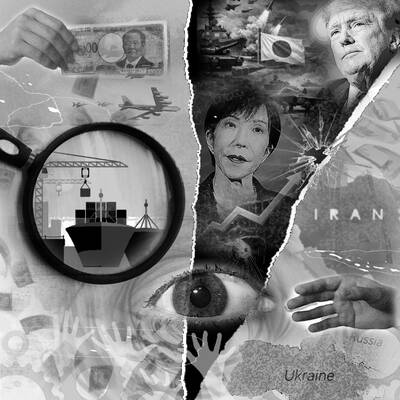
Japan’s imminent easing of arms export rules has sparked strong interest from Warsaw to Manila, Reuters reporting found, as US President Donald Trump wavers on security commitments to allies, and the wars in Iran and Ukraine strain US weapons supplies. Japanese Prime Minister Sanae Takaichi’s ruling party approved the changes this week as she tries to invigorate the pacifist country’s military industrial base. Her government would formally adopt the new rules as soon as this month, three Japanese government officials told Reuters. Despite largely isolating itself from global arms markets since World War II, Japan spends enough on its own
When 17,000 troops from the US, the Philippines, Australia, Japan, Canada, France and New Zealand spread across the Philippine archipelago for the Balikatan military exercise, running from tomorrow through May 8, the official language would be about interoperability, readiness and regional peace. However, the strategic subtext is becoming harder to ignore: The exercises are increasingly about the military geography around Taiwan. Balikatan has always carried political weight. This year, however, the exercise looks different in ways that matter not only to Manila and Washington, but also to Taipei. What began in 2023 as a shift toward a more serious deterrence posture


 RSS
RSS