


Amid heightened tensions between Japan and China, US President Donald Trump spoke by telephone with Chinese President Xi Jinping (習近平).
While Trump termed it a positive development, saying he would visit China in April next year, Beijing said it made it clear to Washington that Taiwan’s return to China is an “integral part of the postwar international order.” While it has been reported that Trump requested a phone call with Japanese Prime Minister Sanae Takaichi, the details of any such conversation have not yet been made public.
Trump’s claim of “extremely strong” US-China relations has once again seized global attention. Last month, just ahead of his highly anticipated meeting with Xi in Busan, South Korea, Trump boldly announced on Truth Social: “THE G2 WILL BE CONVENING SHORTLY!”
Unsurprisingly, the statement sparked widespread discussion, directly invoking China and seemingly reviving the long-dormant G2 concept, which was also promoted by the administration of former US president Barack Obama.
The apparent attempt to resurrect the “G2” notion, which envisions shared global leadership between the US and China, marks a notable rhetorical shift and is surprising, given that Trump has been hawkish on China even during his first term. By invoking it, Washington has brought back a concept dismissed as a faulty trade-off, given the persistent and often adversarial nature of US-China relations.
Media analyses suggest that the move reflects a growing recognition within the US of China’s rising power and an uneasy acknowledgement of its near-equal status on the world stage. The renewed attention signals an implicit acceptance within US policy circles of China’s expanding international influence and the shifting balance of global power.
For Beijing, the idea holds little appeal.
First, China continues to present itself as a developing country, aspiring to lead the global south and, eventually, to achieve broader global influence. Unlike the West, China sees strategic value in retaining the support of developing nations to bolster its legitimacy. While it aims to surpass the US militarily, economically and technologically, it is unlikely to embrace a bilateral framework implying formalized cogovernance of the world.
Second, the ideological, strategic and global ambitions gap between China and the US remains vast, limiting the feasibility of any institutionalized G2 arrangement.
Third, if such a framework were ever to exist, it would likely involve a broader coalition of nations with differing ideologies, capacities and priorities, rather than a US-China duopoly. In this light, the G2 concept appears even less plausible for China this year than it did in the 2000s.
While much commentary has focused on how such discourse might be interpreted in Beijing, the implications extend far beyond the bilateral relationship. Washington’s allies and partners across the Indo-Pacific region are closely observing the developments. For many in the region, stability in US-China relations is desirable, as it would help mitigate the risks of confrontation, economic disruption, regional instability and global upheaval.
Yet Trump’s rhetoric has also generated unease among the US’ regional partners regarding Washington’s long-term strategic intentions. Concerns are growing that a return to the G2 framework could signal a weakening of the US commitment to the Indo-Pacific region, particularly in terms of security and regional order.
While sustained engagement with China is widely accepted as necessary, framing the relationship as one of shared global governance might alarm the US’ allies and partners, especially Taiwan, the Philippines and other members of the Quadrilateral Security Dialogue — Australia, India and Japan. For these countries, any suggestion of a US-China alliance raises doubts about the credibility of the Washington’ status as a security guarantor, and its assurances of collective defense and regional stability.
From the US perspective, reviving the G2 discourse might appear advantageous to smooth the way for a rare earths deal with China or to ease bilateral tensions. However, fundamental differences and rivalry cannot be erased: China’s ultimate goal is to overtake the US.
In all likelihood, China would view G2 rhetoric skeptically, interpreting it as a sign of US weakness and declining influence in the Indo-Pacific region.
The Xi-Trump phone call and China’s reiteration of its claims to Taiwan put pressure on Washington’s G2 plan. How Trump would manage ties with Tokyo and Taipei while building relations with Beijing is worthy of international attention.
Trump’s episodic and erratic approach to China and the region risks eroding the trust the US has painstakingly built with its partners. There is little chance that countries such as India, Japan or the Philippines would accept a bipolar world dominated solely by the US and China.
Rather than serving as a stabilizer, the G2 concept is more likely to be seen as an attempt to divide the world into two poles once again, or worse, as a signal that the US is content with a bipolar world rather than a genuinely multipolar order.
Even if the G2 never materializes, the rhetoric has already bolstered China’s position, while placing the US in a strategic bind. In effect, it is a win-win for Beijing, but a lose-lose for Washington.
There are limitations to Trump’s “America First” approach, not only for the region, but also for the US itself and its foreign policy. His administration would do well to consider the perspectives of the US’ allies and partners, rather than advancing a strategy that ultimately benefits China.
Rahul Mishra is an associate professor at the Centre for Indo-Pacific Studies at Jawaharlal Nehru University in New Delhi, and a senior research fellow at the German-Southeast Asian Center of Excellence for Public Policy and Good Governance at Thammasat University in Thailand. He was formerly director of the Centre for ASEAN Regionalism Universiti Malaya. He is the series editor of the Palgrave Series in Indo-Pacific Studies.
KMT Chairwoman Cheng Li-wun’s (鄭麗文) recent visit to Beijing and her upcoming visit to Washington will serve as a high-level test of her diplomatic mettle. In Beijing, Cheng was received with symbolic gestures, a warm reception, and high-level access. In Washington, she will receive far less pomp and far sharper questions about the KMT’s vision for the future of Taiwan. Her challenge will be to persuade Washington that the KMT’s engagement with China can coexist with strong deterrence. Cheng’s April 7-12 visit to mainland China coincided with an intense period of conflict in Iran. Despite the strategic significance of Cheng’s trip,
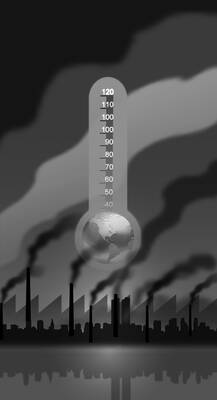
The closure of the Strait of Hormuz has sent the vast Asian chemicals industry into a tailspin. Deprived of the likes of Qatari natural gas and Saudi Arabian oil, the region’s fertilizer and plastics plants are slowing production or even shutting down. Everywhere except China, that is. In petrochemicals, China is unique. As well as a traditional industry that uses oil and gas as feedstock, it has parallel output that relies on its abundant domestic coal. Unsurprisingly, India and other regional powers want to copy and paste the Chinese method. This would not be easy — or climate friendly. The
Indonesian President Prabowo Subianto says he knows how to fix the problems facing Indonesia. Yet his economic mismanagement and authoritarian tendencies are steering the nation toward a familiar mix of currency instability and political chaos. The world’s fourth-most populous nation risks reversing the hard-won democratic and business reforms that came after the Asian Financial Crisis in 1997. At that time, the rupiah collapsed and the political upheaval that followed forced former president Haji Mohamed Suharto from power. Prabowo’s administration is ignoring similar warning signs. That disconnect was apparent in a national address on Wednesday, when Prabowo projected the swagger that has
“Of course you can choose not to be Taiwanese, just do not stay here,” chairwoman of Taipei 101 operator Taipei Financial Center Corp Janet Chia (賈永婕) said in an online interview with local entertainer Tai Chih-yuan (邰智源), triggering intense discussion on social media, with politicians across party lines weighing in. In the interview, which was aired on May 14, Chia and Tai’s discussion over a meal in Taipei 101 covered Chia’s career change from entertainer to chairwoman and US climber Alex Honnold’s free solo climb up the Taipei 101 building. During the interview, Chia said, “Being on this land, we


 RSS
RSS