


Taiwan’s long-term care system has fallen into a structural paradox. Staffing shortages have led to a situation in which almost 20 percent of the about 110,000 beds in the care system are vacant, but new patient admissions remain closed. Although the government’s “Long-term Care 3.0” program has increased subsidies and sought to integrate medical and elderly care systems, strict staff-to-patient ratios, a narrow labor pipeline and rising inflation-driven costs have left many small to medium-sized care centers struggling. With nearly 20,000 beds forced to remain empty as a consequence, the issue is not isolated management failures, but a far more structural dysfunction.
The numbers speak for themselves. After the rollout of the “Long-term Care 2.0” program in 2017, care personnel numbers rose from 25,000 to approximately 100,000, but have stagnated over the past three years. GDP grew by just 1.6 percent in 2023, and the number of in-home care workers increased by only 700 in 2024. Young talent is being drawn away by hospitals, relegating residential long-term care facilities to training grounds. With recent efforts to integrate hospitals with long-term care providers, the increased administrative burden has been a further drain on capacity to provide care services and has created compounding negative effects.
A long-overlooked policy avenue could be found in the vast labor pool emerging from the current wave of retirees. In 2023, Taiwan’s population aged 65 and older reached 4.29 million, with new retirees reaching a 16-year high in 2024. This is expected to peak between last year and this year with a combined total of up to 350,000 retirees over the two years. Equipped with emotional stability, life experience and a sense of responsibility, this cohort of healthy retirees could represent an untapped pool of precisely the kind of candidates for non-medical care roles that the long-term care sector needs.
Senior learning programs have the potential to become a key connecting platform for the workforce. Taiwan’s roughly 370 senior learning centers have already built capacity in health promotion and community engagement programs. With policy guidance, these centers could gradually pilot dementia awareness, patient transfer skills and companionship training modules as entry points for employment. Approximately 166,000 people participated in senior learning programs in 2023. Although this accounts for only about 2 percent of the middle-aged and elderly population, it nevertheless represents a stable and scalable training base.
Japan and South Korea, also super-aged societies, each have models of integrating continued learning centers with care service pathways and senior employment programs well worth Taiwan’s consideration. With short-term training initiatives, clearly defined roles and flexible working hours, healthy and able seniors could be well suited to roles in non-medical caregiving and companionship services. This approach could absorb roughly 20 to 30 percent of the caregiving workload, with particular flexibility in nighttime and companionship support. Using these senior learning centers to steadily roll out training and placement mechanisms could provide the long-term care system with a stable new source of workers.
However, the issue is not whether such policies can be implemented, but whether the political will exists. The government’s long-term care workforce strategy needs to shift from focusing on demand by creating new roles, to focusing on supply by bolstering candidate pools. This can be done systematically through expanding training subsidies, adjusting caregiver-to-patient ratio calculations, establishing tax-exempt re-employment and national job-matching platforms, and allocating dedicated funding for senior-focused long-term care training programs.
The long-term care sector crisis has never been about beds, but about staff. If retirees could be seen as part of the solution rather than simply welfare recipients, and senior learning programs could be brought into the heart of the sector’s workforce strategy, it could enable the system’s stabilization, recovery and even transformation. This strategy represents a data-backed and ready-to-deploy policy solution. All that it needs is the political resolve to be implemented.
Hsieh Min-hsien is an adjunct assistant professor at National Chi Nan University’s Department of Counseling Psychology and Human Resource Development, and the CEO of Miaoli County’s Active Aging Learning Model Center.
Translated by Gilda Knox Streader
Minister of Labor Hung Sun-han (洪申翰) on April 9 said that the first group of Indian workers could arrive as early as this year as part of a memorandum of understanding (MOU) between the Taipei Economic and Cultural Center in India and the India Taipei Association. Signed in February 2024, the MOU stipulates that Taipei would decide the number of migrant workers and which industries would employ them, while New Delhi would manage recruitment and training. Employment would be governed by the laws of both countries. Months after its signing, the two sides agreed that 1,000 migrant workers from India would
In recent weeks, Taiwan has witnessed a surge of public anxiety over the possible introduction of Indian migrant workers. What began as a policy signal from the Ministry of Labor quickly escalated into a broader controversy. Petitions gathered thousands of signatures within days, political figures issued strong warnings, and social media became saturated with concerns about public safety and social stability. At first glance, this appears to be a straightforward policy question: Should Taiwan introduce Indian migrant workers or not? However, this framing is misleading. The current debate is not fundamentally about India. It is about Taiwan’s labor system, its
On March 31, the South Korean Ministry of Foreign Affairs released declassified diplomatic records from 1995 that drew wide domestic media attention. One revelation stood out: North Korea had once raised the possibility of diplomatic relations with Taiwan. In a meeting with visiting Chinese officials in May 1995, as then-Chinese president Jiang Zemin (江澤民) prepared for a visit to South Korea, North Korean officials objected to Beijing’s growing ties with Seoul and raised Taiwan directly. According to the newly released records, North Korean officials asked why Pyongyang should refrain from developing relations with Taiwan while China and South Korea were expanding high-level
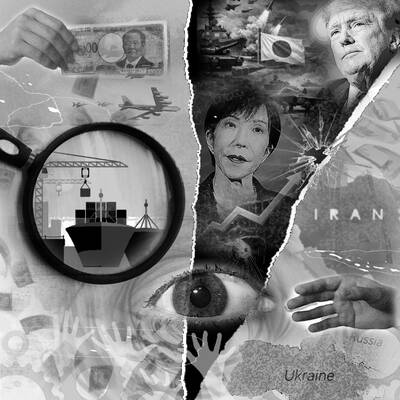
Japan’s imminent easing of arms export rules has sparked strong interest from Warsaw to Manila, Reuters reporting found, as US President Donald Trump wavers on security commitments to allies, and the wars in Iran and Ukraine strain US weapons supplies. Japanese Prime Minister Sanae Takaichi’s ruling party approved the changes this week as she tries to invigorate the pacifist country’s military industrial base. Her government would formally adopt the new rules as soon as this month, three Japanese government officials told Reuters. Despite largely isolating itself from global arms markets since World War II, Japan spends enough on its own


 RSS
RSS