


There is a modern roadway stretching from central Hargeisa, the capital of Somaliland in the Horn of Africa, to the partially recognized state’s Egal International Airport. Emblazoned on a gold plaque marking the road’s inauguration in July last year, just below the flags of Somaliland and the Republic of China (ROC), is the road’s official name: “Taiwan Avenue.”
The first phase of construction of the upgraded road, with new sidewalks and a modern drainage system to reduce flooding, was 70 percent funded by Taipei, which contributed US$1.85 million. That is a relatively modest sum for the effect on international perception, and reinforces the contrasts between Taiwan and China.
The plaque itself speaks volumes, in the wording, the adjacent flags, the message it conveys and the underlying policy behind the collaboration. Both Somaliland and Taiwan are self-governing states struggling to secure international recognition. Their mutual association and strengthening, albeit informal, of diplomatic ties, is one way to reinforce their attempt to find a solution to the predicament. That the name “Taiwan” was used instead of the “Republic of China,” especially when juxtaposed with the ROC flag, is a measure of the recognition that the ROC is Taiwan, and that it is not the People’s Republic of China. On a continent where Beijing is making diplomatic inroads into many nations with its Belt and Road Initiative, Taiwan’s collaborations and investment within Somaliland contrasts the Taiwanese model of seeking to provide benefit and development for locals compared with China’s largely self-serving model of investment in Africa.
An article published on July 17 by the Somaliland Standard news agency, “Taiwan and Somaliland inaugurate ‘Taiwan Avenue’ in Hargeisa, strengthening bilateral ties,” said the event was “part of a broader context of Taiwan’s diplomatic strategy in Africa, where it seeks to expand its influence and challenge dubbed China’s ‘One China’ policy.” That is part of a “unique relationship” with Taiwan, including the opening of representative offices in each other’s capitals, it said.
The representative offices use the official names “Taiwan” and the “Republic of Somaliland.” Despite the lack of formal diplomatic ties, the names reinforce the message of individual legitimacy.
Taiwan Representative to Somaliland Allen Lou (羅震華) has said that Taiwan’s model of cooperation is “people-centric” and focuses on “knowledge transfer and capacity building,” and that ultimately the hope is to create a model in Somaliland to “win more friends in east Africa.”
President William Lai (賴清德) met with Somaliland Minister of Foreign Affairs and International Cooperation Abdirahman Dahir Adam Bakal in July last year following the signing of an agreement between the nations on coast guard cooperation. Lai talked about the need to deepen bilateral ties and fulfill the strategic goal of a “non-red” Somaliland shoreline. He called Somaliland “the beacon of democracy in the Horn of Africa,” and that the “authoritarian bloc” continues to ramp up suppression of Taiwan’s and Somaliland’s international participation.
Taipei’s policy contrasts authoritarian states and democracies, and in particular those that are seeking legitimacy internationally. That these contrasts exist is further evidence that Taiwan and China are separate entities, with distinct governments, even if that is not reflected in international recognition.
On today’s page, analyst Michele Maresca (“Benefits of Israel’s pivot in Africa”) writes that Taiwan’s partnership with Somaliland has helped with the African nation’s aspirations to bolster international recognition. That was given a major boost by Israel’s formal recognition of Somaliland as an “independent and sovereign state” on Dec. 27 last year, making Israel the first UN member to do so. That recognition is a stepping stone in Somaliland’s bid for more international support: It not only provides broader legitimacy, but it now has a champion in Israel.
Soft power works slowly, sometimes imperceptibly, but over time lays the foundations for the evolution of circumstances by forming recognition of desired narratives. It is helped when the application of the soft power is implemented in good faith and for mutual benefit. Israel’s recognition of Somaliland was a significant boost to Hargeisa’s cause. Hopefully the application of soft power will continue to aid Taiwan’s.
KMT Chairwoman Cheng Li-wun’s (鄭麗文) recent visit to Beijing and her upcoming visit to Washington will serve as a high-level test of her diplomatic mettle. In Beijing, Cheng was received with symbolic gestures, a warm reception, and high-level access. In Washington, she will receive far less pomp and far sharper questions about the KMT’s vision for the future of Taiwan. Her challenge will be to persuade Washington that the KMT’s engagement with China can coexist with strong deterrence. Cheng’s April 7-12 visit to mainland China coincided with an intense period of conflict in Iran. Despite the strategic significance of Cheng’s trip,
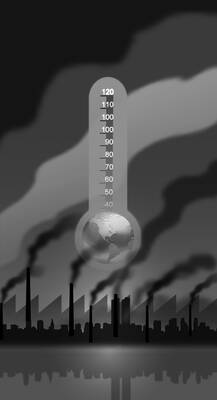
The closure of the Strait of Hormuz has sent the vast Asian chemicals industry into a tailspin. Deprived of the likes of Qatari natural gas and Saudi Arabian oil, the region’s fertilizer and plastics plants are slowing production or even shutting down. Everywhere except China, that is. In petrochemicals, China is unique. As well as a traditional industry that uses oil and gas as feedstock, it has parallel output that relies on its abundant domestic coal. Unsurprisingly, India and other regional powers want to copy and paste the Chinese method. This would not be easy — or climate friendly. The
Indonesian President Prabowo Subianto says he knows how to fix the problems facing Indonesia. Yet his economic mismanagement and authoritarian tendencies are steering the nation toward a familiar mix of currency instability and political chaos. The world’s fourth-most populous nation risks reversing the hard-won democratic and business reforms that came after the Asian Financial Crisis in 1997. At that time, the rupiah collapsed and the political upheaval that followed forced former president Haji Mohamed Suharto from power. Prabowo’s administration is ignoring similar warning signs. That disconnect was apparent in a national address on Wednesday, when Prabowo projected the swagger that has
“Of course you can choose not to be Taiwanese, just do not stay here,” chairwoman of Taipei 101 operator Taipei Financial Center Corp Janet Chia (賈永婕) said in an online interview with local entertainer Tai Chih-yuan (邰智源), triggering intense discussion on social media, with politicians across party lines weighing in. In the interview, which was aired on May 14, Chia and Tai’s discussion over a meal in Taipei 101 covered Chia’s career change from entertainer to chairwoman and US climber Alex Honnold’s free solo climb up the Taipei 101 building. During the interview, Chia said, “Being on this land, we


 RSS
RSS