


While the Chinese People’s Liberation Army (PLA) reportedly aims to possess the capability to attempt an invasion of Taiwan by 2027, Beijing on Saturday surprisingly announced an investigation into two of its highest-ranking PLA commanders for unspecified breaches of the law, sparking doubts about Beijing’s war-readiness.
The Chinese Ministry of National Defense said it has opened an investigation into Chinese Central Military Commission (CMC) Vice Chairman Zhang Youxia (張又俠) and Joint Staff Department Chief of Staff Liu Zhenli (劉振立) for “serious violations of discipline and law.” They were already absent from a high-level party event last month.
Their removal followed the expulsion of nine top generals in October last year — one of the largest public military crackdowns in decades — and a series of purges in the PLA Rocket Force and other branches.
It is reportedly part of a broader “anti-corruption” campaign that has punished more than 200,000 officials since Chinese President Xi Jinping (習近平) came to power in 2012. At least 13 former or serving generals, including Zhang and Liu, with positions of power in the military have been investigated.
Some media reports speculated that Zhang was removed due to his close ties with the US or for allegedly taking bribes in exchange for official posts.
However, an editorial by China’s state mouthpiece, the PLA Daily, said Zhang and Liu “have seriously undermined the CMC Chairman responsibility system,” and caused “severe damage to combat capability development,” showing that they more likely had disagreements with Xi regarding the PLA’s reformation, or made military moves that did not align with Xi’s directives, which could pose a threat to his authority.
All officers and soldiers must resolutely support the decision of the CPC Central Committee “with Comrade Xi Jinping as its core” in thought and action, it said.
The probe is an unprecedented reshaping of the PLA’s leadership under Xi’s instruction, showing his deep mistrust of the military leaders. While Xi hailed the anti-corruption campaign as crucial for national governance, he has used it more as a tool to purge political rivals, and to consolidate loyalty to him.
The investigation into Zhang, the PLA’s No. 1 active general and Xi’s longtime ally, has also demonstrated that Xi could defenestrate any confederate to grab ultimate control of the army.
Whatever the reason is for Zhang’s removal, the crackdown on top generals has put the military’s system into a vacuum. Xi’s anti-corruption drive has also reportedly slowed down the enhancement of China’s advanced weaponry.
The CMC has been slashed down from the original seven members to just two: Xi, the chairman, and Zhang Shengmin (張升民), who is responsible for the military’s disciplinary affairs.
Zhang and Liu have been considered as key figures in China’s military modernization program, and were among the few remaining senior generals with actual combat experiences.
Strategists estimated that it would take China five to 10 years to cultivate such professional and experienced military general commanders.
The removals also reflected that to Xi, political loyalty and command coherence take priority over military professionalism.
The unrest within the Chinese military could delay the army’s upgrade, and weaken its capability to launch military aggression against Taiwan.
Nevertheless, Taiwan should never overlook the long-term threats of China’s take over ambitions, which Beijing has named as a historic mission and bottom “red-line.”
Experts have cautioned that, in place of Zhang and Liu, Xi would likely appoint successors who are less professional, but more willing to execute his military blueprint.
National Taiwan University Center for China Studies associate fellow K. Tristan Tang (湯廣正) said that “although the Chinese military remains unlikely to invade Taiwan in the near term, PLA training and exercise activity might become more aggressive and more frequent than in recent years.”
Furthermore, without experienced generals to dissuade Xi or question decisionmaking, Xi’s “personalistic centralization” could increase the risk of a military miscalculation over the Taiwan issue, which could also make the world “less safe.”
Chinese military strategist Sun Tzu (孫子) in his Art of War said: “One should not rely on the enemy’s not attacking, but rather on having something that cannot be attacked.”
As President William Lai (賴清德) lately reminded military officers: “Taiwan has no room for complacency or laxity,” in the face of turmoil in China over a military power scramble.
Taiwan must continue to refine its defense strength to further safeguard national security.
KMT Chairwoman Cheng Li-wun’s (鄭麗文) recent visit to Beijing and her upcoming visit to Washington will serve as a high-level test of her diplomatic mettle. In Beijing, Cheng was received with symbolic gestures, a warm reception, and high-level access. In Washington, she will receive far less pomp and far sharper questions about the KMT’s vision for the future of Taiwan. Her challenge will be to persuade Washington that the KMT’s engagement with China can coexist with strong deterrence. Cheng’s April 7-12 visit to mainland China coincided with an intense period of conflict in Iran. Despite the strategic significance of Cheng’s trip,
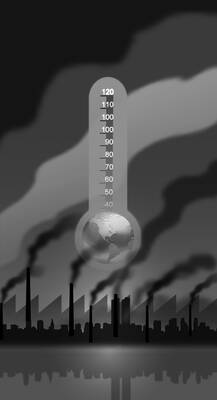
The closure of the Strait of Hormuz has sent the vast Asian chemicals industry into a tailspin. Deprived of the likes of Qatari natural gas and Saudi Arabian oil, the region’s fertilizer and plastics plants are slowing production or even shutting down. Everywhere except China, that is. In petrochemicals, China is unique. As well as a traditional industry that uses oil and gas as feedstock, it has parallel output that relies on its abundant domestic coal. Unsurprisingly, India and other regional powers want to copy and paste the Chinese method. This would not be easy — or climate friendly. The
Indonesian President Prabowo Subianto says he knows how to fix the problems facing Indonesia. Yet his economic mismanagement and authoritarian tendencies are steering the nation toward a familiar mix of currency instability and political chaos. The world’s fourth-most populous nation risks reversing the hard-won democratic and business reforms that came after the Asian Financial Crisis in 1997. At that time, the rupiah collapsed and the political upheaval that followed forced former president Haji Mohamed Suharto from power. Prabowo’s administration is ignoring similar warning signs. That disconnect was apparent in a national address on Wednesday, when Prabowo projected the swagger that has
“Of course you can choose not to be Taiwanese, just do not stay here,” chairwoman of Taipei 101 operator Taipei Financial Center Corp Janet Chia (賈永婕) said in an online interview with local entertainer Tai Chih-yuan (邰智源), triggering intense discussion on social media, with politicians across party lines weighing in. In the interview, which was aired on May 14, Chia and Tai’s discussion over a meal in Taipei 101 covered Chia’s career change from entertainer to chairwoman and US climber Alex Honnold’s free solo climb up the Taipei 101 building. During the interview, Chia said, “Being on this land, we


 RSS
RSS