


The Cabinet on Nov. 6 approved a NT$10 billion (US$318.4 million) four-year plan to build tourism infrastructure in mountainous areas and the south.
Premier Cho Jung-tai (卓榮泰) on Tuesday announced that the Ministry of Transportation and Communications would offer weekday accommodation discounts, birthday specials and other domestic travel incentives beginning next March, aiming to encourage more travel outside the usual weekend and holiday peaks.
The government is right to focus on domestic tourism. Although the data appear encouraging on the surface — as total domestic trips are up compared with their pre-COVID-19 pandemic numbers — a closer look tells a different story.
Domestic tourism spending last year fell 6.2 percent from a year earlier. Overseas travel, on the other hand, is booming. Taiwanese spent roughly NT$1.019 trillion abroad last year, up 42 percent from 2023 — money that might have otherwise supported local economies.
It is clear that many see far more value in traveling to nearby countries than exploring Taiwan, and the government has started to take notice.
The high cost of domestic travel is a major factor behind Taiwan’s tourism deficit. Last year, the average hotel stay cost about NT$2,960 per night — higher than many budget accommodations in popular destinations such as Japan, China, South Korea and Vietnam.
Prices spike on weekends and holidays, the most popular times for overnight trips, creating bottlenecks that deter many potential travelers.
The government’s weekday accommodation program would offer vouchers of up to NT$2,000 per person for stays from Sunday to Thursday, which tend to be less expensive. It would also randomly select 1,000 people each month to receive NT$1,200 for travel on their birthday.
Unfortunately, these incentives fail to account for the basic realities that keep most people from traveling during the week. Domestic tourism is naturally concentrated on weekends and holidays because weekday trips require taking time off from work.
While the ministry encouraged employees to use paid leave for such trips, Taiwan’s mandatory paid leave is limited compared with many other developed countries.
Taking a weekday vacation would mean using one of the few leave days that could otherwise be reserved for rest, longer holidays or personal needs. Students and families with children need to work around school schedules or risk falling behind.
A NT$2,000 travel voucher would not even cover the average cost of a one-night hotel stay, let alone transportation, food and other costs that come with tourism. The proposed birthday specials are similarly limited.
Several attractions across Taiwan announced their own promotions to lure tourists, but isolated initiatives such as raffles or free museum entry, while helpful, are unlikely to draw travelers from across the country.
The government should consider broader, region-focused strategies. Subsidies and attraction-specific incentives could be combined with seasonal events that highlight the unique culture, cuisine, natural beauty and specialties of each area.
Kaohsiung is a strong example — its efforts to draw on its strengths and build an identity as a concert hub are paying off. Concerts by the K-pop group Twice generated more than NT$500 million in revenue last weekend, and the Kaohsiung National Stadium is already fully booked for next year.
The goal of domestic tourism plans should be long-term, sustainable growth — not a cycle of short-term subsidies when demand dips. To shrink the tourism deficit, travelers need to feel that the combined experience, cost and convenience of traveling within the country rivals what they could get from a trip overseas.
Achieving this means building destinations that can stand on their own, through coordinated efforts to create experiences compelling enough that travelers return because they want to — not because they received a voucher.
A gap appears to be emerging between Washington’s foreign policy elites and the broader American public on how the United States should respond to China’s rise. From my vantage working at a think tank in Washington, DC, and through regular travel around the United States, I increasingly experience two distinct discussions. This divergence — between America’s elite hawkishness and public caution — may become one of the least appreciated and most consequential external factors influencing Taiwan’s security environment in the years ahead. Within the American policy community, the dominant view of China has grown unmistakably tough. Many members of Congress, as
The Hong Kong government on Monday gazetted sweeping amendments to the implementation rules of Article 43 of its National Security Law. There was no legislative debate, no public consultation and no transition period. By the time the ink dried on the gazette, the new powers were already in force. This move effectively bypassed Hong Kong’s Legislative Council. The rules were enacted by the Hong Kong chief executive, in conjunction with the Committee for Safeguarding National Security — a body shielded from judicial review and accountable only to Beijing. What is presented as “procedural refinement” is, in substance, a shift away from
The shifting geopolitical tectonic plates of this year have placed Beijing in a profound strategic dilemma. As Chinese President Xi Jinping (習近平) prepares for a high-stakes summit with US President Donald Trump, the traditional power dynamics of the China-Japan-US triangle have been destabilized by the diplomatic success of Japanese Prime Minister Sanae Takaichi in Washington. For the Chinese leadership, the anxiety is two-fold: There is a visceral fear of being encircled by a hardened security alliance, and a secondary risk of being left in a vulnerable position by a transactional deal between Washington and Tokyo that might inadvertently empower Japan
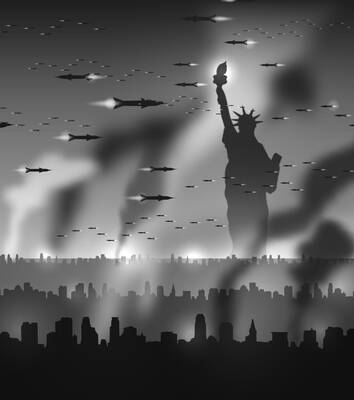
After declaring Iran’s military “gone,” US President Donald Trump appealed to the UK, France, Japan and South Korea — as well as China, Iran’s strategic partner — to send minesweepers and naval forces to reopen the Strait of Hormuz. When allies balked, the request turned into a warning: NATO would face “a very bad” future if it refused. The prevailing wisdom is that Trump faces a credibility problem: having spent years insulting allies, he finds they would not rally when he needs them. That is true, but superficial, as though a structural collapse could be caused by wounded feelings. Something


 RSS
RSS