


Taiwan’s export momentum has been very strong this year, as robust global demand for artificial intelligence (AI) and high-performance computing applications continued to boost outbound shipments of electronic components, information and communications technology (ICT) products, and audiovisual devices. As a result, the government’s statistics agency and several research institutes have sharply raised their GDP growth forecasts for Taiwan this year, despite geopolitical uncertainties and macroeconomic volatility.
The Ministry of Finance on Friday reported that exports last month surged by 49.7 percent year-on-year to US$61.8 billion, a record monthly high. It is also the 24th consecutive month of annual growth and the largest year-on-year increase in about 15-and-a-half years.
Cumulative exports during the first 10 months of the year rose by 31.8 percent to US$514.45 billion from the same period last year, surpassing last year’s full-year total, the ministry said, adding that it expects full-year exports this year to exceed the US$600 billion for the first time.
The strong export performance has been underpinned by strong market demand for electronic parts, ICT products and audiovisual devices, which together helped outbound shipments grow 48.4 percent year-on-year in the first 10 months, the ministry said.
Other exports, such as metals, machinery products, plastics and rubber products, remained largely subdued during the same period, growing 1 percent compared with last year, it added.
Taiwan’s expertise in advanced chip production and high-quality ICT products give the country an edge in the AI boom, helping boost export growth. The ongoing capital outlays earmarked by chipmakers and companies throughout the supply chains have also played a significant role in supporting domestic investment.
On the other hand, private consumption and government spending have been unimpressive so far.
Exports of goods and services in the first three quarters of this year grew by 28.55 percent from a year earlier, gross capital formation increased by 6.9 percent, government spending expanded by 1.15 percent and private consumption edged up by 0.91 percent, government data showed. Despite the robust performance of Taiwan’s stock market this year, household spending has not moved in parallel, and that has become increasingly evident in car and home purchases.
Overall, Taiwan’s economy grew 7.06 percent year-on-year in the first three quarters, largely driven by foreign trade, while domestic demand fell significantly. The government’s NT$10,000 (US$322) cash handout this month is expected to stimulate private consumption, with the National Development Council estimating it would provide a 0.415 percentage point boost to GDP growth, and the Directorate-General of Budget, Accounting and Statistics projecting a 0.65 percentage point contribution.
Taiwan’s reliance on the electronics industry presents opportunities and risks, and economists warned that any setback to the AI boom could adversely affect the country’s trade and capital inflows. The uneven growth in domestic industries — especially traditional industries and non-AI manufacturing — deserves greater attention from the government. While ministries have introduced assistance measures for affected businesses, the imbalance in industrial development does not seem to have improved.
As more Taiwanese manufacturers seek alternative production bases overseas due to geopolitics and the US’ tariff policy, retaining critical technology and advanced manufacturing at home, as well as developing newer and more dynamic industries domestically, are more crucial than ever.
This year is a defining moment for the tech-driven, export-reliant economy, as several institutes forecast that Taiwan’s real GDP this year could grow by about 6 percent. However, to keep the economy resilient, the government must regularly review its policies and make necessary adjustments promptly.

A gap appears to be emerging between Washington’s foreign policy elites and the broader American public on how the United States should respond to China’s rise. From my vantage working at a think tank in Washington, DC, and through regular travel around the United States, I increasingly experience two distinct discussions. This divergence — between America’s elite hawkishness and public caution — may become one of the least appreciated and most consequential external factors influencing Taiwan’s security environment in the years ahead. Within the American policy community, the dominant view of China has grown unmistakably tough. Many members of Congress, as
The Hong Kong government on Monday gazetted sweeping amendments to the implementation rules of Article 43 of its National Security Law. There was no legislative debate, no public consultation and no transition period. By the time the ink dried on the gazette, the new powers were already in force. This move effectively bypassed Hong Kong’s Legislative Council. The rules were enacted by the Hong Kong chief executive, in conjunction with the Committee for Safeguarding National Security — a body shielded from judicial review and accountable only to Beijing. What is presented as “procedural refinement” is, in substance, a shift away from
The shifting geopolitical tectonic plates of this year have placed Beijing in a profound strategic dilemma. As Chinese President Xi Jinping (習近平) prepares for a high-stakes summit with US President Donald Trump, the traditional power dynamics of the China-Japan-US triangle have been destabilized by the diplomatic success of Japanese Prime Minister Sanae Takaichi in Washington. For the Chinese leadership, the anxiety is two-fold: There is a visceral fear of being encircled by a hardened security alliance, and a secondary risk of being left in a vulnerable position by a transactional deal between Washington and Tokyo that might inadvertently empower Japan
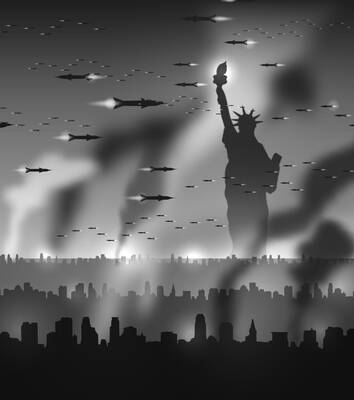
After declaring Iran’s military “gone,” US President Donald Trump appealed to the UK, France, Japan and South Korea — as well as China, Iran’s strategic partner — to send minesweepers and naval forces to reopen the Strait of Hormuz. When allies balked, the request turned into a warning: NATO would face “a very bad” future if it refused. The prevailing wisdom is that Trump faces a credibility problem: having spent years insulting allies, he finds they would not rally when he needs them. That is true, but superficial, as though a structural collapse could be caused by wounded feelings. Something


 RSS
RSS