


It is official: We are about to reach peak fossil fuels. New figures from the International Energy Agency (IEA) show that the shift to renewable energy is now unstoppable — and that demand for oil and gas should begin to decline by the end of this decade. This decline is not fast enough to prevent our climate warming irreversibly, but it is a death knell for fossil fuels.
In response, leaders of rich countries will be showing off wind turbines on their coasts and pointing to shiny electric cars on their streets. But they have spent the past few years persuading African countries to increase their gas expansion instead. There is US$245 billion of gas infrastructure planned in Africa, and gas-rich countries such as Mozambique have faced an onslaught of foreign companies fishing for contracts to extract their gas.
Rich countries have always had their eyes on Africa as a new source of gas, but since Russia’s invasion of Ukraine drove up prices, their thirst for African gas has increased as their own energy security has wobbled.
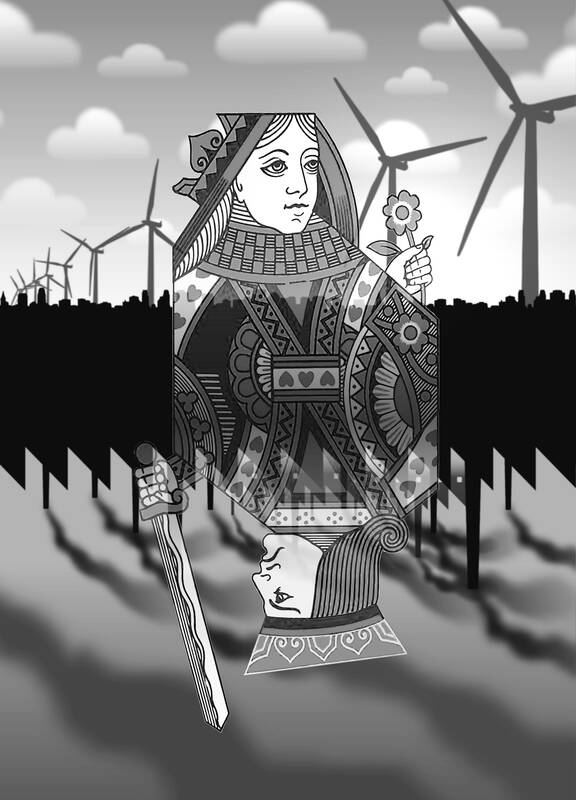
Illustration: Yusha
These projects were pushed as a huge opportunity to boost our economies. But they were never in our interests, because burning or selling fossil fuels is a terrible deal for Africa. First, because the gas extracted from African countries will not generate electricity for their populations, even though 600 million of us in sub-Saharan Africa have no access to it. Instead, it is for export to rich countries. Second, because burning more gas worsens climate breakdown and brings catastrophic droughts and famines — especially in African countries. In addition, fossil fuel plants have often meant disaster for the communities living around them. In Cabo Delgado, in Mozambique, the gas industry destroyed the lives and livelihoods of the locals but delivered few of the promised jobs and compensation. In Nigeria, oil drilling contaminated air, land and water, exposed people to toxic chemicals and lowered life expectancy.
Oil and gas giants have sold African leaders big promises that gas is the key to development. But this week’s analysis by energy experts at the IEA makes those seem even more dubious. It predicts that beyond 2025 there could be too much natural gas in the global energy system, causing a “gas glut.”
For fossil fuel corporations, that means a marginal hit to profits — and their bets are spread. For African countries persuaded into gas projects, a dwindling market for gas could mean an economic crisis that could lead to cuts in national spending and difficulties repaying national debt. We have been burned like this by fossil fuels before: African countries that export oil saw revenue halved at the start of this decade. As we enter the dying days of fossil fuels, gas infrastructure in Africa could go out of date almost as soon as it is built.
That leaves us behind in the renewable energy transition that rich countries are leaping on for themselves. Money spent on building gas supply infrastructure is money that cannot be used for investment in the industry of the future: clean, secure, renewable energies such as solar and wind.
Africans know where the world is heading, and we are determined not to be left behind. In October our governments held the first ever African Climate Summit and called for global support to quintuple our renewable energy capacity.
There is no need to double down on failing fossil fuels in Africa when we have never-ending wind and sun. We are the world’s youngest continent, full of entrepreneurs ready to deliver a manufacturing revolution in global renewables. Nobody is more motivated to tackle the climate crisis than Africans: the continent hit hardest that did the least to cause it. We can deliver a world powered by wind and solar — with the calmer climate, cheaper bills and reliability that come along with it.
When African people get to choose, we choose renewables. But will rich countries finally allow us to determine our own future? They need to meet us halfway instead of tying our hands behind our back with gas pipelines. Right now only 2 percent of investment in renewables goes to Africa. That must change: Development banks should prioritize renewables, better grants and financing for Africa and an end to subsidies for fossil fuels. The money can and must be found in a historic effort by public institutions and private money to prioritize a just energy transition.
This year at the UN climate talks (COP28), world governments can finally choose to support Africa to become a renewable energy powerhouse, so we can produce the renewable energy, minerals and technology that the whole world needs. As leaders talk about tripling global renewables, they must discuss funding Africa to quintuple our renewable energy generation and agree national plans to phase out their own fossil fuel use, and they need to pay for the damage they have done to Africa through climate breakdown by finally contributing to the loss and damage fund.
It is time to decide. Will rich nations’ governments keep holding Africa back by making us a dumping ground for the dying fossil fuel industry? Or will they finally let us lead the world in delivering a secure, just and clean future?
Vanessa Nakate is a UNICEF goodwill ambassador and youth climate activist.

A gap appears to be emerging between Washington’s foreign policy elites and the broader American public on how the United States should respond to China’s rise. From my vantage working at a think tank in Washington, DC, and through regular travel around the United States, I increasingly experience two distinct discussions. This divergence — between America’s elite hawkishness and public caution — may become one of the least appreciated and most consequential external factors influencing Taiwan’s security environment in the years ahead. Within the American policy community, the dominant view of China has grown unmistakably tough. Many members of Congress, as
The Hong Kong government on Monday gazetted sweeping amendments to the implementation rules of Article 43 of its National Security Law. There was no legislative debate, no public consultation and no transition period. By the time the ink dried on the gazette, the new powers were already in force. This move effectively bypassed Hong Kong’s Legislative Council. The rules were enacted by the Hong Kong chief executive, in conjunction with the Committee for Safeguarding National Security — a body shielded from judicial review and accountable only to Beijing. What is presented as “procedural refinement” is, in substance, a shift away from
The shifting geopolitical tectonic plates of this year have placed Beijing in a profound strategic dilemma. As Chinese President Xi Jinping (習近平) prepares for a high-stakes summit with US President Donald Trump, the traditional power dynamics of the China-Japan-US triangle have been destabilized by the diplomatic success of Japanese Prime Minister Sanae Takaichi in Washington. For the Chinese leadership, the anxiety is two-fold: There is a visceral fear of being encircled by a hardened security alliance, and a secondary risk of being left in a vulnerable position by a transactional deal between Washington and Tokyo that might inadvertently empower Japan

After declaring Iran’s military “gone,” US President Donald Trump appealed to the UK, France, Japan and South Korea — as well as China, Iran’s strategic partner — to send minesweepers and naval forces to reopen the Strait of Hormuz. When allies balked, the request turned into a warning: NATO would face “a very bad” future if it refused. The prevailing wisdom is that Trump faces a credibility problem: having spent years insulting allies, he finds they would not rally when he needs them. That is true, but superficial, as though a structural collapse could be caused by wounded feelings. Something


 RSS
RSS