


Taiwan’s major political parties are engaged in intense campaigning for next year’s presidential and legislative elections. From the perspective of Taiwanese ethnic groups, every time there is an election, indigenous people can do little but watch from the sidelines.
After elections, the inaugurations of new presidents, legislators and ministers seem to have nothing to do with them, with the exception of whoever wins the six indigenous legislative seats and whoever becomes minister of the Council of Indigenous Peoples, which are normally allocated to indigenous people.
Other important ministers and legislators are almost always exclusively Han elites.
No matter which party is in power, the disadvantages indigenous people face in political participation does not improve. In the 2020 legislative elections, four parties crossed the threshold of 5 percent of the vote to nominate legislators-at-large, but they either did not recommend indigenous lawmakers or had put them low in their rankings of lawmakers, giving them little chance of winning a seat.
There is not a single indigenous representative among the 34 legislators-at-large.
The idea of legislators-at-large is to allow parties to recommend experts or representatives of underrepresented groups to uphold the ideal of taking care of disadvantaged people and ethnic minorities.
Hopefully, the main political parties in the January elections would recommend representatives of ethnic minorities and disadvantaged groups for legislator-at-large seats to give them a voice in the legislature and realize transitional justice.
It would create a positive image for the parties and win the support of voters.
Kuo Chun-yen is a professor of Providence University’s Department of Social Work and Child Welfare.
Translated by Lin Lee-kai
Minister of Labor Hung Sun-han (洪申翰) on April 9 said that the first group of Indian workers could arrive as early as this year as part of a memorandum of understanding (MOU) between the Taipei Economic and Cultural Center in India and the India Taipei Association. Signed in February 2024, the MOU stipulates that Taipei would decide the number of migrant workers and which industries would employ them, while New Delhi would manage recruitment and training. Employment would be governed by the laws of both countries. Months after its signing, the two sides agreed that 1,000 migrant workers from India would
In recent weeks, Taiwan has witnessed a surge of public anxiety over the possible introduction of Indian migrant workers. What began as a policy signal from the Ministry of Labor quickly escalated into a broader controversy. Petitions gathered thousands of signatures within days, political figures issued strong warnings, and social media became saturated with concerns about public safety and social stability. At first glance, this appears to be a straightforward policy question: Should Taiwan introduce Indian migrant workers or not? However, this framing is misleading. The current debate is not fundamentally about India. It is about Taiwan’s labor system, its
On March 31, the South Korean Ministry of Foreign Affairs released declassified diplomatic records from 1995 that drew wide domestic media attention. One revelation stood out: North Korea had once raised the possibility of diplomatic relations with Taiwan. In a meeting with visiting Chinese officials in May 1995, as then-Chinese president Jiang Zemin (江澤民) prepared for a visit to South Korea, North Korean officials objected to Beijing’s growing ties with Seoul and raised Taiwan directly. According to the newly released records, North Korean officials asked why Pyongyang should refrain from developing relations with Taiwan while China and South Korea were expanding high-level
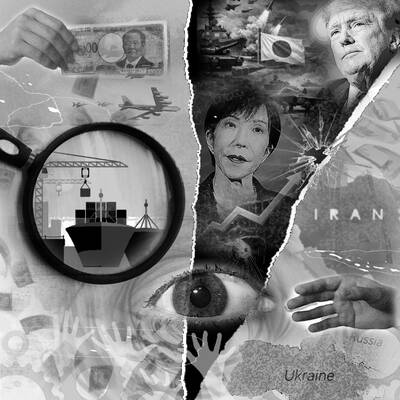
Japan’s imminent easing of arms export rules has sparked strong interest from Warsaw to Manila, Reuters reporting found, as US President Donald Trump wavers on security commitments to allies, and the wars in Iran and Ukraine strain US weapons supplies. Japanese Prime Minister Sanae Takaichi’s ruling party approved the changes this week as she tries to invigorate the pacifist country’s military industrial base. Her government would formally adopt the new rules as soon as this month, three Japanese government officials told Reuters. Despite largely isolating itself from global arms markets since World War II, Japan spends enough on its own


 RSS
RSS