


With the ongoing Ukraine war, it is hard to see past the shock of another major conflict breaking out in the world. Hamas, the Palestinian Muslim organization that runs Gaza City, has orchestrated an unprecedented assault on Israel with thousands of rockets and fighters by land, sea and air over the weekend.
Chinese Nationalist Party (KMT) Chairman Eric Chu (朱立倫) said that the conflict demonstrated the “horrors of war” and reiterated the importance of cross-strait peace.
While the Ukraine war taught Taiwan that conflict is not a thing of the past, the situation in Israel could teach it a thing or two about the dangers of complacency, disunity and the potential for strife.
Ever since its founding, Israel has been engaged in wars with neighboring Arab and Muslim nations, as it strives for normalization, while hoping that one day its adversaries would lay down their weapons and acknowledge its statehood. Diplomatically, the signing of the Abraham Accords by the United Arab Emirates and Bahrain in 2020 to recognize Israel’s sovereignty has set examples for other neighboring countries to follow. The US’ recent push for a grand bargain to normalize relations between Saudi Arabia and Israel is the final piece in the puzzle for Israel’s complete normalization.
In terms of military power, Israel seems to have cracked the Hamas problem with technology, with the introduction of the Iron Beam laser system and the Iron Dome missile system. Along with its “iron wall,” Israel likely considered its war against Hamas over in terms of strategy, military prowess and diplomacy.
Perhaps it is this complacency and overconfidence in its missile intercept system that had Israel hosting the Tribe of Nova music festival less than 5km from Gaza City. Years of false alarms and overwhelming dominance over the enemy had tripped Israelis up, and its citizens and military personnel were not able to react quickly when Hamas breached the border.
Similarly, this kind of complacency could easily take root in the minds of Taiwanese. With the launch of its first domestically built submarine, Taiwan could easily think it could rest on its laurels for reaching a new high in its defense capabilities. With China’s economy in tatters, Taiwan forming closer ties with democratic allies, and years of peace, the Taiwanese public could become lax.
As the conflict in Israel has shown, vigilance should never be lost, not a second or minute. The old Chinese saying could not have put it better: “Thrive in calamity and perish in soft living.”
Taiwan should continue ratcheting up its efforts to improve the military conscription program and develop domestic weapons.
Taiwan should think about the possibility of a proxy war, just as it was Hamas, not the Palestinian government, that attacked Israel. Tunghai University political science professor Shen Yu-chung (沈有忠) said that China could plan terrorist attacks, hire mercenaries or incite a pro-China third party to launch attacks against Taiwan, such as creating chaos at elections or targeting infrastructure.
Aside from staying vigilant and preparing for different possibilities, the Taiwanese public should work on bolstering solidarity and consensus to counter China.
As the US, Taiwan’s biggest ally, is now involved in the Ukraine quagmire and could be dragged into yet another conflict in the Middle East, China could be led to misjudge the situation. To prevent that, Taiwan would have to boost its own defenses if it seeks to keep China at bay.
Minister of Labor Hung Sun-han (洪申翰) on April 9 said that the first group of Indian workers could arrive as early as this year as part of a memorandum of understanding (MOU) between the Taipei Economic and Cultural Center in India and the India Taipei Association. Signed in February 2024, the MOU stipulates that Taipei would decide the number of migrant workers and which industries would employ them, while New Delhi would manage recruitment and training. Employment would be governed by the laws of both countries. Months after its signing, the two sides agreed that 1,000 migrant workers from India would
In recent weeks, Taiwan has witnessed a surge of public anxiety over the possible introduction of Indian migrant workers. What began as a policy signal from the Ministry of Labor quickly escalated into a broader controversy. Petitions gathered thousands of signatures within days, political figures issued strong warnings, and social media became saturated with concerns about public safety and social stability. At first glance, this appears to be a straightforward policy question: Should Taiwan introduce Indian migrant workers or not? However, this framing is misleading. The current debate is not fundamentally about India. It is about Taiwan’s labor system, its
On March 31, the South Korean Ministry of Foreign Affairs released declassified diplomatic records from 1995 that drew wide domestic media attention. One revelation stood out: North Korea had once raised the possibility of diplomatic relations with Taiwan. In a meeting with visiting Chinese officials in May 1995, as then-Chinese president Jiang Zemin (江澤民) prepared for a visit to South Korea, North Korean officials objected to Beijing’s growing ties with Seoul and raised Taiwan directly. According to the newly released records, North Korean officials asked why Pyongyang should refrain from developing relations with Taiwan while China and South Korea were expanding high-level
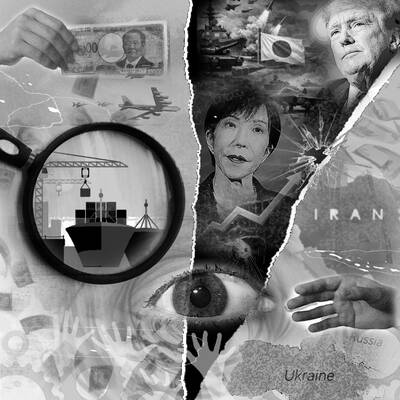
Japan’s imminent easing of arms export rules has sparked strong interest from Warsaw to Manila, Reuters reporting found, as US President Donald Trump wavers on security commitments to allies, and the wars in Iran and Ukraine strain US weapons supplies. Japanese Prime Minister Sanae Takaichi’s ruling party approved the changes this week as she tries to invigorate the pacifist country’s military industrial base. Her government would formally adopt the new rules as soon as this month, three Japanese government officials told Reuters. Despite largely isolating itself from global arms markets since World War II, Japan spends enough on its own


 RSS
RSS