


The US Senate on Tuesday unanimously passed legislation affirming its support for the initial trade agreement reached under the US-Taiwan Initiative on 21st-Century Trade. The bill, which cleared the US House of Representatives on June 21, was passed by the US Senate and is to be sent to US President Joe Biden to be signed into law within 10 days.
The first agreement under the initiative covers the areas of customs administration and trade facilitation, good regulatory practices, services’ domestic regulation, fighting corruption and small and medium-sized enterprises.
Following the signing of the agreement, the two sides said they planned to begin negotiations on other, more complicated issues, such as agriculture, digital trade, labor, environmental and non-market policies and practices, and state-owned enterprises and standards.
Although the initiative is not a free-trade agreement, in that there were no adjustments to tariffs or import categories, the deal’s trade facilitation measures — which standardize and streamline the import and export process — would ensure substantial benefits and savings, fair market competition, public transparency and reduction of trade costs, while providing a legal foundation for further expanding bilateral trade ties.
The initiative could set Taiwan on the path to a sustainable economic future with a global outlook, pave the way for a free-trade agreement (FTA) and help with the country’s efforts to join the Comprehensive and Progressive Agreement for Trans-Pacific Partnership (CPTPP).
For the US, Taiwan is crucial not only for its contributions to semiconductors and supply chains. Bilateral trade and investment between the two countries can also create job opportunities for Washington. Only with cooperation based on the same values can there be a genuine win-win situation.
Taiwan and the UK are to begin official-level talks on an Enhanced Trade Partnership (ETP) in three key areas, with the aim of signing a memorandum of understanding. Minister Without Portfolio John Deng (鄧振中), who heads the Executive Yuan’s Office of Trade Negotiations, and British Minister of State for International Trade Nigel Huddleston announced the talks after a videoconference.
As Taiwan is an important trading partner for the UK, with bilateral trade reaching £8.6 billion (US$11 billion) last year, the two countries hope to enhance trade and investment ties while tackling market access issues. The ETP is to focus on two-way investment, digital trade, energy and net zero carbon emissions. It also aims to improve collaboration through annual trade talks, tackle barriers to trade and promote UK expertise, and in this way taking advantage of increasing commercial opportunities with the deepening of the UK-Taiwan relationship.
Since the UK has become a member of the CPTPP, the trade talks between the two can also give Taiwan an edge in joining the CPTPP. To further strengthen health cooperation between the UK and Taiwan, a memorandum of understanding on health cooperation was signed on July 7, which revealed warming relations between London and Taipei.
In addition, the UK issued a demarche to condemn China for violating the Sino-British Joint Declaration, underscoring the UK’s pivot to a hard-line stance in its relations with China in recent years, as Beijing tightened its control over Hong Kong.
The US’ and the UK’s increasing cooperation with Taiwan on trade is not only benefiting all parties economically, but, more importantly, it catalyzes Taiwan to establish closer ties with the global community.
However, China, which continues to claim sovereignty over Taiwan, expressed anger about the initiatives that could bring Taiwan substantial benefits, stating that: “Under the disguise of trade cooperation, the so-called ‘Initiative’ is just a US tool to rip Taiwan off. The [Democratic Progressive Party] authorities, driven by the selfish separatist agenda, have no scruples to betray Taiwan compatriots and businesses’ interests or sell Taiwan away. By signing the agreement, they are offering Taiwan to the US on a plate. This is the latest example of the US trying to fudge and hollow out the one-China principle.”
The less-than-friendly statements once again demonstrate that China views the West and Taiwan as nothing but its enemies.
The ballots in our hands are to determine whether Taiwan continues to partner with democratic countries and work for shared values that benefit both parties, or it shoots itself in the foot and throws its future away by tilting toward an autocratic country.
Hong Tsun-ming, who is originally from Hong Kong, is a specialist in the Taiwan Statebuilding Party’s international section.
Translated by Rita Wang
A gap appears to be emerging between Washington’s foreign policy elites and the broader American public on how the United States should respond to China’s rise. From my vantage working at a think tank in Washington, DC, and through regular travel around the United States, I increasingly experience two distinct discussions. This divergence — between America’s elite hawkishness and public caution — may become one of the least appreciated and most consequential external factors influencing Taiwan’s security environment in the years ahead. Within the American policy community, the dominant view of China has grown unmistakably tough. Many members of Congress, as
The Hong Kong government on Monday gazetted sweeping amendments to the implementation rules of Article 43 of its National Security Law. There was no legislative debate, no public consultation and no transition period. By the time the ink dried on the gazette, the new powers were already in force. This move effectively bypassed Hong Kong’s Legislative Council. The rules were enacted by the Hong Kong chief executive, in conjunction with the Committee for Safeguarding National Security — a body shielded from judicial review and accountable only to Beijing. What is presented as “procedural refinement” is, in substance, a shift away from
The shifting geopolitical tectonic plates of this year have placed Beijing in a profound strategic dilemma. As Chinese President Xi Jinping (習近平) prepares for a high-stakes summit with US President Donald Trump, the traditional power dynamics of the China-Japan-US triangle have been destabilized by the diplomatic success of Japanese Prime Minister Sanae Takaichi in Washington. For the Chinese leadership, the anxiety is two-fold: There is a visceral fear of being encircled by a hardened security alliance, and a secondary risk of being left in a vulnerable position by a transactional deal between Washington and Tokyo that might inadvertently empower Japan
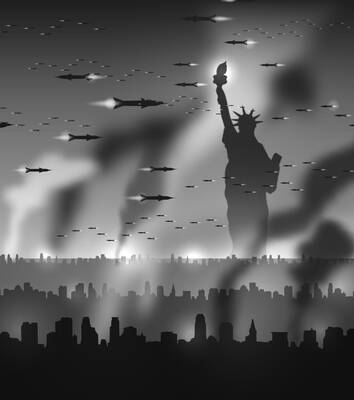
After declaring Iran’s military “gone,” US President Donald Trump appealed to the UK, France, Japan and South Korea — as well as China, Iran’s strategic partner — to send minesweepers and naval forces to reopen the Strait of Hormuz. When allies balked, the request turned into a warning: NATO would face “a very bad” future if it refused. The prevailing wisdom is that Trump faces a credibility problem: having spent years insulting allies, he finds they would not rally when he needs them. That is true, but superficial, as though a structural collapse could be caused by wounded feelings. Something


 RSS
RSS