


Lack of investment for sustainable development in the world’s poorest, most vulnerable countries is one of the most pressing global issues today, especially now that many of these countries are in debt distress, or would be soon.
The fallout from the COVID-19 pandemic, Russia’s war on Ukraine and ongoing climate-driven disasters are preventing many developing economies from achieving liftoff, and exacerbating the global economy’s structural asymmetries.
This is the decade when we should be ratcheting up investments in sustainable development. In Sub-Saharan Africa, an additional 2 million decent jobs must be created each month until 2035 just to keep up with growth in the working-age population. Yet major powers like the US, the EU and China are paying scant attention to such challenges. Instead, they are focused on their own technological competition, reindustrialization, decarbonization and zero-sum strategic maneuvering, all of which could aggravate conditions in developing countries.
As Barbadian Prime Minister Mia Mottley warns, the Global South, including its emerging economies, remains in critical financial condition, much like Europe after World War II. Back then, the US committed reconstruction funding equal to 3 percent of the recipient countries’ combined national incomes, because it knew that the investment would pay off economically and geopolitically. Now, the Western countries that still dominate the Bretton Woods institutions must recognize that they, too, have an interest in effectuating global financial and institutional transformative, not just incremental, reform.
Otherwise, the consequences would be catastrophic. The stage would be set for the proliferation of humanitarian disasters in many parts of the world, ecological breakdown and China’s rise as the main power behind an alternative bloc of multilateral institutions that exist to serve its own interests. This scenario would ultimately leave everyone worse off, with fragmentation and competition between different rule-setters and institutions introducing zero-sum dynamics and destroying global public goods.
To prevent such outcomes, Western countries must join the effort to transform multilateral financial institutions, even if doing so means ceding some of their own influence to others who have previously been marginalized. Those pursuing systemic reforms must resist the temptation merely to tweak current arrangements. The entire conversation about development should be reframed to account for neglected issues such as infrastructure, and the role of the private sector and non-public financial flows.
This is what the Paris Summit for a New Global Financing Pact, which is to be held on Thursday and Friday, aims to do.
However, as important as the gathering is, it is also risky. If the only result is a hollow political declaration, the broader reform effort could lose credibility. That is why those in attendance must deliver a concrete blueprint that is ambitious but also realistic and feasible.
The summit is asking the right questions and it presents an opportunity for everyone to think imaginatively about novel solutions to today’s unprecedented challenges.
The discussion should focus on three time horizons:
The first is the day of the gathering, when governments must agree, for example, to a suspension of debt-servicing obligations for countries facing catastrophic climate events — as was done at the height of the COVID-19 pandemic.
The second time horizon spans the next 18 months, through the rest of India’s and then Brazil’s G20 presidencies. Since it has been only six months since the Paris summit was announced, there has not been enough time to negotiate finalized agreements on critical political issues.
Even so, the summit can create an impetus for such deal-making in the months ahead as governments find ways to overcome domestic obstacles to more robust action. For example, a preliminary agreement to improve the efficiency with which multilateral development banks deploy existing capital could open the door for greater capital contributions by donor countries.
The third time horizon covers the next few years, when far-reaching reforms to the global financial system will need to be implemented. To prepare the ground, the summit should explore the options for mobilizing different kinds of donors and tapping new funding sources, with an emphasis on creating new international taxation mechanisms.
This would help broaden the debate beyond official development finance. Not only does the current financial system still favor carbon-intensive investments over sustainable projects; it also favors pure speculation (usually on arcane financial instruments and real estate) over productive investments in poorer countries.
Recognizing how deep these problems run, UN Secretary-General Antonio Guterres recently proposed a comprehensive program of measures to redirect “unproductive and unrewarding” finance and rebalance structural asymmetries in the global economic system. The Paris summit should help launch this debate so that it delivers tangible results — including public money to support developing countries — in the months and years ahead.
This is the moment to articulate a reform agenda that is ambitious enough to give the Global South real hope for the future.
Sebastien Treyer is executive director of the Institute for Sustainable Development and International Relations. Bertrand Badre, a former managing director of the World Bank, is CEO and founder of Blue Like an Orange Sustainable Capital and the author of Can Finance Save the World?
Copyright: Project Syndicate
Minister of Labor Hung Sun-han (洪申翰) on April 9 said that the first group of Indian workers could arrive as early as this year as part of a memorandum of understanding (MOU) between the Taipei Economic and Cultural Center in India and the India Taipei Association. Signed in February 2024, the MOU stipulates that Taipei would decide the number of migrant workers and which industries would employ them, while New Delhi would manage recruitment and training. Employment would be governed by the laws of both countries. Months after its signing, the two sides agreed that 1,000 migrant workers from India would
In recent weeks, Taiwan has witnessed a surge of public anxiety over the possible introduction of Indian migrant workers. What began as a policy signal from the Ministry of Labor quickly escalated into a broader controversy. Petitions gathered thousands of signatures within days, political figures issued strong warnings, and social media became saturated with concerns about public safety and social stability. At first glance, this appears to be a straightforward policy question: Should Taiwan introduce Indian migrant workers or not? However, this framing is misleading. The current debate is not fundamentally about India. It is about Taiwan’s labor system, its
On March 31, the South Korean Ministry of Foreign Affairs released declassified diplomatic records from 1995 that drew wide domestic media attention. One revelation stood out: North Korea had once raised the possibility of diplomatic relations with Taiwan. In a meeting with visiting Chinese officials in May 1995, as then-Chinese president Jiang Zemin (江澤民) prepared for a visit to South Korea, North Korean officials objected to Beijing’s growing ties with Seoul and raised Taiwan directly. According to the newly released records, North Korean officials asked why Pyongyang should refrain from developing relations with Taiwan while China and South Korea were expanding high-level
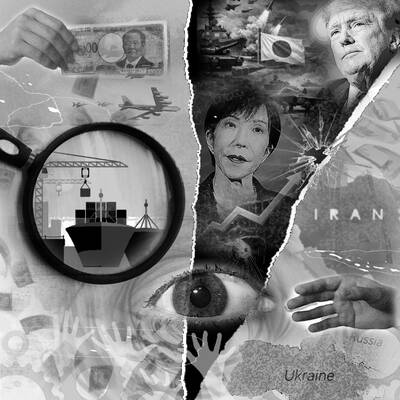
Japan’s imminent easing of arms export rules has sparked strong interest from Warsaw to Manila, Reuters reporting found, as US President Donald Trump wavers on security commitments to allies, and the wars in Iran and Ukraine strain US weapons supplies. Japanese Prime Minister Sanae Takaichi’s ruling party approved the changes this week as she tries to invigorate the pacifist country’s military industrial base. Her government would formally adopt the new rules as soon as this month, three Japanese government officials told Reuters. Despite largely isolating itself from global arms markets since World War II, Japan spends enough on its own


 RSS
RSS