


The so-called “Blank Paper Movement” has swept across China like a whirlwind, only to quickly calm down and disappear.
It looks like China’s next step would be to gradually open up. After all, the nation’s foundation, which was built over several decades of reform and opening up, has been frittered away over the past three years, so if this farce is to continue, the next step would be into the grave.
From the very beginning, I had reservations about the “Blank Paper Movement.” Admittedly, the protests succeeded in forcing central authorities to gradually ease their draconian lockdown measures, but can this really be called a revolution?
A revolution represents a popular awakening and a big change in the political system, or even the overhaul of an existing regime.
However, has the existing system changed in this case? Have the problems of corruption and multiple layers of local oppression been solved?
Having built temporary hospitals to treat COVID-19 patients, the authorities want patients to fill the wards. Nucleic acid manufacturers have apparently deliberately mixed viral particles into test swabs to fabricate large numbers of positive results, while receiving a government subsidy of 3,500 yuan (US$502) for every person dragged to a hospital.
Has anyone investigated the more than 85 billion yuan that the nucleic acid manufacturing chain has collected in just one year?
No one has done anything to clear this murky pool. The slogan of “freedom and democracy” raised during the protests was just for shouting.
For most Chinese, it is enough to return to a “normal life,” in which they look at everything in terms of money while numbing themselves to other issues.
Every “revolution” in China has come about when the masses were pushed to the brink of doom with no way out.
Each time, some minor concessions sufficed to quell public discontent and anger, after which, their original grievances were soon forgotten.
History keeps repeating itself, as an unending cycle of slaps, then candy, then the same again.
The recent protests were not a revolution, but were more like a fish on the chopping block with a knife cutting its throat, using its last gasp for a final, hopeless struggle.
The “Blank Paper Movement” has been one of the very few acts of resistance in China’s modern history, but I am still pessimistic about China’s future.
Totalitarian power is still in the hands of one man, and what a painful price the nation has paid for playing along with his show over the past three years.
The process of shutting down thought and culture has not stopped, and other retrograde steps are continuing. The time for real change in China is still a long way off.
All that is being done is the continuation of concealing problems. The nation’s pomp and circumstance are no more than froth on the surface, while it is rotten to the core.
The political, judicial and educational systems are in dire need of reform, but how can such vast systems be broken down and reassembled?
The protest movement will hopefully turn out to have been a good start, a catalyst for people to wake up, and that this faint spark will not once again be extinguished.
Bai Zhao is a Chinese freelance artist living in London.
Translated by Julian Clegg
Minister of Labor Hung Sun-han (洪申翰) on April 9 said that the first group of Indian workers could arrive as early as this year as part of a memorandum of understanding (MOU) between the Taipei Economic and Cultural Center in India and the India Taipei Association. Signed in February 2024, the MOU stipulates that Taipei would decide the number of migrant workers and which industries would employ them, while New Delhi would manage recruitment and training. Employment would be governed by the laws of both countries. Months after its signing, the two sides agreed that 1,000 migrant workers from India would
In recent weeks, Taiwan has witnessed a surge of public anxiety over the possible introduction of Indian migrant workers. What began as a policy signal from the Ministry of Labor quickly escalated into a broader controversy. Petitions gathered thousands of signatures within days, political figures issued strong warnings, and social media became saturated with concerns about public safety and social stability. At first glance, this appears to be a straightforward policy question: Should Taiwan introduce Indian migrant workers or not? However, this framing is misleading. The current debate is not fundamentally about India. It is about Taiwan’s labor system, its
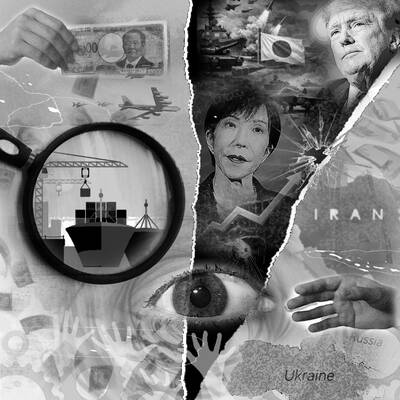
Japan’s imminent easing of arms export rules has sparked strong interest from Warsaw to Manila, Reuters reporting found, as US President Donald Trump wavers on security commitments to allies, and the wars in Iran and Ukraine strain US weapons supplies. Japanese Prime Minister Sanae Takaichi’s ruling party approved the changes this week as she tries to invigorate the pacifist country’s military industrial base. Her government would formally adopt the new rules as soon as this month, three Japanese government officials told Reuters. Despite largely isolating itself from global arms markets since World War II, Japan spends enough on its own
On March 31, the South Korean Ministry of Foreign Affairs released declassified diplomatic records from 1995 that drew wide domestic media attention. One revelation stood out: North Korea had once raised the possibility of diplomatic relations with Taiwan. In a meeting with visiting Chinese officials in May 1995, as then-Chinese president Jiang Zemin (江澤民) prepared for a visit to South Korea, North Korean officials objected to Beijing’s growing ties with Seoul and raised Taiwan directly. According to the newly released records, North Korean officials asked why Pyongyang should refrain from developing relations with Taiwan while China and South Korea were expanding high-level


 RSS
RSS