


The Constitutional Court has ruled that parts of the Status Act for Indigenous Peoples (原住民身分法) are unconstitutional. According to the ruling, the act has failed to protect the right to personal identity and conserve indigenous cultures; hence, it must be amended within the next three years or a special law must be stipulated.
While the ruling has not solved the recognition and rights issue of the Siraya indigenous community, it is a major achievement for indigenous peoples in name rectification and official recognition.
Twenty years have passed since the Siraya attempted to retrieve their indigenous identity. As per the current law, indigenous peoples in Taiwan are categorized as “mountain” and “plain” indigenous peoples, excluding the Pingpu and the Austronesian groups. The Constitutional Court has ruled that the classification is inadequate, and that the competent authority should amend the act or legislate new laws within a limited period. The indigenous status shall be based on and inspected through cultural characteristics, ethnic identifications and objective historical records.
In this line, the amendment is also applicable to the Siraya and their descendants, as well as other Pingpu groups, whose household registries were marked with either shou (熟, “civilized”) or sheng (生, “primitive” or “savage”) during Japanese colonial rule.
Among Taiwan’s indigenous groups, the Austronesian peoples are the earliest inhabitants of the island. Even though they are a minority now, they are integral to the history of Taiwan and humankind. According to academics at home and abroad, the Austronesian peoples migrated from Taiwan to other Pacific islands about 6,000 years ago. The Austronesian languages and cultures therefore originated from Taiwan.
Historical traces of the Siraya in Taiwan are particularly crucial to these findings. In the 16th century, the Dutch and the Spanish called the Siraya (who then lived on the Chiayi-Tainan Plain) “Formosan,” which would be employed by the West to refer to Taiwan’s peoples until the 20th century. Taiwan had also been called “Formosa” for centuries.
Likewise, Notes on the Eastern Savages (東番記), a 17th-century text written by Chinese traveler and philologist Chen Di (陳第) during the Ming Dynasty, refers to Taiwan as “Dayuan” (大員); a similar pronunciation, “Tayouan” (大員), was also used by the Dutch to refer to Tainan’s Anping (台南安平), where the Siraya had lived. The Siraya community there was called “Tayouan” (台窩灣), which gave rise to “Taiwan” (台灣), a name used for the entire island since the Qing Dynasty.
Categorized as a Pingpu group, the Siraya has been of special standing among Taiwan’s indigenous communities. Before the establishment of Han society and culture in Taiwan, the Siraya had been one of the largest groups inhabiting Taiwan, throughout the island.
The Siraya left a significant cultural imprint during Dutch colonial rule. In A Short Account of the Island of Formosa in the Indies, the first Dutch missionary in Taiwan, Georgius Candidius, described the “Formosans” that he had encountered. According to him, they were “friendly, loyal, kind, hospitable, with good comprehension and memory.” A German traveler, Candidius’ contemporary, also portrayed the lives of the “Formosans.”
More importantly, with the romanization system, the Dutch helped the Siraya develop their own language, leaving behind the Sinkang Manuscripts that include translations of the Bible.
When the Siraya prepared contracts, leases or mortgages with Han people, the Siraya language would be used together with Chinese characters. Not until the 19th century was the Siraya language eliminated by Han Taiwanese.
Taiwan’s immigrant history shows that the latecomers would often gain the upper hand. When Western missionaries arrived, they witnessed the ill treatment inflicted upon the indigenous peoples. George Mackay’s memoirs point out how Han Taiwanese despised and deceived indigenous people and took away their lands and property. Unsurprisingly, the first Pingpu group subjugated was the one oppressed the most by Han Taiwanese.
Although Scottish missionary William Campbell had once praised Han Taiwanese as “clever, hardworking and diligent,” he could not stand the ways that they abused and took advantage of indigenous people.
The ways in which Han Taiwanese have addressed indigenous people are also indicative of their attitudes. Indigenous people usually call themselves “human” in their own languages, for example, “Tao,” “Thao,” “Atayal” and “Sediq.” “Siraya,” as commonly acknowledged, also means “human.”
However, with the exception of the Dutch usage of “Formosan,” peoples who came to Taiwan, including Han immigrants, the eventual rulers of the Kingdom of Tungning, the Qing Dynasty and Imperial Japan, all addressed indigenous people with disparaging terms such as “savages,” “highlanders” and “lowlanders.” Some even divided “savages” into shou and sheng ones, depending on how “civilized” they were perceived to be.
The Pingpu groups were first called sheng “savages” by the Qing authority; during the Japanese rule, the Pingpu groups were classified as “plains indigenous peoples,” namely, those who lived on the plains.
Toward the end of the Japanese colonial rule, the Pingpu groups had a population of about 60,000. They were the indigenous groups that had interacted the most closely with Han communities. As a result, after World War II, the authorities categorized the Pingpu groups as Han Taiwanese. The Pingpu groups’ ethnic distinctions were eliminated in the official records.
Along with Taiwan’s democratization, the indigenous movement thrived. In 1994, then-president Lee Teng-hui (李登輝) employed “Taiwanese aborigines” as the indigenous groups’ official name, and further made “four great ethnic groups” constitutional. That way, indigenous people were able to fight for name rectification and advocate for enfranchisement.
Years later, the Siraya have been officially recognized by the Tainan City Government and Fuli Township (富里) in Hualien County as a Taiwanese indigenous people. The Siraya’s effort has also been demonstrated in the following examples: the Siraya National Scenic Area Administration (西拉雅國家風景區) and the Ka-bua Sua Elementary School (吉貝耍國小) in Tainan, the first elementary school named in the Siraya language.
The Constitutional Court’s ruling has paved the way for a Pingpu group like the Siraya to be recognized as a Taiwanese indigenous people by the central government. Later on, it would be even more significant for the Siraya to leave the dark past behind, concentrate on cultural rejuvenation, and carry on the Siraya culture and its historical significance, including but not limited to Ali-zu worship, the Night Festival, Konkai and pot worship (公廨祀壺), and Kankei (牽曲).
Taiwan is a democratic country with ethnic diversity. Based on human rights, freedom and other universal values, Taiwanese have worked to restore the due status of indigenous people and secure their rights. They have done the right thing for their cultural harmony.
Translated by Liu Yi-hung

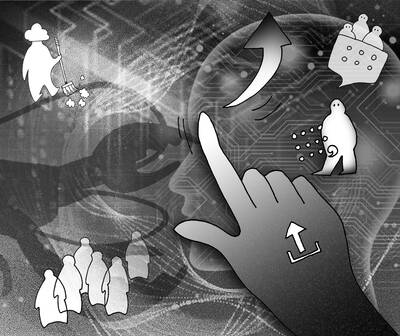
Weeks into the craze, nobody quite knows what to make of the OpenClaw mania sweeping China, marked by viral photos of retirees lining up for installation events and users gathering in red claw hats. The queues and cosplay inspired by the “raising a lobster” trend make for irresistible China clickbait. However, the West is fixating on the least important part of the story. As a consumer craze, OpenClaw — the AI agent designed to do tasks on a user’s behalf — would likely burn out. Without some developer background, it is too glitchy and technically awkward for true mainstream adoption,
On Monday, a group of bipartisan US senators arrived in Taiwan to support the nation’s special defense bill to counter Chinese threats. At the same time, Beijing announced that Chinese President Xi Jinping (習近平) had invited Chinese Nationalist Party (KMT) Chairwoman Cheng Li-wun (鄭麗文) to visit China, a move to make the KMT a pawn in its proxy warfare against Taiwan and the US. Since her inauguration as KMT chair last year, Cheng, widely seen as a pro-China figure, has made no secret of her desire to interact with the Chinese Communist Party (CCP) and meet with Xi, naming it a
Taiwan People’s Party (TPP) Chairman Huang Kuo-chang (黃國昌) took the stage at a protest rally on Sunday in front of the Presidential Office Building in Taipei in support of former TPP chairman Ko Wen-je (柯文哲), who has been sentenced to 17 years in jail for corruption and embezzlement. Huang told the crowd that Chinese Nationalist Party (KMT) Chairwoman Cheng Li-wun (鄭麗文) had sent a message of support the previous day, saying she would be traveling from the south to Taipei: If the protest continued into the evening, she had said, she would show up. The rally was due to end
A delegation of Chinese Nationalist Party (KMT) officials led by Chairwoman Cheng Li-wun (鄭麗文) is to travel to China tomorrow for a six-day visit to Jiangsu, Shanghai and Beijing, which might end with a meeting between Cheng and Chinese President Xi Jinping (習近平). The trip was announced by Xinhua news agency on Monday last week, which cited China’s Taiwan Affairs Office (TAO) Director Song Tao (宋濤) as saying that Cheng has repeatedly expressed willingness to visit China, and that the Chinese Communist Party (CCP) Central Committee and Xi have extended an invitation. Although some people have been speculating about a potential Xi-Cheng


 RSS
RSS