


Energy prices in Europe have soared since Russia invaded Ukraine in February. On July 8, the European Parliament voted in favor of classifying natural gas and nuclear power as environmentally sustainable economic activities in the EU’s Complementary Climate Delegated Act, which governs the EU taxonomy of sustainable finance and allows the issue of bonds and preferential loans for related investments.
Germany, which relies on Russia for most of its natural gas supply, has been seeking alternative energy sources from the Middle East and South Africa. In August, German Chancellor Olaf Scholz visited Norway to secure more supplies.
Late last month, Germany announced that two out of its three remaining nuclear reactors, which were scheduled to be shut down at the end of this year, would remain in operation for at least another four months.
In Taiwan, we have seen some alternative interpretations of how the EU has been managing this energy crisis.
When the European Parliament’s resolution was announced, Broadcasting Corp of China chairman Jaw Shaw-kong (趙少康) said: “The EU has decided to treat nuclear power as green energy. Opposing nuclear power used to be right, but now it is wrong.”
Online news outlet Storm Media (風傳媒) went further with an editorial asking: “Now that the EU has decided to regard nuclear power as green energy, and various countries are starting to increase their use of nuclear power, should Taiwan reconsider and adjust its policies regarding this source of energy, or will nothing change until a new government comes into office?”
Whatever intentions or time constraints they might have had, both commentators omit the many provisos in the resolution. For example, the restrictions placed on nuclear power plants — such as technology, fuel and nuclear waste disposal — as well as requirements to replace coal-fired power stations, and the sunset clause that requires construction of nuclear power plants to be completed by 2045.
The EU has essentially only applied the financial conditions afforded to green energy sources to natural gas and nuclear energy. No European country has modified its energy policies as a result of this decision. In other words, this is an emergency relief measure for the EU, not a sharp U-turn in major decisions regarding nuclear energy. It does not entail a sudden turnaround from opposition to enthusiastic support for nuclear energy.
Germany’s goal for 100 percent renewable energy by 2050 has not changed because of Russia’s war in Ukraine. As for France, last year, 69 percent of its energy came from nuclear power, but it aims to reduce this figure to 30 percent by 2050, with the other 70 percent coming from renewable energy sources.
The Oct. 8 edition of CommonWealth Magazine includes a report about various problems that France has had this year with its nuclear energy. The article asks why a “nuclear power revival” is hard to achieve and mentions bottlenecks that have recently affected new developments in nuclear technology, such as small modular reactors.
Taiwan’s nuclear power advocates believe that nuclear energy has two major selling points — low cost and stability. Data published by Ember Climate in January showed that the average wholesale electricity prices per megawatt-hour were 211.60 euros in France and 167.90 euros in Germany.
The price peaked in August at 493 euros in France and 469.30 euros in Germany before falling last month to 393.60 euros in France and 360.20 euros in Germany. Throughout the year, France’s electricity prices and the increase compared with last year were higher than that in Germany.
France buys electricity from Germany during the peak time for annual repairs to its nuclear power plants. In previous years, France bought electricity from Germany in winter, but this year it did so in summer, partly because at the end of last year nuclear safety authorities ordered some power stations to shut down all their reactors for maintenance.
In addition, high temperatures and drought caused some power plants to suspend operations because they could not access river water for their cooling systems. Having bet so heavily on nuclear power, France could suffer a greater impact than Germany — which has more diverse sources of electrical power — if systematic problems arise. In 2012, Germany generated 40.9 percent of its electricity from renewable sources, 27.9 percent from coal, 15.3 percent from natural gas and 11.9 percent from nuclear power.
Some people insist on comparing Taiwan to Ukraine but do not think about what would happen if Taiwanese nuclear power plants were bombed.
Taiwan’s energy policy can be very simple. First, go non-nuclear. Given that nuclear power provides only 5.6 percent of Taiwan’s energy demands, it would not be difficult to replace. Second, spread the risk by maintaining diverse energy sources such as natural gas, coal and oil.
Among the various options, the higher the proportion of renewable energy, the safer Taiwan would be. As Deputy Minister of Economic Affairs Tseng Wen-sheng (曾文生) said in an interview with CommonWealth Magazine, neither military exercises nor any other military action can obstruct the wind, water and sun.
Wu Hai-ruei is a manager of a listed company.
Translated by Julian Clegg
On March 22, 2023, at the close of their meeting in Moscow, media microphones were allowed to record Chinese Communist Party (CCP) dictator Xi Jinping (習近平) telling Russia’s dictator Vladimir Putin, “Right now there are changes — the likes of which we haven’t seen for 100 years — and we are the ones driving these changes together.” Widely read as Xi’s oath to create a China-Russia-dominated world order, it can be considered a high point for the China-Russia-Iran-North Korea (CRINK) informal alliance, which also included the dictatorships of Venezuela and Cuba. China enables and assists Russia’s war against Ukraine and North Korea’s
After thousands of Taiwanese fans poured into the Tokyo Dome to cheer for Taiwan’s national team in the World Baseball Classic’s (WBC) Pool C games, an image of food and drink waste left at the stadium said to have been left by Taiwanese fans began spreading on social media. The image sparked wide debate, only later to be revealed as an artificially generated image. The image caption claimed that “Taiwanese left trash everywhere after watching the game in Tokyo Dome,” and said that one of the “three bad habits” of Taiwanese is littering. However, a reporter from a Japanese media outlet
Taiwanese pragmatism has long been praised when it comes to addressing Chinese attempts to erase Taiwan from the international stage. “Taipei” and the even more inaccurate and degrading “Chinese Taipei,” imposed titles required to participate in international events, are loathed by Taiwanese. That is why there was huge applause in Taiwan when Japanese public broadcaster NHK referred to the Taiwanese Olympic team as “Taiwan,” instead of “Chinese Taipei” during the opening ceremony of the Tokyo Olympics. What is standard protocol for most nations — calling a national team by the name their country is commonly known by — is impossible for
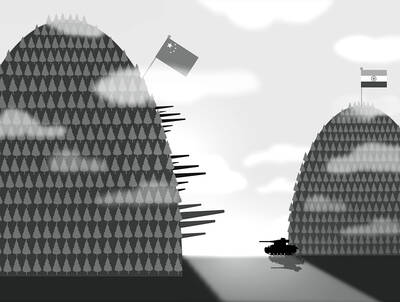
India is not China, and many of its residents fear it never will be. It is hard to imagine a future in which the subcontinent’s manufacturing dominates the world, its foreign investment shapes nations’ destinies, and the challenge of its economic system forces the West to reshape its own policies and principles. However, that is, apparently, what the US administration fears. Speaking in New Delhi last week, US Deputy Secretary of State Christopher Landau warned that “we will not make the same mistakes with India that we did with China 20 years ago.” Although he claimed the recently agreed framework


 RSS
RSS