


Acts of online gender-based violence in which sexual images have been taken without consent, or through threats or violence, have increasingly been appearing in the media, showing how victims’ privacy rights are breached, as well as the pain they undergo and the damage done to their reputations.
On March 10, the Executive Yuan approved draft amendments to the Criminal Code and three other laws that aim to prevent gender-based violence. The amendments are laudable, as they address the public’s concern.
They include a new chapter added to the Criminal Code on offenses against sexual privacy and fake sexual images. Chapter 28-1 stipulates that recording sexual images without consent is punishable by up to three years in prison, while disseminating such images is punishable by up to five years in prison. If the dissemination is for profit, the prison sentence can be increased by half again.
The amendments stipulate that making or distributing fake images of others, or deepfakes, without consent is punishable by up to five years in prison, while doing it for profit is punishable by up to seven years in prison.
The amendments aim to protect people’s right to sexual privacy and their “personality rights,” or their right to control the commercial use of their name, image or any matter that forms a part of their identity.
Although the period of compulsory treatment for sexual assault has been amended so that it can be regularly extended without a limit on the number of times, it is not applicable to those who breach people’s sexual privacy, or make or distribute fake sexual images, as this would be unreasonable.
In a recent case, a man surnamed Lin (林) — a prospective graduate student at National Taiwan University School of Medicine — was sentenced to 104 years and two months in prison after he was convicted of seducing children and young people to engage in sexual intercourse or obscene acts covered under the Child and Youth Sexual Exploitation Prevention Act (兒童及少年性剝削防制條例).
Lin was found guilty of tricking 81 young girls on the Internet into taking nude photographs, but as he did not engage in sexual assault, ordering him to undergo compulsory treatment at a medical facility would not have made sense.
In such cases, the nature of the Internet makes it that, once private videos are posted online or uploaded to foreign pornographic Web sites, it is extremely difficult to take them “off the shelf,” which potentially harms victims almost as much as a sexual assault.
Such offenders are mostly repeat offenders, having put many young victims through physical and mental abuse, and damaged their reputations. This legislative loophole needs to be fixed as soon as possible to demonstrate the government’s determination to crack down on crimes against sexual privacy.
Article 2 of the Criminal Code stipulates that the law in force when a crime is committed, not at the time of the court judgement, should be applied when a court imposes rehabilitative measures that restrict offenders’ personal freedom. This means that amendments to any laws would need to be reflected in changes to the Criminal Code, which complicates the issue.
Taiwan should follow the example of criminal laws in countries such as Austria, Germany and Switzerland, where a new law makes rehabilitative measures consistent across the board. Such details would require the cooperation of the executive and legislative branches to make the nation’s social safety net more comprehensive.
Chao Hsuey-wen is an assistant professor at National Open University and has a doctoral degree from Fu Jen Catholic University’s department of law.
Translated by Lin Lee-kai

A gap appears to be emerging between Washington’s foreign policy elites and the broader American public on how the United States should respond to China’s rise. From my vantage working at a think tank in Washington, DC, and through regular travel around the United States, I increasingly experience two distinct discussions. This divergence — between America’s elite hawkishness and public caution — may become one of the least appreciated and most consequential external factors influencing Taiwan’s security environment in the years ahead. Within the American policy community, the dominant view of China has grown unmistakably tough. Many members of Congress, as
The Hong Kong government on Monday gazetted sweeping amendments to the implementation rules of Article 43 of its National Security Law. There was no legislative debate, no public consultation and no transition period. By the time the ink dried on the gazette, the new powers were already in force. This move effectively bypassed Hong Kong’s Legislative Council. The rules were enacted by the Hong Kong chief executive, in conjunction with the Committee for Safeguarding National Security — a body shielded from judicial review and accountable only to Beijing. What is presented as “procedural refinement” is, in substance, a shift away from
The shifting geopolitical tectonic plates of this year have placed Beijing in a profound strategic dilemma. As Chinese President Xi Jinping (習近平) prepares for a high-stakes summit with US President Donald Trump, the traditional power dynamics of the China-Japan-US triangle have been destabilized by the diplomatic success of Japanese Prime Minister Sanae Takaichi in Washington. For the Chinese leadership, the anxiety is two-fold: There is a visceral fear of being encircled by a hardened security alliance, and a secondary risk of being left in a vulnerable position by a transactional deal between Washington and Tokyo that might inadvertently empower Japan
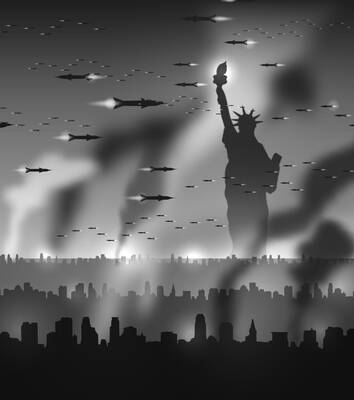
After declaring Iran’s military “gone,” US President Donald Trump appealed to the UK, France, Japan and South Korea — as well as China, Iran’s strategic partner — to send minesweepers and naval forces to reopen the Strait of Hormuz. When allies balked, the request turned into a warning: NATO would face “a very bad” future if it refused. The prevailing wisdom is that Trump faces a credibility problem: having spent years insulting allies, he finds they would not rally when he needs them. That is true, but superficial, as though a structural collapse could be caused by wounded feelings. Something


 RSS
RSS