


The Nicaraguan government’s decision to switch diplomatic ties from Taipei to Beijing and the subsequent developments in that country reignited discussion about the true value of Taiwanese allies.
Nicaraguan President Daniel Ortega’s regime giving only two weeks to Taiwanese diplomats to leave the country, followed by the seizing of the former Taiwanese embassy and diplomatic offices to give them to the Chinese Communist Party (CCP), shows just how desperate Managua is to obtain financial support from the Chinese government.
This paints a bleak picture of how meaningful the diplomatic alliances that Taiwan has around the world really are.
The assets in Nicaragua were to be donated to the Roman Catholic archdiocese of Managua, which Ortega’s government refused to allow, saying this would be a “maneuver and subterfuge to take what doesn’t belong to them.”
Understandably, such treatment of Taiwan, which continued to support Nicaragua when most of the world did not, has left many people wondering if all the resources that Taiwan provides to its diplomatic allies are worth it.
Opinions have ranged from advice to the government to strengthen its relationships with allies, to extreme statements like the one made by Derek Grossman in an op-ed in the Nikkei Asia, in which he suggested that Taiwan should cut off all of its diplomatic allies “to strengthen its hand long-term against China.”
Although this opinion might be far from the mainstream, Grossman makes some valid points in his article. It is true, as he says, that almost all of Taiwan’s remaining allies are impoverished countries, and I would add that they might have little to offer to Taiwan.
Besides the agricultural products that Taiwan imports from these countries, and their periodic speeches at the UN asking for Taiwan to participate in the body, their contributions to the nation might not seem so valuable compared to the support that countries like the US, Japan or Australia can and seem willing to provide in terms of military equipment and intervention in the event of a conflict with China.
However, this leaves out an important factor: Until a few years ago, none of the countries were willing to speak out against the Chinese government and unequivocally defend Taiwan. Even when it is obvious that Taiwan’s allies cannot offer the same support offered by these countries, they stood for Taiwan when the rest of the world recognized China and gave it Taipei’s seat at the UN.
Yet their value is not just a matter of nostalgia; it is more about securing a diplomatic presence no matter what happens in the years to come.
The support that Taiwan fortunately enjoys today can be attributed to the election of former US president Donald Trump in 2016 and his disruptive governing style, putting him in direct confrontation with China in a way that probably nobody could see coming, and led to a trade conflict that persists today and shows no sign of being resolved.
That is not the only reason for Taiwan’s recent support. China’s assertiveness in the region, accusations of human rights violations against Uighurs, imposition of Hong Kong’s National Security Law, the COVID-19 pandemic, and the great job that President Tsai Ing-wen’s (蔡英文) administration has done to improve Taiwan’s image in the world — these are all factors to consider when analyzing why Taiwan is standing stronger than ever against the CCP.
However, Taiwan and its people must not forget that in geopolitics, things can quickly change in a short period.
This is not to say that the support that Taiwan is receiving from the international community is false, or that the US and other democratic governments do not mean well when they speak on Taiwan’s behalf, but sadly, more than 50 years ago the world turned its back on Taiwan, kicking it out of the UN when no one really expected the West to establish such a relationship with a communist nation.
There are not many scenarios in which anti-China sentiment around the world could be reversed, at least not in the short term, but Taiwan must still consider the possibility of a change of heart in worldwide attitudes toward China, and execute its foreign relations policy accordingly.
The repercussions of Taiwan losing all of its diplomatic allies to China would be more ideological than tangible. The products procured from these allies can surely be obtained from other sources, and even if they could not, a switch in ties does not mean that the trade relationship also disappears. If diplomatic and commercial relations went hand in hand, the Chinese and Taiwanese economies would probably not be so intertwined, and Taiwan would not be able to purchase most goods.
Besides, Taiwan has maintained unofficial diplomatic relations with countries all around the world, and even if the tally of diplomatic allies dropped to zero, these unofficial relationships would not go anywhere, and Taiwan’s global presence would continue to be a force to be reckoned with.
However, Taiwan should not disregard its allies while focusing only on strengthening its relationship with the US and other powerful countries, because the tide might change again, as it has in the past.
If a new Chinese leader who is more willing to meet the West’s demands were to emerge, is it impossible to think that the US would warm its positions toward the world’s second-largest economy? If this came to pass, what would the rest of the world do? Would they stand with Taiwan or change their stance and return to putting Taiwan in an uncomfortable gray area?
Taiwan has for too long been treated as a pawn and a bargaining chip. Even as things seem to be going its way, the government should prepare for any scenario that might arise in decades to come.
Although it might sound a bit plain, the best strategy might be the one that the government is executing right now: to build unofficial relationships with nations that share its democratic values while continuing to foster ties with its democratic allies. This way, Taiwan can take advantage of the momentum and become more relevant, while making sure that if things change, there are countries that would continue to vouch for it.
There is a reason that China continues to poach these allies that otherwise have little to no value to it. That is reason enough to put in some effort to ensure that it does not meet its goal of completely isolating Taiwan.
Fernando Herrera Ramos is a Honduran lawyer residing in Taiwan. He has a master’s degree in business administration.
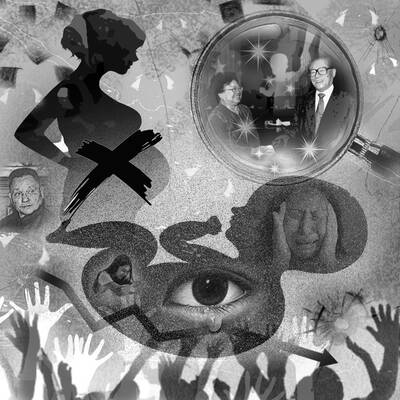
Jan. 1 marks a decade since China repealed its one-child policy. Just 10 days before, Peng Peiyun (彭珮雲), who long oversaw the often-brutal enforcement of China’s family-planning rules, died at the age of 96, having never been held accountable for her actions. Obituaries praised Peng for being “reform-minded,” even though, in practice, she only perpetuated an utterly inhumane policy, whose consequences have barely begun to materialize. It was Vice Premier Chen Muhua (陳慕華) who first proposed the one-child policy in 1979, with the endorsement of China’s then-top leaders, Chen Yun (陳雲) and Deng Xiaoping (鄧小平), as a means of avoiding the
As the Chinese People’s Liberation Army (PLA) races toward its 2027 modernization goals, most analysts fixate on ship counts, missile ranges and artificial intelligence. Those metrics matter — but they obscure a deeper vulnerability. The true future of the PLA, and by extension Taiwan’s security, might hinge less on hardware than on whether the Chinese Communist Party (CCP) can preserve ideological loyalty inside its own armed forces. Iran’s 1979 revolution demonstrated how even a technologically advanced military can collapse when the social environment surrounding it shifts. That lesson has renewed relevance as fresh unrest shakes Iran today — and it should

The last foreign delegation Nicolas Maduro met before he went to bed Friday night (January 2) was led by China’s top Latin America diplomat. “I had a pleasant meeting with Qiu Xiaoqi (邱小琪), Special Envoy of President Xi Jinping (習近平),” Venezuela’s soon-to-be ex-president tweeted on Telegram, “and we reaffirmed our commitment to the strategic relationship that is progressing and strengthening in various areas for building a multipolar world of development and peace.” Judging by how minutely the Central Intelligence Agency was monitoring Maduro’s every move on Friday, President Trump himself was certainly aware of Maduro’s felicitations to his Chinese guest. Just
In the US’ National Security Strategy (NSS) report released last month, US President Donald Trump offered his interpretation of the Monroe Doctrine. The “Trump Corollary,” presented on page 15, is a distinctly aggressive rebranding of the more than 200-year-old foreign policy position. Beyond reasserting the sovereignty of the western hemisphere against foreign intervention, the document centers on energy and strategic assets, and attempts to redraw the map of the geopolitical landscape more broadly. It is clear that Trump no longer sees the western hemisphere as a peaceful backyard, but rather as the frontier of a new Cold War. In particular,


 RSS
RSS