


As a recipient of Taiwan’s Medigen COVID-19 vaccine, I am unable to return to my homeland, Canada.
More precisely, Canada would allow me to return as a technically unvaccinated citizen, subject to quarantine and the expense that entails, but I am forbidden from exiting Canada through an airport, even when I have met the vaccination requirements of my destination country.
That means any visit to Canada must become a permanent one. Stepping on Canadian soil carries the consequence of renouncing my life in Taiwan — my job, my home and my friends.
The idea of not being allowed to leave your country for non-compliance with public policy is something people associate with authoritarian nations. A fundamental right of citizenship in a democratic country has been taken away from me and likely thousands of other vaccinated Canadians abroad.
This contravenes the UN Universal Declaration of Human Rights, which states: “Everyone has the right to leave any country, including his own, and to return to his country.”
For the sake of argument, let us assume that this right does not apply to unvaccinated citizens. I have at least met my societal obligation, having taken a COVID-19 vaccine that The Lancet, one of the world’s most recognized medical journals, said has a predicted efficacy that is equal to that of AstraZeneca’s.
When I received my first dose of Medigen in late August, Canada had no restrictions for unvaccinated travelers, except for standard quarantine measures. Being able to leave Canada remained an option if I needed to return home for a short period, even if the country still considered me technically unvaccinated.
On Oct. 6, one week after my second dose, it was declared that to depart from any Canadian airport, travelers must have received one of the AstraZeneca, Pfizer, Moderna or Johnson & Johnson vaccines. While this might be fine for Canadian residents whose only choices come from that selection, it traps many expatriates who have received other vaccines elsewhere.
The Asia Pacific Foundation of Canada estimated in 2011 that there were about 30,000 Canadians residing in Taiwan. I doubt that number has changed much. Even if just 5 percent of these Canadians opted for Medigen before the rules changed, that is more than 1,000 citizens who cannot cross the border without becoming trapped.
This is not even counting the tens of thousands more Canadians residing in China, most of whom would have likely taken the Sinovac or Sinopharm vaccines, which have been authorized by the WHO for emergency use.
Chinese vaccines are also used widely in India, the Philippines and Brazil, among many other countries, while the Russian Gamaleya vaccine is exported to the Middle East. The idea that every Western expatriate living in these places had access to or opted for one of the “big four” vaccines is unrealistic.
You could tell me to just go get vaccinated again with a different brand. However, Taiwan is rationing vaccines and I would be denied another shot. Besides, there is no medical safety data on getting fully vaccinated twice with two different brands in such a short space of time.
You could also say that I should have seen this coming and chosen one of the “right” vaccines, given that AstraZeneca and others are available in Taiwan. This kind of judgement is myopic, blaming the victim for making a legitimate choice.
My reason for choosing Medigen should not even factor into this equation, but I shall address it anyway. I would have taken one of the four “new technology” vaccines if my choices had been limited. However, the well-known adverse events of blood clotting and heart inflammation (as rare as they might be) along with a few off-putting accounts of serious long-term effects I heard from friends and acquaintances, were enough to make me opt for a more traditional vaccine.
Medigen’s product uses a protein subunit technology that has been used in hepatitis B and flu vaccines since the late 1980s. Its adjuvant, while relatively new, has a couple of years of data showing only mild adverse reactions. The Medigen vaccine appears nearly identical to one made by the US firm Novavax, whose COVID-19 shot is expected to come to market by the end of this year, and is being awaited by many among the “vaccine hesitant” in the West.
I am not an immunologist or a medical scientist, but I educated myself as best I could and made what I thought was the best choice for me. Medigen was the product I trusted most, and physicians generally agree that patients should be afforded the right to choose the treatment they are most comfortable with when options are available.
I knew that by taking Medigen, I would be denied a Canadian QR code to enter restaurants, cafes and such if I had to return home for any reason. That was a consequence I was willing to live with, as I am opposed to such programs on a number of ethical grounds.
One of my objections to these documents is how they change society’s mindset toward extrajudicial punishment, especially since the unvaccinated are widely talked about as an underclass who seem to deserve segregation based on their bad attitudes and supposedly right-wing politics.
Many leftist and well-credentialed critics of COVID-19 policies go ignored by the mainstream media, while the loudmouths with misspelled protest signs nab the spotlight, providing society with a convenient narrative that says only lunatics question government directives.
Now that members of the public in many Western countries have been conditioned to self-police their bars, coffee shops and gyms, governments and businesses can keep chipping away at civil liberties and constitutional rights without the public giving these actions a second thought.
A few months ago, friends back home considered me paranoid when I talked about vaccine certificates being a slippery slope toward something like China’s social credit system. Yet we see restrictions around the world are gradually becoming more irrational and punitive — Germans can be denied food purchases in grocery stores, and Australians are finding the police on their doorsteps over online objections to lockdown policies.
Now, my country has deemed me enough of a threat to not let me depart on a plane, even when I have met the vaccination requirements of my destination. Mass compliance with vaccine certificates allows my bizarre situation and other abnormal penalties to pass uncritically as part of the global “new normal.”
Nations do not need to behave this way. Many Scandinavian countries have virtually eliminated COVID-19 restrictions without any worse outcomes in terms of infections or hospitalizations, and with similar percentages of vaccinated residents compared with most developed nations.
Regarding travel rules, New Zealand welcomes arrivals from abroad if they have been inoculated with one of 22 globally instituted COVID-19 vaccines, including Medigen, based on their established efficacy profiles.
Every country could adopt the same approach, yet it is anyone’s guess as to why Canada and other Western nations are disadvantaging mostly non-white travelers for the profit of a few US and European pharmaceutical companies.
I would welcome any reason to not be so cynical. A good start would be Canada restoring my right to freely cross its border, and along with that, allowing a wider swath of vaccinated travelers to visit my beautiful country. It would set a good precedent for the rest of the world.
Michael Riches is a copy editor at the Taipei Times.
KMT Chairwoman Cheng Li-wun’s (鄭麗文) recent visit to Beijing and her upcoming visit to Washington will serve as a high-level test of her diplomatic mettle. In Beijing, Cheng was received with symbolic gestures, a warm reception, and high-level access. In Washington, she will receive far less pomp and far sharper questions about the KMT’s vision for the future of Taiwan. Her challenge will be to persuade Washington that the KMT’s engagement with China can coexist with strong deterrence. Cheng’s April 7-12 visit to mainland China coincided with an intense period of conflict in Iran. Despite the strategic significance of Cheng’s trip,
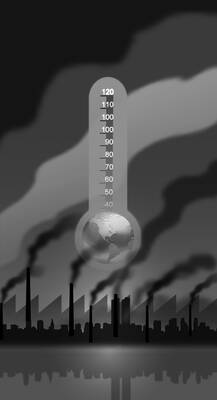
The closure of the Strait of Hormuz has sent the vast Asian chemicals industry into a tailspin. Deprived of the likes of Qatari natural gas and Saudi Arabian oil, the region’s fertilizer and plastics plants are slowing production or even shutting down. Everywhere except China, that is. In petrochemicals, China is unique. As well as a traditional industry that uses oil and gas as feedstock, it has parallel output that relies on its abundant domestic coal. Unsurprisingly, India and other regional powers want to copy and paste the Chinese method. This would not be easy — or climate friendly. The
Indonesian President Prabowo Subianto says he knows how to fix the problems facing Indonesia. Yet his economic mismanagement and authoritarian tendencies are steering the nation toward a familiar mix of currency instability and political chaos. The world’s fourth-most populous nation risks reversing the hard-won democratic and business reforms that came after the Asian Financial Crisis in 1997. At that time, the rupiah collapsed and the political upheaval that followed forced former president Haji Mohamed Suharto from power. Prabowo’s administration is ignoring similar warning signs. That disconnect was apparent in a national address on Wednesday, when Prabowo projected the swagger that has
“Of course you can choose not to be Taiwanese, just do not stay here,” chairwoman of Taipei 101 operator Taipei Financial Center Corp Janet Chia (賈永婕) said in an online interview with local entertainer Tai Chih-yuan (邰智源), triggering intense discussion on social media, with politicians across party lines weighing in. In the interview, which was aired on May 14, Chia and Tai’s discussion over a meal in Taipei 101 covered Chia’s career change from entertainer to chairwoman and US climber Alex Honnold’s free solo climb up the Taipei 101 building. During the interview, Chia said, “Being on this land, we


 RSS
RSS