


On Aug. 27, the Executive Yuan announced that it would make cannabis the main target in the government’s fight against drugs and adopt three major strategies to tackle it.
The authorities are to be commended for their determination to deal with the problem. Cannabis users are by no means few in number. Many of them have high social status or returned to Taiwan after studying overseas, and most of them started smoking cannabis while at university.
Many think that cannabis is no more harmful to health than tobacco, so they think it should be tolerated as it has been in the Netherlands, or legalized as in Canada and some US states.
There was a case of a student who fell in with the wrong crowd. One day, after a student society event, he and his friends went to his rented apartment to smoke cannabis; the student later died.
After taking the student to the hospital, his friends tried to avoid any further involvement, so it was not until the student’s mother went to the rented apartment to tidy up that she found that her son had been smoking cannabis. She did not dare to agree to an autopsy to confirm the cause of death, possibly because insurers do not pay death benefits when someone dies because of narcotics use.
Later, she expressed hope that the university could strengthen its guidance against illegal drug use by students.
In the past few years, cannabis use has increased at universities. Some students lead a decadent nightlife and have plenty of money to spend. They are out of their parents’ control and it is not easy for the police to monitor them, so they can easily be influenced by their peers to fall into bad habits, such as smoking cannabis.
In addition to its announced “triple reduction policy” to decrease supply, demand and harm of cannabis, the government should ensure that students receive stronger guidance about the harmful effects of cannabis, as well as making greater efforts to detect its use, to improve students’ understanding of the issue to prevent them from unwittingly becoming victims of cannabis.
Chen Hung-hui is a former university military instructor.
Translated by Julian Clegg
A gap appears to be emerging between Washington’s foreign policy elites and the broader American public on how the United States should respond to China’s rise. From my vantage working at a think tank in Washington, DC, and through regular travel around the United States, I increasingly experience two distinct discussions. This divergence — between America’s elite hawkishness and public caution — may become one of the least appreciated and most consequential external factors influencing Taiwan’s security environment in the years ahead. Within the American policy community, the dominant view of China has grown unmistakably tough. Many members of Congress, as
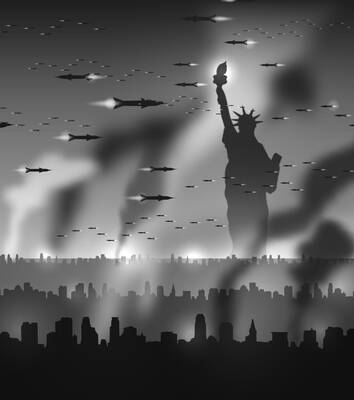
After declaring Iran’s military “gone,” US President Donald Trump appealed to the UK, France, Japan and South Korea — as well as China, Iran’s strategic partner — to send minesweepers and naval forces to reopen the Strait of Hormuz. When allies balked, the request turned into a warning: NATO would face “a very bad” future if it refused. The prevailing wisdom is that Trump faces a credibility problem: having spent years insulting allies, he finds they would not rally when he needs them. That is true, but superficial, as though a structural collapse could be caused by wounded feelings. Something
Former Taipei mayor and Taiwan People’s Party (TPP) founding chairman Ko Wen-je (柯文哲) was sentenced to 17 years in prison on Thursday, making headlines across major media. However, another case linked to the TPP — the indictment of Chinese immigrant Xu Chunying (徐春鶯) for alleged violations of the Anti-Infiltration Act (反滲透法) on Tuesday — has also stirred up heated discussions. Born in Shanghai, Xu became a resident of Taiwan through marriage in 1993. Currently the director of the Taiwan New Immigrant Development Association, she was elected to serve as legislator-at-large for the TPP in 2023, but was later charged with involvement
Out of 64 participating universities in this year’s Stars Program — through which schools directly recommend their top students to universities for admission — only 19 filled their admissions quotas. There were 922 vacancies, down more than 200 from last year; top universities had 37 unfilled places, 40 fewer than last year. The original purpose of the Stars Program was to expand admissions to a wider range of students. However, certain departments at elite universities that failed to meet their admissions quotas are not improving. Vacancies at top universities are linked to students’ program preferences on their applications, but inappropriate admission


 RSS
RSS