


On Aug. 5, the US Department of State approved the sale of US$750 million in weapons and equipment to Taiwan, including 40 155mm Paladin M109A6 self-propelled howitzers. It is the first such sale under US President Joe Biden’s administration.
Not only does the deal satisfy the military’s requirements, it would also help the army rapidly adapt and provide support fire, enhancing the deterrence capability of Taiwan’s land forces. The sale is also a clear expression of Washington’s intent toward the Indo-Pacific region in the face of expanding Chinese military power.
From Washington’s perspective, the severe threat from China means that it is imperative to boost Taiwan’s defensive capabilities to help maintain regional peace and stability, and ensure that Taiwanese have the ability and self-confidence to deter an attack by China. If Washington wants to keep Beijing’s expansionist military in check, there is no room for strategic ambiguity.
The sale of the self-propelled howitzers and associated equipment provides artillery units with a significant upgrade that Taiwan has been fighting to acquire for a long time.
In April, Biden sent an unofficial delegation to Taiwan, led by his close friend, former US senator Chris Dodd.
Dodd told Taiwanese officials that Washington was willing to go ahead with the weapons sale, although it took another three months until the sale was formalized.
During the delegation’s visit, Dodd told President Tsai Ing-wen (蔡英文) that he had come on behalf of Biden to reiterate the US’ responsibilities toward Taiwan under the US’ Taiwan Relations Act and express Washington’s support for Taiwan’s investment in its own defense.
The delegation also held high-level discussions with senior politicians and military officials to understand Taiwan’s thinking and requirements regarding defense. Tsai held a banquet for the delegation at her official residence, with Minister of National Defense Chiu Kuo-cheng (邱國正) also attending. The evening involved important high-level strategic talks.
At the same time that the Dodd delegation was visiting Taiwan, Washington was engaging with Beijing. Biden dispatched US Special Presidential Envoy for Climate John Kerry to China for discussions on climate change prior to a climate summit at the end of April. Only a month prior to that, the US and Chinese foreign ministers had locked horns during a summit in Alaska that deteriorated into an acrimonious tit-for-tat tongue-lashing.
At the time, the Biden administration had not yet given up on its policy of competing and engaging with China, where possible.
The Biden administration seeks to reinforce interactions with democratic nations around the world and has emphasized the importance of mutual alliances, while also trying to maintain a balance. This is perhaps no more clear than in the Taiwan-US relationship. While the Biden administration on several occasions has stressed that the Taiwan-US relationship is “rock solid,” the relationship has undeniably cooled off somewhat since the giddy heights of the administration of former US president Donald Trump.
Credited as a Taiwan hand, US National Security Council Coordinator for the Indo-Pacific Kurt Campbell during an interview in May said that he opposed abandoning the US’ policy of strategic ambiguity over whether the US would come to Taiwan’s aid in the event of an invasion by China.
Last month, Campbell elaborated further, saying that the Biden administration supports a strong unofficial relationship with Taiwan, but said: “We do not support Taiwan independence” and added that the US side fully understands the “sensitivities” involved.
Also last month, the White House COVID-19 response team posted a reference to Taiwan and a graphic of its national flag on Twitter.
Tsai immediately replied to the tweet, expressing Taiwan’s gratitude, but within 24 hours the tweet had been deleted.
White House press secretary Jen Psaki said the inclusion of Taiwan’s national flag in the tweet was “an honest mistake,” and that the US was still committed to a “one China” policy.
Although the Biden administration has been reluctant to define what it means by “Taiwanese independence” or its “one China” policy, and stated that it intends to maintain a degree of strategic ambiguity, in its words and actions, it has on many occasions shown a tendency to side with Beijing’s point of view. This has created unease in Taipei.
Meanwhile, China has continued to use its military as a coercive force. Although Taiwan has borne the brunt of Beijing’s military threats, its aggressive actions have pressured Japan.
This has led Tokyo to be even more explicit and vocal than Washington about the imbalance of power in the Taiwan Strait.
Japanese Minister of Defense Nobuo Kishi has repeatedly said that Japan’s national security is intimately connected to the peace and security of Taiwan, and has warned that China’s military expansionism is squeezing Taiwan like a boa constrictor.
The Japanese Ministry of Defense released a defense white paper last month that for the first time listed China as Japan’s primary security threat. From Tokyo’s perspective, it is no longer possible to maintain strategic ambiguity over the Taiwan Strait.
With US democratic allies displaying misgivings over Washington’s foreign policy, the Biden administration’s announcement of a new weapons sale to Taiwan is not just about increasing Taiwan’s ability to defend itself, but also signaling to US allies that Biden plans to continue the policy of his predecessor, selling weapons to Taiwan on a rolling basis according to Taiwan’s defensive needs, rather than a sporadic series of discrete weapons packages.
It is also a sign of Washington’s determination to maintain peace and stability in the Taiwan Strait, and a response to the concerns of Japan and other Indo-Pacific allies that the US is paying close attention to Taiwan’s situation.
Several days prior to the announcement of the arms sales, the US’ Indo-Pacific Command announced joint military exercises with Australian, British and Japanese forces, called Large Scale Exercise 2021.
The timing of the announcement was significant, signaling that Taiwan could be incorporated into a close military alliance with the US and its allies. Taiwan’s security interests must not be affected by a US-China conflict.
Biden, supremely confident in his diplomatic abilities, seeks to balance the Taiwan Relations Act and the US’ “one China” policy off one another and increase the US’ room for maneuvering.
However, Beijing’s increasingly overt display of its expansionist intentions represents a challenge to democratic nations and the rules-based world order. If the Taiwan-US relationship is not fully decoupled from the US-China relationship, Washington will fall into a trap set by Beijing, which defines Taiwan as a “core Chinese interest.”
Biden must guard against falling into the trap of passivity toward Taiwan: This is just what Beijing wants.
Additionally, Biden’s predecessor, Trump, and a cross-party consensus in the US Congress have consistently adopted a hard-line policy toward China: Any minor adjustment that the Biden administration makes to the US’ Taiwan policy would be placed under a microscope.
Just as with the timing of military sales to Taiwan, where there was no need for Washington to take into consideration background interaction between the US and China, future sales should be based on Taiwan’s defense requirements. If a need for a sale can be demonstrated, then it should go ahead.
Such a security guarantee would not only benefit Taiwan, but would also restore trust among the US’ other key democratic allies.
Translated by Edward Jones
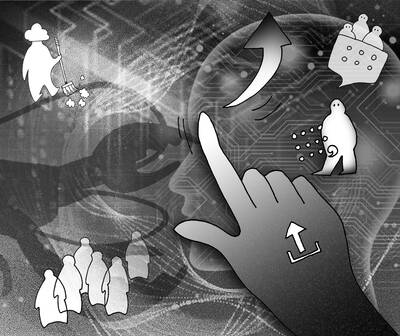
Weeks into the craze, nobody quite knows what to make of the OpenClaw mania sweeping China, marked by viral photos of retirees lining up for installation events and users gathering in red claw hats. The queues and cosplay inspired by the “raising a lobster” trend make for irresistible China clickbait. However, the West is fixating on the least important part of the story. As a consumer craze, OpenClaw — the AI agent designed to do tasks on a user’s behalf — would likely burn out. Without some developer background, it is too glitchy and technically awkward for true mainstream adoption,
Out of 64 participating universities in this year’s Stars Program — through which schools directly recommend their top students to universities for admission — only 19 filled their admissions quotas. There were 922 vacancies, down more than 200 from last year; top universities had 37 unfilled places, 40 fewer than last year. The original purpose of the Stars Program was to expand admissions to a wider range of students. However, certain departments at elite universities that failed to meet their admissions quotas are not improving. Vacancies at top universities are linked to students’ program preferences on their applications, but inappropriate admission
On Monday, a group of bipartisan US senators arrived in Taiwan to support the nation’s special defense bill to counter Chinese threats. At the same time, Beijing announced that Chinese President Xi Jinping (習近平) had invited Chinese Nationalist Party (KMT) Chairwoman Cheng Li-wun (鄭麗文) to visit China, a move to make the KMT a pawn in its proxy warfare against Taiwan and the US. Since her inauguration as KMT chair last year, Cheng, widely seen as a pro-China figure, has made no secret of her desire to interact with the Chinese Communist Party (CCP) and meet with Xi, naming it a
Taiwan-South Korea relations face a critical test, as a deadline forces both sides to confront a long-simmering issue. Taipei has requested that Seoul correct its classification of Taiwan in South Korea’s e-arrival system, where it has been labeled as “China (Taiwan)” since Feb. 24 last year. The Ministry of Foreign Affairs set today as a clear deadline for revision, warning that failure to act would trigger reciprocal measures beginning tomorrow. Taipei has already signaled its willingness to respond. Beginning on March 1, the government changed the designation of South Koreans on the alien resident certificates from the “Republic of Korea” to “South


 RSS
RSS