


German Institute Taipei Director-General Thomas Prinz said recently that Germany is attempting to balance its relationships with Taiwan and China.
In an interview with the Central News Agency (CNA), Prinz said that “Germany has good relations with Taiwan that are based on the shared values of freedom and democracy and strong bilateral trade,” but that it also has strong economic ties to China.
“Strong” is an understatement. According to a Foreign Policy report published on Wednesday, China has become the biggest trading partner of Germany and the EU as a whole since German Chancellor Angela Merkel last year pushed other EU member states on an investment deal with China.
In the report, Center for a New American Security researcher Rachel Rizzo said: “Germany does not want to get caught in the middle of a broader geopolitical power struggle between the United States and China.”
On Tuesday, French Office in Taipei Director Jean-Francois Casabonne-Masonnave told CNA that the perception of Taiwan in France is much better than two or three years ago due to Taiwan’s vibrant freedom and democracy.
Prinz and Casabonne-Masonnave also talked about their countries’ desire for peace and stability in the Taiwan Strait, and sending naval vessels into the region to make a statement of support for freedom of navigation. The representatives’ statements imply that Taiwan is a valuable friend for what it represents in terms of freedom and democracy.
However, how can countries such as Germany and France claim to be democratic and champions of human rights if their economic health is reliant on their trade relationship with an authoritarian country known for human rights violations? If they are afraid to set the conditions of their relationships with China as it relates to Taiwan, how can they claim to be independent and free?
Surely it is the people of France who decide French policy, and the people of Germany who decide German policy, so why walk on eggshells? Also, why work so hard to protect a trade relationship that is extremely unbalanced and subject to the whims of an authoritarian despot?
China has imposed astronomically high tariffs on Australian wine, beef, barley and coal after Australian officials called for an investigation into the origin of COVID-19. China also cut off imports of Canadian canola and meat products after Canada arrested Huawei Technologies Co chief financial officer Meng Wanzhou (孟晚舟) following a US request for her extradition. Who is to say that Beijing would not do the same to EU countries when their politicians speak up about human rights in Hong Kong or Xinjiang?
Democratic countries cannot continue to allow their economies to remain vulnerable to the whims of an authoritarian government, or to allow their private companies and citizens to be silenced on human rights issues for fear of upsetting one. It is imperative that democracies stand up for their values and conduct themselves diplomatically without coercion.
It is clear that China will continue to act in ways that are incompatible with democratic values. On Tuesday, German Minister of Foreign Affairs Heiko Maas said that Russia and China had pushed political demands in delivering vaccines to other countries.
Taipei should encourage friendly nations such as France, Germany and the US to explore alternatives to China for the development of their economies, and to avoid compromising on their values for access to an imbalanced and unstable trade relationship with China. Friendly nations should bolster ties with Taiwan to send a clear message to Beijing that democracies will stand together. Acquiescing to Beijing’s demands will only encourage it to continue acting recklessly.
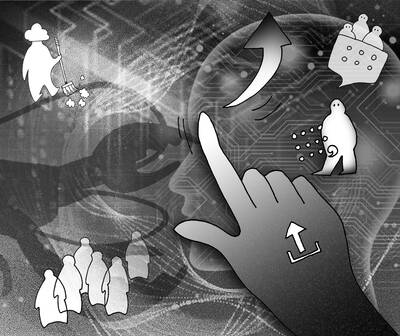
Weeks into the craze, nobody quite knows what to make of the OpenClaw mania sweeping China, marked by viral photos of retirees lining up for installation events and users gathering in red claw hats. The queues and cosplay inspired by the “raising a lobster” trend make for irresistible China clickbait. However, the West is fixating on the least important part of the story. As a consumer craze, OpenClaw — the AI agent designed to do tasks on a user’s behalf — would likely burn out. Without some developer background, it is too glitchy and technically awkward for true mainstream adoption,
Out of 64 participating universities in this year’s Stars Program — through which schools directly recommend their top students to universities for admission — only 19 filled their admissions quotas. There were 922 vacancies, down more than 200 from last year; top universities had 37 unfilled places, 40 fewer than last year. The original purpose of the Stars Program was to expand admissions to a wider range of students. However, certain departments at elite universities that failed to meet their admissions quotas are not improving. Vacancies at top universities are linked to students’ program preferences on their applications, but inappropriate admission
Taiwan-South Korea relations face a critical test, as a deadline forces both sides to confront a long-simmering issue. Taipei has requested that Seoul correct its classification of Taiwan in South Korea’s e-arrival system, where it has been labeled as “China (Taiwan)” since Feb. 24 last year. The Ministry of Foreign Affairs set today as a clear deadline for revision, warning that failure to act would trigger reciprocal measures beginning tomorrow. Taipei has already signaled its willingness to respond. Beginning on March 1, the government changed the designation of South Koreans on the alien resident certificates from the “Republic of Korea” to “South
On Monday, a group of bipartisan US senators arrived in Taiwan to support the nation’s special defense bill to counter Chinese threats. At the same time, Beijing announced that Chinese President Xi Jinping (習近平) had invited Chinese Nationalist Party (KMT) Chairwoman Cheng Li-wun (鄭麗文) to visit China, a move to make the KMT a pawn in its proxy warfare against Taiwan and the US. Since her inauguration as KMT chair last year, Cheng, widely seen as a pro-China figure, has made no secret of her desire to interact with the Chinese Communist Party (CCP) and meet with Xi, naming it a


 RSS
RSS