


Faced with the COVID-19 pandemic, as many as 3.9 billion people around the world have been forced to stay at home, and this has had a clear side effect: an increase in domestic violence. In some countries, the number of abused women seeking help has doubled, and medical workers and police officers are having problems keeping up with the increase.
Since the government raised the COVID-19 alert to level 3 in May, emotional and other daily pressures have surged, causing high stress at home. Ministry of Health and Welfare data show that reports of domestic violence rose by 15 percent compared with the same period last year. The repeated extension of the level 3 alert makes the situation even more difficult for people exposed to domestic violence.
All schools and childcare centers have been closed, while community care centers have suspended services as well. Based on traditional labor distribution by gender, the task of taking care of children and families mostly falls on women, who are trapped between family duties and their jobs.
Without support, it is difficult for many working women to catch their breath while they worry about losing their jobs, as various unfavorable factors interact to cause intense family conflicts. Also, abused women must often spend all day at home in small spaces with their partners, and are exposed to a high-risk, tightly controlled environment. That makes it more difficult for them to contact the outside world or use the phone to call social workers.
Although local shelters for abused women have continued to operate, the number of beds have been reduced due to social distancing. In Taipei shelters, abused women must pay for a COVID-19 test, and can only check in if they present a negative test issued within the past three days. This can deter poor and underprivileged women from escaping their situation at home, while forcing working women to choose between safety and economic needs.
Faced with this increase in domestic violence, it is difficult for conventional hotline services to provide assistance to abused women, making it even more difficult to protect their mental and physical safety. As a solution, the Modern Women’s Foundation suggests that the Ministry of Health and Welfare follow the guidelines of the UN Entity for Gender Equality and the Empowerment of Women, also known as UN Women, to develop diverse resources and take preventive action against domestic violence.
First, the government should increase communication channels — such as e-mail, text messaging, social media or other online counseling tools — to assist those being abused and provide prompt support services.
Second, since women are mostly responsible for grocery shopping for their families, the government could establish emergency relief or counseling stations at drugstores or supermarkets, so victims can conveniently seek help without being spotted by their partners.
Third, the government should develop diverse types of shelters, such as quarantine hotels and friendly homestays, to meet victims’ needs for safe refuge.
Moreover, it could increase budgets for tackling domestic violence, offering greater resources for victims and the authorities in charge, pushing for flexible responsive measures and proposing relief packages that fulfill the needs of the disadvantaged.
Finally, law enforcement should adopt a zero-tolerance attitude toward domestic violence, and implement existing laws to protect victims and bring offenders to justice. There should be no “window period” in Taiwan’s domestic violence prevention.
Chen Tzu-hua is a researcher at the Modern Women’s Foundation.Translated by Eddy Chang
Minister of Labor Hung Sun-han (洪申翰) on April 9 said that the first group of Indian workers could arrive as early as this year as part of a memorandum of understanding (MOU) between the Taipei Economic and Cultural Center in India and the India Taipei Association. Signed in February 2024, the MOU stipulates that Taipei would decide the number of migrant workers and which industries would employ them, while New Delhi would manage recruitment and training. Employment would be governed by the laws of both countries. Months after its signing, the two sides agreed that 1,000 migrant workers from India would
In recent weeks, Taiwan has witnessed a surge of public anxiety over the possible introduction of Indian migrant workers. What began as a policy signal from the Ministry of Labor quickly escalated into a broader controversy. Petitions gathered thousands of signatures within days, political figures issued strong warnings, and social media became saturated with concerns about public safety and social stability. At first glance, this appears to be a straightforward policy question: Should Taiwan introduce Indian migrant workers or not? However, this framing is misleading. The current debate is not fundamentally about India. It is about Taiwan’s labor system, its
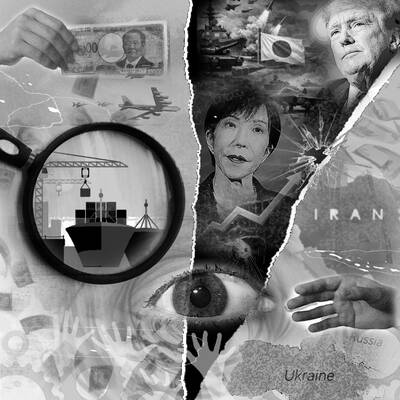
Japan’s imminent easing of arms export rules has sparked strong interest from Warsaw to Manila, Reuters reporting found, as US President Donald Trump wavers on security commitments to allies, and the wars in Iran and Ukraine strain US weapons supplies. Japanese Prime Minister Sanae Takaichi’s ruling party approved the changes this week as she tries to invigorate the pacifist country’s military industrial base. Her government would formally adopt the new rules as soon as this month, three Japanese government officials told Reuters. Despite largely isolating itself from global arms markets since World War II, Japan spends enough on its own
On March 31, the South Korean Ministry of Foreign Affairs released declassified diplomatic records from 1995 that drew wide domestic media attention. One revelation stood out: North Korea had once raised the possibility of diplomatic relations with Taiwan. In a meeting with visiting Chinese officials in May 1995, as then-Chinese president Jiang Zemin (江澤民) prepared for a visit to South Korea, North Korean officials objected to Beijing’s growing ties with Seoul and raised Taiwan directly. According to the newly released records, North Korean officials asked why Pyongyang should refrain from developing relations with Taiwan while China and South Korea were expanding high-level


 RSS
RSS